The natural wealth of a nation should serve as a pillar for sovereignty, not a catalyst for its downfall.
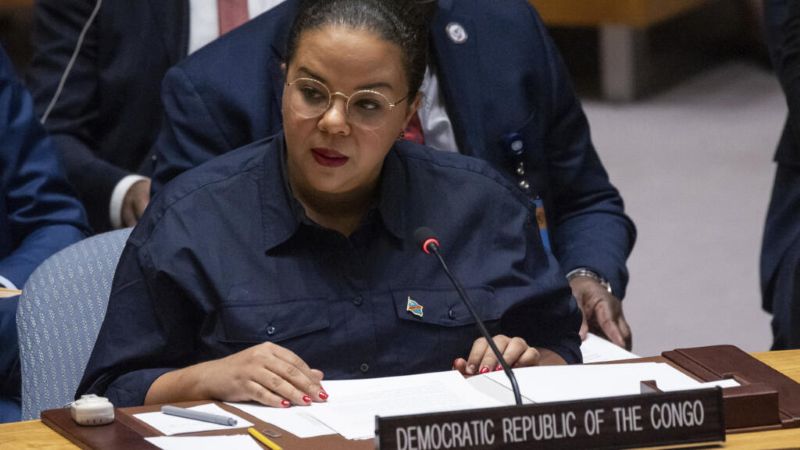
New York — In a bold diplomatic move at the United Nations, the Democratic Republic of Congo (DRC) has redefined its stance on global mineral governance, pushing for a system that rewards producing countries rather than leaving them as mere exporters of raw materials. Speaking at the High-Level Meeting on Critical Minerals for the Energy Transition, Foreign Minister Thérèse Kayikwamba Wagner delivered a sharp critique of the current international framework, arguing that true energy justice cannot exist without equitable value distribution.
« The focus must shift from where minerals come from to where their added value is captured, » she declared, emphasizing the need for investments in infrastructure, energy, research, and technology within the DRC. Her speech underscored Kinshasa’s ambition to transform from a supplier of unprocessed minerals into a key industrial hub for strategic resources like cobalt, copper, and tantalum—essential for electric batteries, digital technologies, and renewable energy systems.
Breaking free from the raw material trap
The DRC’s foreign minister made it clear: her country refuses to remain confined to the role of a passive exporter. « Africa cannot be the continent of extraction while others control the industries of the future, » she stated, calling for international partnerships that prioritize technology transfer, capacity building, and fair profit-sharing along global supply chains.
Her demands extend beyond economic justice. Addressing the UN Security Council—where the DRC currently holds the presidency—Kayikwamba Wagner linked mineral governance directly to international peace and security. She pointed to the eastern DRC, where illicit mineral trafficking fuels armed groups, destabilizing the region and undermining global efforts for sustainable development.
Rwanda in the crosshairs over tantalum trafficking
Citing a UN experts’ report, the minister exposed how Rwandan-backed armed factions, including the M23, have exploited mineral-rich zones like Rubaya—a region supplying nearly 15% of global tantalum demand. According to the report, over 1,400 tons of coltan were smuggled into Rwanda, generating approximately $800,000 monthly for armed groups. Despite these findings, no sanctions have been imposed on Kigali’s military forces, a gap she described as a failure of the international system to curb resource-fueled conflicts.
« How can we achieve sustainable peace when minerals mined in blood continue to flow freely across borders without consequences? » she questioned, urging the UN to adopt a more coherent framework where mineral governance, conflict prevention, and economic development are treated as interconnected priorities.
A call for systemic accountability
Beyond condemning Rwanda, Kinshasa’s strategy targets the entire supply chain—producers, traders, refiners, financial institutions, and consuming nations. The goal: to enforce traceability that disrupts fraud, smuggling, and armed group financing without penalizing legitimate artisanal miners. « Transparency must serve justice, not bureaucracy, » she asserted.
This diplomatic offensive marks a turning point in the DRC’s approach to global mineral governance. No longer content with defending its resources, Kinshasa is demanding a structural overhaul of the energy transition’s economic model—a system where producing nations finally reap the rewards of their natural endowments.
The message was clear: the DRC is no longer asking for charity. It is demanding a seat at the table where the future of critical minerals is decided.