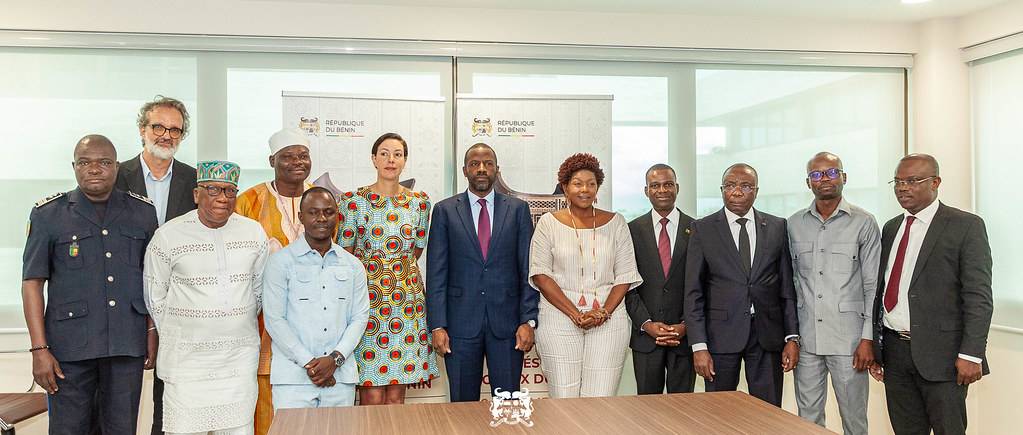
Following a groundbreaking first phase of cultural repatriations, Benin is set to embark on an even more ambitious journey. On July 14, 2026, the government in Cotonou formally established a National Scientific Committee to spearhead the return of 35 additional cultural artifacts and colonial-era archives currently held in France. Far from being merely symbolic, this initiative is designed to transform restored heritage into a powerful engine for tourism and local economic growth, fueled by widespread public support.
A new era of Beninese cultural sovereignty
The country is not resting on its laurels. As a leader in sub-Saharan Africa’s cultural restitution movement, Benin is advancing to its next strategic phase. The government has formally requested France to repatriate 35 significant cultural artifacts and historical archives that are vital to the nation’s identity.
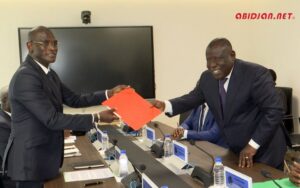
To ensure a meticulous process that balances legal, historical, and scientific rigor, a six-member National Scientific Committee was inaugurated in Cotonou on July 14, 2026. Led by Alain Godonou, a respected authority in African heritage, the committee is tasked with strengthening Benin’s case and collaborating closely with the upcoming joint Franco-Beninese Scientific Commission.
During the committee’s launch, the Minister of Culture, Arts, and Heritage, Yassine Latoundji, emphasized the sacred nature of their mission: « Your work demands intellectual rigor, independence, collegiality, a commitment to the public good, and unwavering fidelity to scientific truth. »
The economic dividend: turning heritage into development
While the moral and political significance of restitution is clear, the Beninese government views it as a strategic economic investment. From Cotonou to Abomey and Ouidah, culture is no longer seen as a financial burden but as a major productive sector capable of creating thousands of both direct and indirect jobs.
World-class infrastructure for cultural revival
To welcome these treasures under optimal conservation conditions, Benin has launched major construction projects nationwide. The upcoming Museum of Kings and Amazons in Abomey will grandly commemorate the legacy of the Dahomey Kingdom. In Porto-Novo, the International Vodun Museum aims to redefine and globalize the understanding of a spirituality often misunderstood. Simultaneously, the extensive restoration of Ouidah’s historic forts will anchor sustainable memorial tourism tied to the transatlantic slave trade. These world-class infrastructures are designed to attract foreign investment and build local expertise in museography, cultural mediation, and art restoration.
A ripple effect across the economy
The arrival of 35 new cultural artifacts and archives will significantly enrich Benin’s museum offerings. The anticipated economic benefits will be felt across multiple sectors. Hotels and restaurants will see a surge in regional and international tourist overnight stays. Traditional crafts—bronze artisans, weavers, and wood sculptors—will see renewed demand as they draw inspiration from recovered historical pieces to create contemporary works. Transportation and services will also thrive, supported by a vibrant ecosystem of tour guides, drivers, and event organizers.
Voices from the ground: pride and hope for the future
The establishment of the new scientific committee has sparked strong reactions in Cotonou. In the bustling neighborhoods of the economic capital, enthusiasm blends with a deep understanding of the stakes.
« To us, these objects are not just museum pieces, » says Séraphin, a bronze artisan at the Dantokpa market. « They are the spirits of our ancestors, the craftsmanship we were robbed of. Seeing them return is like reclaiming a part of our soul. And if this brings visitors from around the world into our workshops, it will benefit our entire youth. »
Students at the University of Abomey-Calavi share a similar sentiment. For them, the return of national archives represents an academic revolution:
« Until now, to conduct in-depth research on our colonial history, our scholars had to secure grants to study in Paris or Aix-en-Provence, » explains Amélie, a history PhD student. « The return of these archives to Cotonou is a scientific victory. We can finally write our own history from our land, in our own words. »
This widespread public buy-in is the backbone of the government’s vision. Cultural restitution is not just a matter for elites or diplomats—it is a grassroots reappropriation that strengthens national unity.
A redefined bilateral partnership
By launching the committee on France’s National Day, July 14, Benin sends a powerful message of mature, uncompromising partnership. This is no longer about confrontation but about a balanced, scientific collaboration rooted in mutual respect, knowledge exchange, and shared expertise.
The next steps are clearly outlined. The first phase, underway in July 2026, focuses on establishing the National Scientific Committee under Alain Godonou’s leadership. By the end of 2026, Beninese experts will systematically compile dossiers for the 35 artifacts and archives in close consultation with French museum institutions. The final milestone, set for 2027, will mark the official validation of transfers by the joint Franco-Beninese Commission.
A 21st-century African model
Benin’s methodical approach proves that cultural restitution transcends historical reparation. By scientifically structuring its demands and meticulously preparing for the return of these treasures, Cotonou is turning its heritage into a driver of political empowerment, popular pride, and, above all, a cornerstone of its future economic development. As these 35 artifacts and archives prepare to return home, Benin is demonstrating to the world that culture is indeed a wealth of the future.