Judicial appointments in Senegal fuel speculation over Ousmane Sonko’s political future
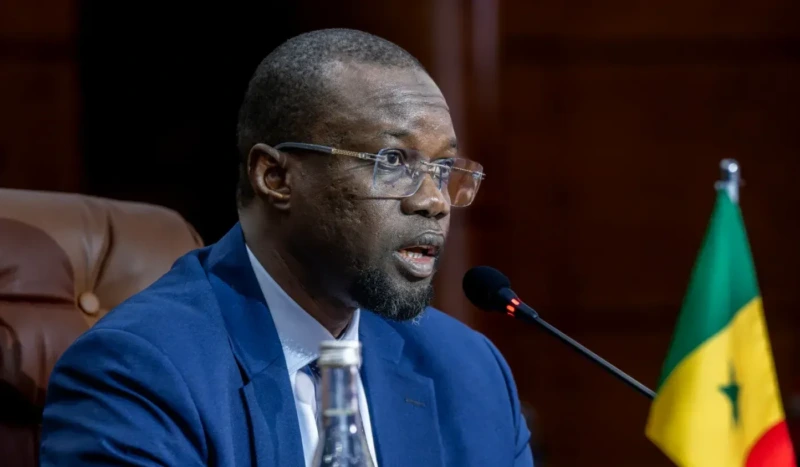
Recent judicial appointments in Senegal are sparking intense debate about their potential impact on the country’s political landscape. Political analyst Mamadou Wane suggests President Bassirou Diomaye Faye may be laying the groundwork to sideline opposition leader Ousmane Sonko ahead of the 2029 elections.
The appointment of new magistrates to the Constitutional Council and the Saint-Louis Court of Appeal represents a significant shift in Senegal’s judicial hierarchy. According to political scientist Mamadou Wane, these changes form part of a broader strategy by President Bassirou Diomaye Faye to revive elements of the old neocolonial order while systematically excluding Ousmane Sonko from future electoral contests. This stealthy maneuver, however, may ultimately collide with an empowered citizenry that has repeatedly demonstrated its capacity for resistance, particularly through the country’s largest political party which continues to gain momentum.
Wane argues that Faye’s administration appears determined to prevent Sonko from contesting the 2029 presidential election by leveraging state institutions—particularly the judiciary—against him. The analyst warns that such an approach overlooks the remarkable resilience of the Senegalese people, whose unwavering support for the PASTEF leader has repeatedly thwarted previous attempts to sideline him politically. “The Senegalese people have a long history of rising up against injustice,” Wane emphasizes, “any attempt to politically eliminate Sonko through institutional manipulation will ultimately fail.”
The President’s July 13, 2023 decree appointing magistrate Ousmane Diagne as president of the Constitutional Council marked a clear departure from previous leadership. Even more controversial was the appointment of former prosecutor Serigne Bassirou Guèye as Advocate General at the Saint-Louis Court of Appeal. Both appointees share a contentious history with Sonko.
Wane notes that Diagne’s disagreements with Sonko primarily centered on the administration of justice regarding accountability for crimes committed between March 2012 and February 2024. The relationship with Guèye, however, has been openly adversarial—Sonko has publicly accused the prosecutor of falsifying a gendarmerie investigation report in a politically motivated attempt to incite charges against him.
The political analyst reserves particular criticism for Guèye’s conduct: “When a magistrate resorts to fabricating evidence to target a political opponent, it calls into question their fitness to serve in any judicial capacity.” While Wane refrains from preemptively judging Diagne, he makes no such concession for Guèye, whose documented actions in the Sonko case demonstrate clear ethical violations.
Revival of neocolonial structures raises alarms
Wane characterizes the current political trajectory as a deliberate attempt to restore what he terms the “neocolonial order.” The recent judicial appointments signal the return of figures from the former regime, aligning with what he describes as a strategic pivot by President Faye to consolidate power at the political center through alliances with former coalition partners.
“What we’re witnessing is revisionism in its most dangerous form,” Wane explains. “There are now two distinct camps: one seeking to revive the old order of external control, and another committed to national sovereignty, patriotic values, and democratic revolution.” The analyst cautions that any attempt to exclude Sonko politically would be both strategically flawed and historically shortsighted.
“Those pushing this agenda are suffering from political myopia,” he warns. “They forget that the Senegalese people have a proven track record of defending their democratic rights. The current government exists only because the people mobilized. Any attempt to eliminate Sonko by dissolving institutions or manufacturing charges will meet the same fate as previous failures.”
PASTEF’s growing influence and youth mobilization
The unprecedented surge in PASTEF membership sales serves as a tangible indicator of the party’s burgeoning strength. “No other political formation in Senegal today matches PASTEF’s organizational capacity, dynamic leadership under Sonko, or grassroots mobilization,” Wane observes. This robust party structure positions Sonko’s movement as the dominant force in Senegal’s evolving political landscape.
Wane underscores that Senegal’s democratic maturity, forged through the historic alternations of 2000 and 2012 and solidified during the intense three-year struggle from 2021 to 2024, has created an irreversible political consciousness among citizens. “The events of March 2021 weren’t a fleeting protest—they represented a sustained three-year movement that taught the nation how to resist authoritarianism regardless of the regime’s coercive capabilities,” he notes. This collective memory ensures that any strategy to politically marginalize Sonko would encounter insurmountable resistance from an informed and mobilized citizenry.