spain and Morocco agree on swift deportation of irregular migrants at ceuta and melilla
The recent surge in migration flows to Ceuta has intensified diplomatic and security cooperation between Spain and Morocco, with Brussels reaffirming Rabat’s role as a key migration partner while stressing the need to strengthen border management and combat human trafficking networks.
Diplomatic urgency amid rising migration pressures
The sudden influx of irregular migrants into Ceuta has prompted an immediate and coordinated response from Spain and Morocco, with both nations committing to expedite the return of all unauthorized entrants. This decision applies equally to the enclave of Melilla, underscoring the shared commitment to uphold border integrity.
With maritime and land crossings—including the Tarajal border zone—continuing to see unprecedented movement, authorities in both countries have escalated joint efforts to control migration flows and address the unfolding crisis at the frontier.
Spanish and Moroccan officials have directly linked the recent spike in irregular entries to the activities of human trafficking networks, which are exploiting a Supreme Court ruling that limits immediate deportations of migrants reaching Ceuta by swimming.
Eu’s immediate response to ceuta’s migration surge
In response to the growing pressure, the European Union has pledged support to Spain through Frontex deployments in Ceuta. Brussels has also urged Morocco to take urgent action, emphasizing that the EU remains determined to reinforce its backing in managing the migratory surge and restoring order in the enclave.
Ongoing dialogue between EU and Moroccan authorities is focused on ensuring rapid implementation of measures to curb perilous crossings and prevent further irregular entries.
Bilateral cooperation takes center stage
Faced with thousands of migrants arriving at Ceuta’s Tarajal border crossing, Spain and Morocco have agreed to strengthen bilateral cooperation and prioritize the swift return of all unauthorized migrants who have entered the city. This decision is being implemented under existing collaboration frameworks.
Spanish Interior Minister Fernando Grande-Marlaska is scheduled to travel to Ceuta to oversee on-the-ground crisis management and maintain continuous contact with his Moroccan counterpart, Abdelouafi Laftit, to reinforce joint efforts in overcoming the crisis.
Informed sources within Morocco’s Interior Ministry have expressed concerns that the crisis could undermine long-standing cooperation between the two nations and raise questions about security within the strategic triangle formed by Morocco, Spain, and the European Union.
Clarifying the role of recent diplomatic visits
The Spanish government has categorically denied any connection between the current migration surge and the recent visit of Prime Minister Pedro Sánchez to Algeria on July 20. The Ministry of Foreign Affairs emphasized that “migration cooperation with Morocco remains robust within the framework of the strategic partnership between the two countries.”
Prime Minister Sánchez has reiterated that his administration is working tirelessly to restore normalcy in Ceuta amid the unprecedented influx of irregular migrants. He stated that the government is mobilizing all available resources and coordinating with Moroccan authorities and international partners to effectively address the situation.
In a statement on social media platform X, Sánchez assured that the government is preparing “the necessary measures” to restore order “as soon as possible,” adding that close cooperation with Morocco is central to managing the current migratory pressure on Ceuta.
Both Spanish and Moroccan authorities attribute the crisis to human trafficking networks, which are allegedly capitalizing on a recent Supreme Court decision that prohibits immediate repatriation of migrants who enter Ceuta and Melilla by swimming. This legal ruling is being exploited by smuggling organizations to encourage further irregular crossing attempts.
Ceuta under unprecedented strain
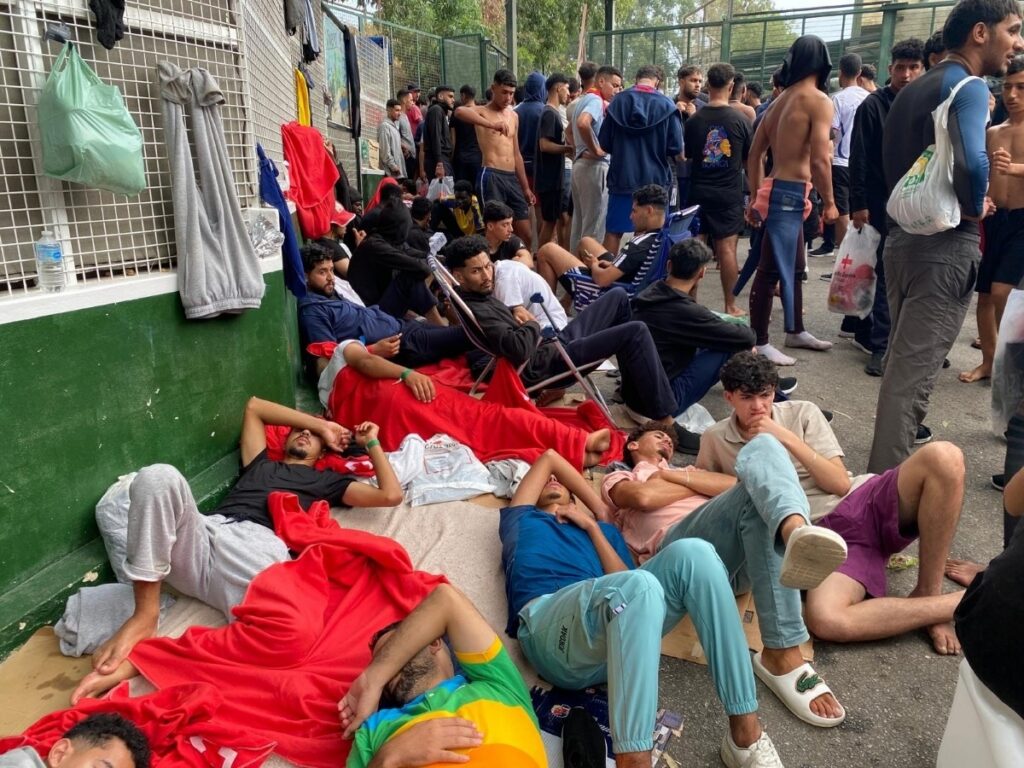
Since the mass migration crisis of May 2021, Ceuta is once again experiencing an unparalleled migratory pressure, with hundreds of individuals arriving daily—often by swimming or through the Tarajal border zone. This has pushed emergency and security services to their operational limits.
In the early hours of Wednesday to Thursday, multiple attempts to enter Ceuta by sea persisted, overwhelming the response capacity of the Civil Guard. Among the arrivals were numerous minors, and authorities recovered another body from the waters, as reported by local sources.
Local authorities in Ceuta have called for the declaration of a state of emergency—a request declined by the Sánchez administration—along with increased police resources and the deployment of the military to restore control in a city where security forces are stretched to breaking point. Reception centers are also operating beyond capacity.
Each wave of migration compounds the crisis, with groups of migrants attempting to scale border fences despite Moroccan police efforts to block access routes to Ceuta. Misleading information circulating on social media continues to fuel these attempts, as many seek what they perceive as a better life in Spain.
Many of those who have made it into Ceuta have set up makeshift camps while awaiting placement in reception facilities.
Ceuta crisis exposes deeper challenges
The current crisis in Ceuta—characterized by the arrival of predominantly young migrants—has reignited debates about Morocco’s capacity to address the root causes of migration, including unemployment and economic hardship that drive individuals to risk dangerous Mediterranean crossings in search of opportunity.
New arrivals in Ceuta often celebrate their entry with expressions of joy, shouting slogans such as “viva España” and “amigo, vamos, vamos,” reflecting a sense of having reached a long-sought paradise. Yet behind these scenes lies a harsh reality: for many, survival in their home countries has become untenable.
This raises critical questions: Are these young people merely seeking rights—work, dignity, and a future—without wanting to contribute to nation-building? Or is the lack of real opportunities pushing them to leave? This “collective exodus” is not a marginal phenomenon but a profound crisis rooted in structural issues such as youth unemployment, regional inequality, and eroded trust in institutions.
With significant security forces deployed for the Throne Day celebrations—the first under King Mohamed VI’s reign—questions have arisen about the diligence of regional authorities in detecting, controlling, and preventing gatherings before they reach the Ceuta border. Reports also indicate the involvement of Algerians and Sub-Saharan Africans in organizing these large-scale attempts to enter Ceuta, with evidence suggesting that organizers possess resources and funding far exceeding local grievances.
Rather than spontaneous local discontent, the goal appears to be the destabilization of Morocco and its relations with Spain and the EU—particularly by disrupting the Throne Day celebrations and undermining the positive narrative presented in the king’s address highlighting Morocco’s progress.
Behind every person who successfully reaches Ceuta, many more perish or are lost at sea, their struggles largely unseen. The sight of young migrants celebrating their arrival—despite the immense human cost—demands reflection and urgent action. It is a stark reminder of a migration crisis fueled by desperation, vulnerability, and staggering human loss.