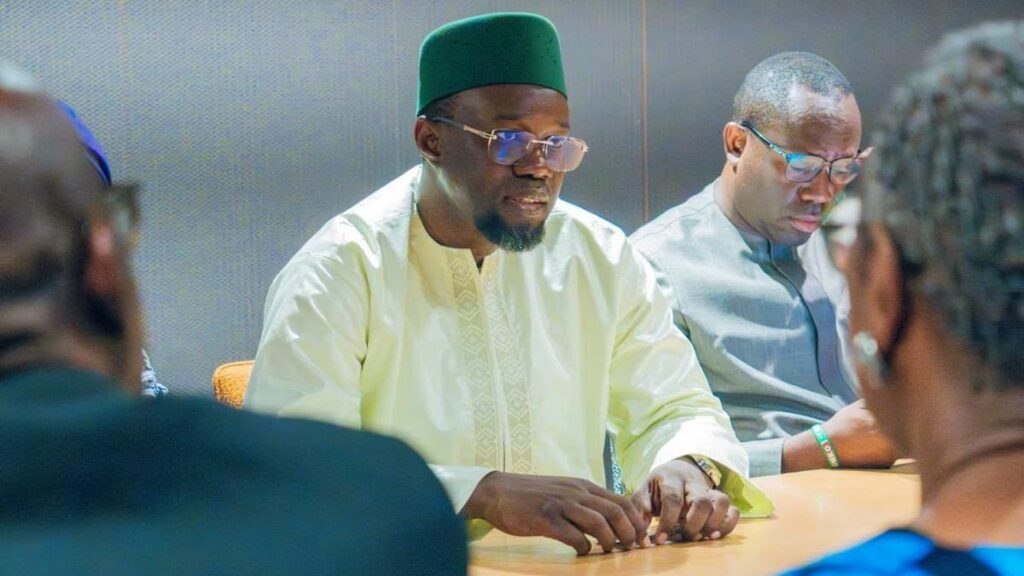
The judge overseeing urgent matters at Senegal’s highest court has declined to rule on the petition contesting Ousmane Sonko’s reinstatement as a Member of Parliament, asserting that the matter falls under the exclusive jurisdiction of the legislative body itself. This latest judicial setback follows a similar ruling by the Constitutional Council in June, which also declined jurisdiction, citing that the contested act did not directly relate to the electoral process.
The case stems from a petition filed by the Senegalese National Union of Independents, challenging the validity of the procedures that enabled Sonko to reclaim his parliamentary seat before his subsequent election as Assembly President. With two high courts now abstaining from a substantive review, the opposition has grown increasingly vocal, with legal experts and political figures decrying what they describe as a judicial vacuum threatening the legitimacy of the proceedings.
Ousmane Sonko’s legal representative, Amadou Guèye, has condemned the Supreme Court’s decision, framing it as an act of institutional defiance that exacerbates legal uncertainty. The controversy deepens as Sonko himself has alleged a politically motivated conspiracy behind the successive legal challenges, arguing that his adversaries are weaponizing the judiciary to undermine his political standing rather than seeking legal redress.
While the urgent petition has been dismissed, the broader dispute remains unresolved, leaving the final outcome shrouded in ambiguity. The impasse continues to fuel tensions between Sonko’s parliamentary allies and segments of the opposition, who have yet to secure a decisive legal victory despite their concerted efforts to challenge his position.