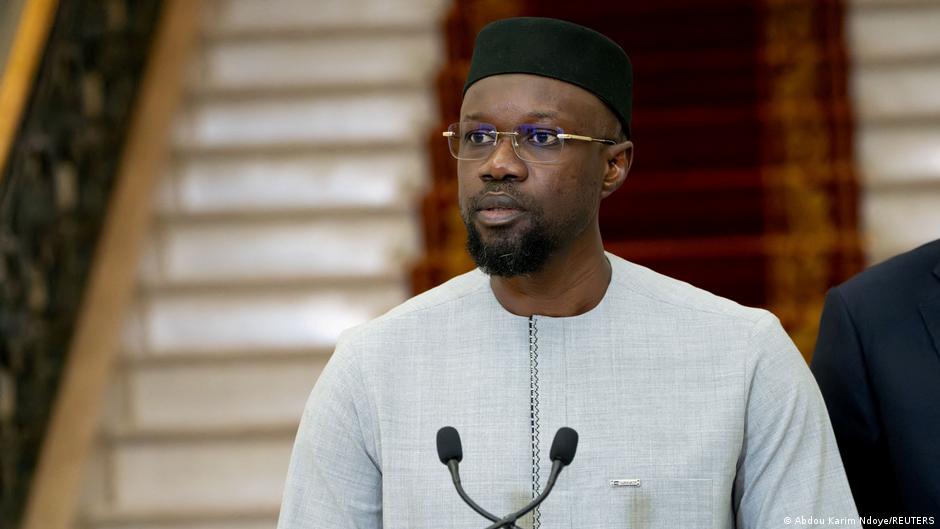
Senegal’s Constitutional Council has dealt a fresh blow to Ousmane Sonko by striking down a contentious institutional reform proposed by his ruling Pastef party. The decision marks another setback in his ongoing political confrontation with President Bassirou Diomaye Faye.
The highest judicial body in Senegal ruled that the reform, endorsed by the National Assembly, violated constitutional provisions. The proposal aimed to rebalance institutional powers but was deemed incompatible with the country’s legal framework. Two critical flaws were identified: the absence of a funding mechanism for the new Constitutional Court envisaged by the reform, and procedural irregularities in the parliamentary handling of government amendments.
President Bassirou Diomaye Faye personally referred the matter to the Council, underscoring the gravity of the situation. The ruling effectively halts the ambitious reform agenda pursued by the ruling majority in the Assembly, where Pastef holds a commanding majority.
legal and political implications
The Council’s decision also addresses concerns raised by opposition figures, including Adji Diarra Mergane Kanouté, leader of the USD/A party and president of the coalition Ensemble Demain. She emphasized that while the reform has been rejected, lawmakers could reintroduce a revised version—provided they adhere strictly to constitutional requirements. Specifically, any legislation creating new public obligations, such as funding elections or a new Constitutional Court, must include compensatory revenue measures, as stipulated under Article 82, paragraph two of the Constitution.
Another procedural flaw highlighted by the Council involved the National Assembly’s failure to apply the blocked vote procedure at the government’s request, in violation of Article 82, paragraph four. These irregularities left the Council with no choice but to declare the reform unconstitutional.
mixed reactions and ongoing tensions
Political reactions have been swift. Ousmane Sonko acknowledged the Council’s decision in a statement on social media, signaling his acceptance of the ruling. Meanwhile, figures within the presidential coalition defended the institutions’ proper functioning and called for continued dialogue on reform initiatives.
Dr. Binette Ndiaye, coordinator of the Citizen Forum, praised the Council’s arbitration, stressing the importance of inclusivity in constitutional amendments. In her view, the decision reinforces the principle that even with a parliamentary majority, governance must remain inclusive and respectful of diverse perspectives.
“As a member of civil society, I believe this is a decision worth celebrating. Initially, the process lacked the inclusivity it deserved. It appeared as though a single political party was attempting to reshape constitutional provisions without prior dialogue or consensus. It is reassuring that the Constitutional Council has reminded us that we operate within a republic where even a majority must consider the views of all citizens.”
a nation at a political crossroads
The Council’s ruling arrives amid escalating tensions between Ousmane Sonko and President Bassirou Diomaye Faye. Sonko, who was removed from the prime minister’s office in May, has since assumed the presidency of the National Assembly. However, the rift between the two leaders has widened, with Sonko openly describing the current situation as a form of ‘cohabitation’ with the head of state.
Observers suggest that this decision could further strain relations at the highest levels of government and have lasting implications for Senegal’s political landscape. The clash over institutional reforms is seen as a critical juncture that may reshape the dynamics of power in the country.