Senegal’s 2027 budget project, unveiled by President Bassirou Diomaye Faye’s administration, doubles down on a high-stakes gamble: leveraging digital education and infrastructure projects to jumpstart economic growth while navigating tightening fiscal constraints. The proposal, centered on 12 LYNAQE schools, a second bridge in Ziguinchor, and the digitization of 15,000 classrooms, reflects a deliberate pivot toward long-term human capital and connectivity investments—despite warnings from creditors about debt sustainability.
Facing the debt dilemma: Dakar’s infrastructure push under IMF scrutiny
The macroeconomic backdrop for this budget couldn’t be more treacherous. Revelations in late 2024 exposed public debt levels far exceeding earlier estimates, triggering a downgrade in Senegal’s sovereign credit rating by Moody’s in 2024-2025. With borrowing costs soaring to decade highs, every fiscal decision in the 2027 budget is now a test of credibility—for international markets and a skeptical electorate alike.
By prioritizing large-scale infrastructure over immediate social spending, Dakar is walking a tightrope. Multilateral lenders like the IMF typically categorize such projects as “productive investments” eligible for concessional financing, but only if they align with structural adjustment frameworks. The question now is whether Senegal can prove its commitments to fiscal discipline without stifling the very development projects it champions.
Ziguinchor’s second bridge: politics, peace, and economic lifelines
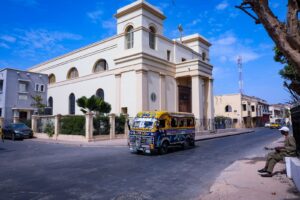
The planned second crossing in Ziguinchor isn’t just an engineering challenge—it’s a political statement with deep regional implications. As the longtime stronghold of former mayor and current Prime Minister Ousmane Sonko, Casamance has suffered decades of isolation, compounded by conflict with the Movement of Democratic Forces of Casamance (MFDC). The original Émile Badiane Bridge, inaugurated in 1984, remains the region’s sole major river crossing, throttling trade flows to Guinea-Bissau and beyond.
Announcing this project sends a dual signal: economic emancipation for a historically marginalized region and a firm pledge to Sonko’s local base. Yet the viability hinges on funding. Comparable West African projects, such as the Rosso Bridge between Senegal and Mauritania (financed by the African Development Bank at €87 million and completed in 2025), rely heavily on multilateral partnerships. The identities of Ziguinchor’s future financiers will dictate when—or if—they break ground.
Digital classrooms and LYNAQE: redefining education for a tech-driven future
The education sector bears the brunt of the 2027 budget, with the 15,000-classroom digitization plan requiring more than just hardware. Achieving seamless high-speed connectivity in areas still lacking fiber optic access demands innovative solutions. Senegal’s advantage? The Sonatel group (Orange’s local subsidiary) has already laid over 20,000 kilometers of fiber nationwide, while the state-owned Sénégal Numérique SA could leverage its network to anchor the initiative.
The LYNAQE program’s 12 model schools aim to redefine pedagogy through equity-focused, digitally integrated curricula, mirroring past initiatives like the 2013 Quality, Equity, and Transparency Initiative. Yet their success will depend on more than buildings and bandwidth. Can Dakar deliver on its promise of a “new educational paradigm” without repeating the pitfalls of underfunded or unevenly distributed resources?
Balancing ambition and austerity: what the 2027 budget reveals
For Faye and Sonko’s government, the 2027 budget is more than a ledger—it’s a referendum on their economic vision. Juggling public expectations for tangible change, investor demands for stability, and promises to Casamance’s voters and urban youth, the margins for error are razor-thin. When the text lands in the National Assembly—now dominated by the Pastef coalition after November 2024’s snap elections—the debate will reveal whether these proposals are destined for the drawing board or the drafting table.