When the fight against terrorism turns against civilians
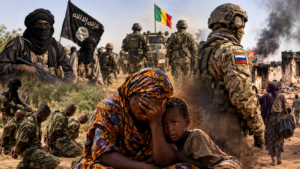
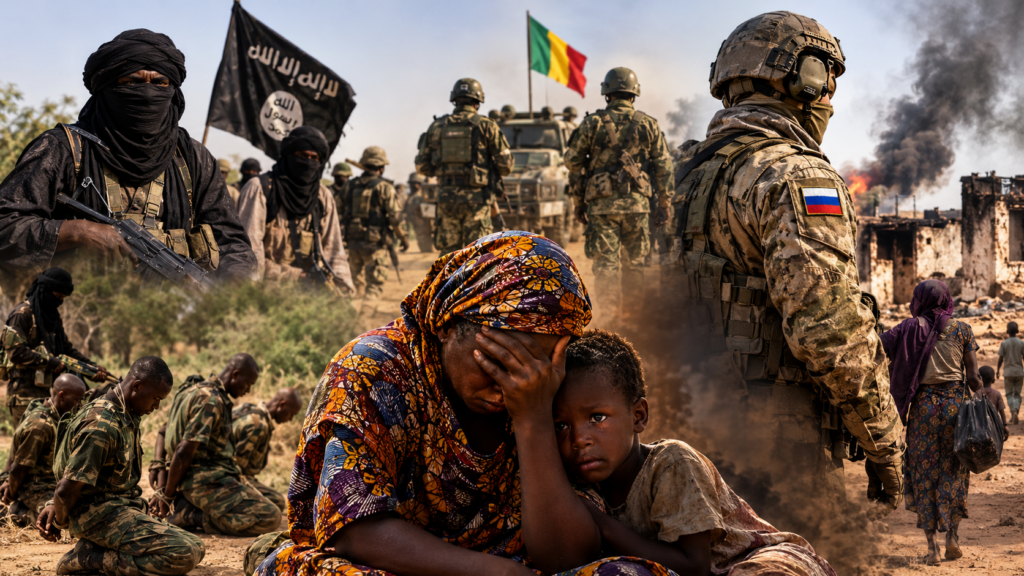
The military campaign in Mali is taking an increasingly heavy toll on civilians, with Human Rights Watch documenting cases where Malian forces, backed by Africa Corps, have caused civilian casualties. This comes at a time when government soldiers themselves are falling victim to deadly attacks by the Group for the Support of Islam and Muslims (JNIM), revealing a crisis where protection for civilians is being eroded from multiple fronts.
While soldiers face relentless assaults, often losing their lives in ambushes or targeted strikes, the communities they are meant to safeguard are caught in the crossfire. Reports indicate that civilians are not only caught between jihadist violence and military operations but are also direct targets of alleged abuses by government-aligned forces. The result is a growing humanitarian crisis where entire villages live under the constant threat of violence, displacement, or worse.
Soldiers in the line of fire: the human cost of jihadist attacks
The JNIM’s attacks on Malian troops have become a grim routine. Soldiers are executed in cold blood, their bodies left in remote areas, while survivors recount harrowing tales of ambushes and raids. These strikes not only decimate military ranks but also weaken public confidence in the government’s ability to protect its people.
Yet, the response from Mali’s armed forces has raised serious concerns. Instead of reinforcing security for civilians, some operations are accused of causing unintended but devastating consequences. Families caught in military sweeps report arbitrary detentions, property destruction, and, in some cases, loss of life. These incidents underscore a dangerous imbalance: while the military struggles against a well-armed enemy, the very citizens it vows to protect are bearing the brunt of collateral damage.
Africa Corps’ partnership under scrutiny: accountability in the balance
The collaboration between Malian forces and Africa Corps has become a defining feature of the country’s counterterrorism strategy. Since Bamako’s military realignment toward Moscow, foreign support has played a critical role in shaping Mali’s security operations. However, as civilian casualties mount, questions are growing about the oversight and accountability of these joint missions.
International humanitarian law demands that all parties regardless of their origin adhere to strict rules of engagement. Yet, with Africa Corps personnel embedded in Malian units, the line between support and direct involvement blurs. This raises urgent questions: Are these forces complicit in actions that violate human rights? Or are they simply failing to prevent abuses committed by their local counterparts? The lack of transparency surrounding these operations only deepens public distrust.
What does success look like in Mali’s war?
The Malian government has repeatedly emphasized its commitment to regaining control over insurgent-held territories. Military victories are celebrated, and territorial gains are highlighted as proof of progress. But these narratives ring hollow for civilians living in fear, their homes destroyed, and their families torn apart by violence.
A true measure of success cannot be found in the number of operations conducted or villages recaptured. It lies in the ability to safeguard lives, uphold the rule of law, and ensure that those who violate human rights whether jihadist groups or state forces are held responsible. Until then, Mali’s security strategy will remain a double-edged sword: cutting down insurgents but also inflicting wounds on the very people it seeks to protect.
Where do we go from here? A path toward accountability and protection
The path forward must prioritize the safety and dignity of Mali’s civilians. Independent investigations into reported abuses must be conducted without delay. Perpetrators whether from JNIM or Malian forces must face consequences under national and international law. Additionally, the role of foreign partners, including Africa Corps, must be reassessed to ensure their support does not inadvertently enable violations.
Civil society organizations, local leaders, and international actors all have a role to play in demanding transparency and accountability. Only through a concerted effort can Mali break free from the cycle of violence that continues to destabilize the nation. The international community must also recognize that military solutions alone will not restore peace justice and protection for civilians must be at the heart of every strategy.
By Rose Njoya — Journalist