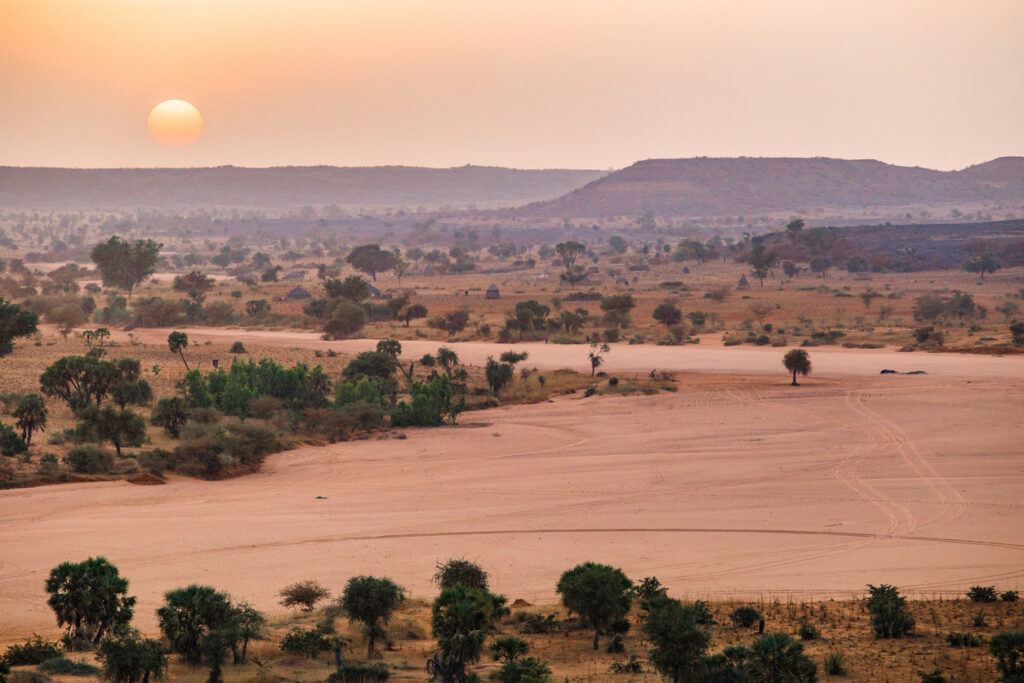
Picture taken about 15 km North-West of Niamey during the dry cooler season in the Sahel
The Sahel, once a focal point of global attention, now fades from headlines amid shifting geopolitical priorities. Conflicts in Ukraine, the Israel-Palestine crisis, and rising tensions in the Democratic Republic of the Congo have diverted focus away from the region. Yet beneath this apparent calm, the Sahel’s decade-long crises continue to deepen, with jihadist violence escalating and authoritarian regimes tightening their grip.
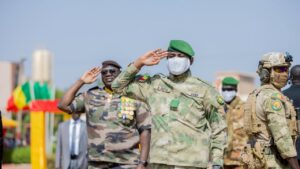
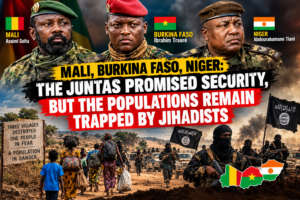
Military juntas in Mali, Niger, and Burkina Faso—collectively known as the Alliance of Sahel States (AES)—vowed to dismantle jihadist networks. Instead, violence has surged. These three nations now rank as the world’s most affected by jihadist attacks, with civilian casualties mounting. The promised transitions to democratic rule have stalled, replaced by prolonged military rule and shrinking civic freedoms.
escalating jihadist threats and collapsing state control
Once considered Africa’s least violent region a decade ago, the Sahel now bears the grim title of the continent’s deadliest. Deaths linked to violent extremism have tripled since 2021, reaching over 11,200 in 2024. Shockingly, state security forces—including Russian-backed Wagner Group mercenaries—may have caused more civilian fatalities than jihadist groups themselves, leaving populations trapped between armed factions and repressive regimes.
Mali: a state besieged by terror
Mali has witnessed a dramatic unraveling since the 2023 expulsion of the UN’s MINUSMA peacekeeping mission. The junta, backed by Russian forces, has clashed with both Tuareg separatists and jihadist groups, labeling all opponents as “terrorists.” In October 2023, Malian forces reclaimed the rebel stronghold of Kidal, but their gains proved fleeting. A July 2024 ambush by the Group for the Support of Islam and Muslims (JNIM)—an Al-Qaeda affiliate—dealt Wagner one of its costliest defeats in the region, with 40 Malian soldiers and 80 Russian mercenaries killed.
By September 2024, jihadists had escalated their boldness, launching simultaneous attacks on a gendarmerie school and Bamako’s military airport, killing over 70 soldiers and destroying the presidential aircraft. These coordinated strikes, targeting exclusively military sites, signaled a strategic shift: the JNIM seeks to undermine junta legitimacy while avoiding civilian casualties—a stark contrast to the Islamic State’s Sahel Province, which rules through fear.
Yet civilians remain prime targets. In July 2024, a wedding massacre in Mopti killed 40 people. In August, Malian military drone strikes in retaliation for the ambush killed at least 20 civilians. As of February 2025, over 50 people died in an ambush near Gao when jihadists targeted a military convoy escorting civilians. Despite these setbacks, Malian polls suggest unwavering public trust in the armed forces—even as their competence falters.
Burkina Faso: militias, massacres, and a state in retreat
Burkina Faso has become a humanitarian catastrophe under military rule. Since the 2022 coup, jihadist groups like the JNIM now operate freely in 11 of the country’s 13 regions. The death toll rose 68% between 2022 and 2023, with 2024 poised to surpass that grim record. The August 2024 attack on Barsalogho—where civilians digging trenches for the army were slaughtered—may have killed between 130 and 600 people, marking one of the deadliest incidents in the region’s history.
State forces have matched jihadist brutality. In February 2024, Human Rights Watch documented the army’s execution of 223 civilians in two villages. Reports later emerged of soldiers mutilating corpses. In March, civilian militias known as the Voluntaries for the Defense of the Homeland (VDP)—officially lauded for counterterrorism—allegedly massacred Peul civilians in Solenzo, including children, elderly, and women. The JNIM retaliated with a deadly attack on a military camp in Diapaga, vowing “vengeance for Solenzo.”
The junta’s solution? Arming civilians. Since 2020, and intensifying after the 2022 coup, the regime has recruited 50,000 VDP fighters with minimal training, arms, and a monthly stipend. Exclusionary recruitment—largely barring Peuls—has fueled ethnic tensions and intercommunal violence. VDP villages become jihadist targets, blurring lines between state forces, militias, and armed groups. Reports in 2024 revealed forced recruitment of political opponents into the VDP, and many fighters are sent into battle as expendable cannon fodder. The result? Burkina Faso now hosts over 2 million internally displaced persons—the highest in the region.
Niger: rising lethality despite relative stability
Niger has faced fewer jihadist attacks than its AES neighbors, but their lethality has surged since the 2023 coup. Military operations have intensified, yet civilian deaths at the hands of both jihadists and state forces have skyrocketed. Since the coup, Nigerian forces killed three times more civilians than in the previous year, mirroring patterns seen across the Sahel.
A 2024 study by the Safeguarding Security Sector Stockpiles initiative found that state forces were attacked 51 times in nine months—a near doubling from 2023. Jihadist groups, including the Islamic State in the Greater Sahara (EIGS), have targeted both civilians and military outposts. In March 2024, 23 soldiers died in an ambush near the Burkina Faso border. In December, twin attacks killed 39 civilians in western Niger. By March 2025, an EIGS assault on a mosque left 44 dead. Though slightly more stable than its neighbors, Niger’s trajectory remains deeply concerning.
authoritarian entrenchment: silencing dissent to prolong power
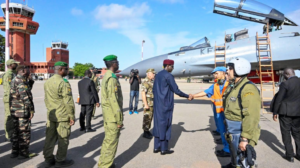
The AES juntas have systematically dismantled democratic institutions to consolidate control. Transitions promised in 2020–2023 have been repeatedly extended, with new constitutions drafted to legalize prolonged rule. In Mali, the junta now aims to stay in power until 2029. Burkina Faso has extended its transition to 60 months, while Niger approved a five-year renewable transition in early 2025. These delays allow regimes to deepen alliances—such as the recent Russian pledge to support the AES joint force—while sidelining regional bodies like ECOWAS.
With territorial control slipping, the juntas have turned to silencing information. Independent and foreign media—including RFI and France 24—have been banned or suspended across all three countries. Journalists face arbitrary arrests, expulsions, and forced conscription. Civil society organizations and political parties have been shuttered, with opposition figures detained or forced into exile. In Burkina Faso, critics are labeled terrorists and abducted; in Niger, foreign passport holders are held at airports to restrict movement. These measures aim to obscure reality: while regimes claim control of 70% of national territory, external analyses attribute the same percentage to jihadist dominance.
global implications: why the Sahel cannot be ignored
The Sahel’s media silence belies its escalating crises. Over 52.7 million people in West Africa faced acute food insecurity between June and August 2025, while 3.1 million were internally displaced across the Sahel by March 2025. Jihadist groups now operate with near impunity, state forces violate human rights with impunity, and democratic backsliding accelerates.
Europe, once a key actor in the region, has scaled back engagement amid competing priorities. Yet disengagement carries risks. Instability in the Sahel fuels migration, radicalization, and regional spillover—threats that transcend borders. The EU’s cautious re-engagement must be strategic: clarifying priorities, rebuilding trust with civil society, and addressing the root causes of violence.
One truth is clear: the Sahel’s silence is not stability. It is a warning.