Empty coffers despite record defense spending
Niger’s escalating security budget—nearing 960 billion CFA francs in 2024—has not translated into lasting safety for its citizens. While billions flow into military hardware, drones, and armored vehicles through mechanisms like the Patriotic Safeguard Solidarity Fund, the persistent absence of transparent performance data leaves a critical question unanswered: where is the evidence that these investments are reducing crime, restoring state presence, or protecting rural communities?
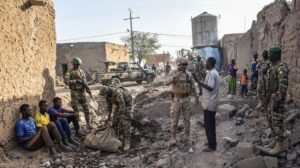
International military spending alone now accounts for 2.2% of Niger’s GDP, with allocations stabilizing between $435 million and $464 million annually from 2024 to 2026. In August 2026, an additional 58.3 billion CFA francs were injected into defense, raising total defense-related expenditures to over 260 billion CFA francs per year—excluding internal security forces. Yet, the human cost remains stark: communities in border regions continue to face daily threats from armed groups, with little visible change in their security conditions.
Asymmetrical warfare demands strategic adaptation, not just firepower
Niger’s security crisis is fueled by asymmetrical threats—hit-and-run attacks, improvised explosive devices, and infiltration across porous borders. The massive investments in high-tech weaponry, including armed drones and armored units, raise concerns about operational relevance.
Critics argue that current spending priorities may be misaligned with ground realities. For example:
- Operational mismatch: Do armored convoys and aerial surveillance effectively counter ambushes on rural roads or night raids in remote villages?
- Crisis-driven allocation: Are funds distributed based on a coherent national security plan, or are they reactionary, responding to immediate crises without long-term cohesion?
- Civilian protection deficit: Are these expenditures restoring essential state services—healthcare, education, and governance—in areas abandoned to militant control?
Without public, verifiable data on outcomes such as crime rates, school reopening rates, or state service restoration, the link between spending and security remains speculative.
Healthcare, education, and roads pay the price
Niger’s defense surge comes at a heavy opportunity cost. In 2025, the national budget was slashed from 3,033 billion to 2,749 billion CFA francs due to economic constraints. Yet even in this constrained environment, defense spending has absorbed a disproportionate share of available funds. Meanwhile, essential public services in peripheral zones—schools, clinics, and road infrastructure—remain underfunded.
This imbalance fuels public discontent and fuels recruitment by armed groups. Parents in conflict zones cite the lack of schools and healthcare as reasons for sending children into militant ranks. Without reinvestment in civilian life, the very engine of insecurity is sustained. Far from breaking the cycle of violence, this militarized fiscal policy may be deepening it.
Where accountability meets national security
Despite claims of budgetary secrecy for national security, the absence of financial transparency in defense spending is no longer acceptable. Over 58.8 billion CFA francs were channeled through the Patriotic Safeguard Solidarity Fund alone—yet no public audit trail exists to trace how these funds were spent or whether they delivered intended outcomes.
Independent oversight must become a cornerstone of defense governance. This includes:
- Regular parliamentary reviews of defense allocations and expenditures
- Third-party audits of procurement and fund utilization
- Public reporting of key budget execution metrics—without compromising tactical confidentiality
Transparency is not a threat to security—it is the foundation of sustainable defense policy and public trust.
From spending to results: redefining national security priorities
The central question is no longer how much Niger spends on its military—but what its citizens actually gain in return. A budget of this magnitude demands measurable returns:
- Verifiable reductions in civilian casualties and displacement
- Reopened schools and functioning healthcare facilities in former militant strongholds
- Restoration of road access and administrative presence across rural zones
Without these benchmarks, defense spending risks becoming a financial black hole—absorbing resources without delivering safety or stability. For a nation facing existential threats, the time has come to shift from a strategy of endless spending to one of measurable impact.
Niger must prove that its skyrocketing defense budget is not just funding an arms race—but restoring peace, opportunity, and dignity for its people.