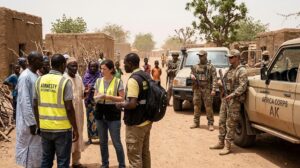
The Sahel region faces a defining question: can Mali and its neighbors absorb a relentless surge of displaced people without collapsing under the strain? With over 322,000 refugees now sheltering within its borders, the country is navigating a humanitarian crisis that refuses to ease. Regional insecurity continues to push families across borders, stretching resources, testing national systems, and raising urgent questions about long-term solutions.
Over half a million people displaced within and beyond Mali’s borders
As of late 2026, Mali is hosting 322,584 refugees and asylum seekers, while 414,524 people remain internally displaced. These figures, presented during a high-level meeting in Geneva, represent only part of a much larger displacement picture. An additional 90,648 Malians have returned home, and 343,091 are refugees living abroad. Between August and September alone, the number of refugees and asylum seekers in Mali rose by 5,396—while internal displacement remained largely unchanged.
But displacement is not confined to Mali. Across the wider Sahel triangle—Mali, Burkina Faso, and Niger—nearly 4 million people have been forced from their homes. Over 818,000 are refugees or asylum seekers, with the rest internally displaced. In Koro, central Mali, nearly 86,000 refugees from Burkina Faso have found sanctuary, a microcosm of a crisis unfolding across multiple nations.
A humanitarian burden shaped by regional insecurity
Conflict and instability have driven families from their homes, with no clear end in sight. For many, exile is a last resort—and for others, return remains out of reach without safety or opportunity. The needs are vast: protection from violence, access to basic services, and sustainable reintegration for those who do go back. While the latest data reveals the scale of displacement, it offers only a glimpse into the daily struggles—housing shortages, food insecurity, and limited access to healthcare—that define life for displaced populations.
Bamako commits to protection and voluntary return
In Geneva, Issa Ousmane Coulibaly, Mali’s Minister of Territorial Administration and Decentralization, highlighted the government’s dual strategy: safeguarding displaced communities and enabling voluntary returns. He underscored recent legal reforms, including the 2024 adoption of a Statelessness Status Act and the creation of a national commission dedicated to addressing statelessness. A newly validated guide now streamlines the process for recognizing stateless status, reinforcing Mali’s legal framework amid ongoing displacement.
The minister emphasized that while the state is committed to welcoming refugees and supporting returnees, the reality on the ground demands coordinated, long-term action. With displacement continuing to rise across the Sahel, the question looms larger: can national policies match the scale of human need?
Strengthening systems for the long term
- Legal protections: New laws and commissions are improving recognition and support for stateless persons and returning citizens.
- Humanitarian aid: Shelter, food, and medical care remain priorities, especially in border regions like Koro.
- Community integration: Efforts are underway to help displaced families rebuild livelihoods and regain stability after trauma.
What comes next for Mali’s displaced populations?
The numbers tell a story of scale—but not of survival. Behind each statistic lies a family, a village, a life interrupted. As Mali grapples with the realities of hosting over 322,000 refugees while managing internal displacement, the path forward hinges on more than policy. It requires sustained international support, regional cooperation, and innovative solutions to break the cycle of displacement.
With no immediate resolution to regional violence, the crisis is far from over. The real test for Mali—and for the global community—will be in turning commitments into action, before more lives are left in limbo.