Is Africa Corps in Mali repeating the same human rights violations as Wagner?
Even after the transition from Wagner to Africa Corps in Mali, reports of civilian harm and systematic impunity persist. A recent inquiry reveals that alleged war crimes—including extrajudicial killings, torture, and arbitrary detentions—continue to plague regions such as Ségou, Mopti, and Tombouctou. The shift in security forces raises a critical question: Has the change of allegiance from Moscow to Paris truly altered the risks faced by Malians?
Mali’s shifting security landscape: What exactly changed after Wagner?
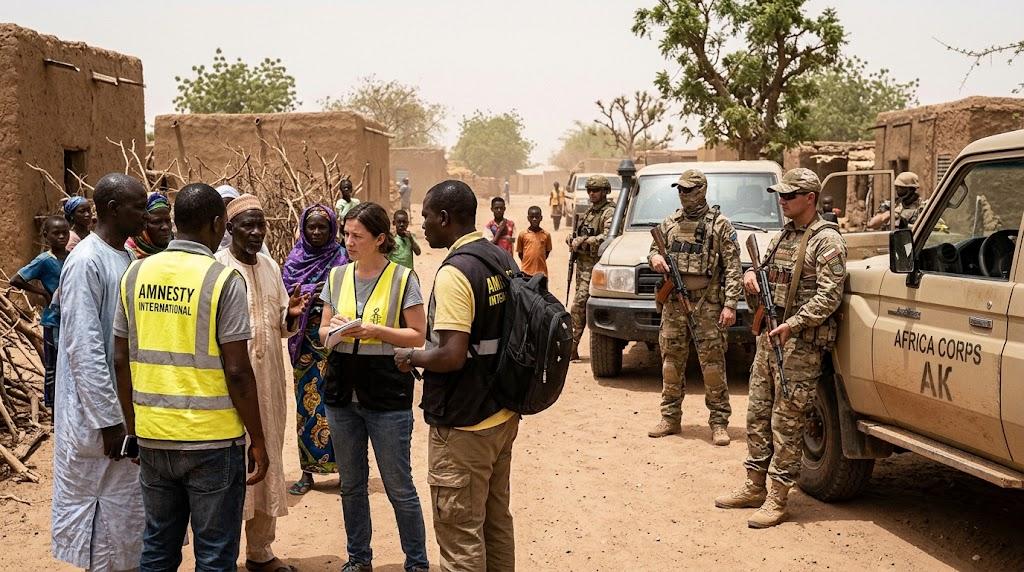
Amnesty International’s investigation highlights a stark reality: the operational transition from Wagner to Africa Corps has not reduced civilian casualties. Between June 2023 and December 2025, at least 34 civilians were killed in seven border communities near Mauritania during joint military operations involving Malian forces and Wagner fighters. Survivors describe executions, mutilations, and indiscriminate attacks on markets and homes.
On March 16, 2025, a drone strike allegedly killed 16 people at a market in Ejdeir. In November of the same year, another strike on a residential area in Tangata claimed seven lives. Investigators found no evidence of armed group presence or military targets in these locations, raising serious questions about the targeting process and accountability mechanisms.
Torture and arbitrary detentions: A pattern that refuses to break
Africa Corps’ deployment has not halted the use of torture, according to testimonies from detention centers in Léré and Nampala. Fifteen survivors recount harrowing experiences, including waterboarding, electric shocks, beatings with rods and rifle butts, and sexual violence. At least five detainees died from injuries or poor conditions. Many were held for months without access to legal counsel or family contact, their detention documented yet unchallenged.
The report implicates both Wagner-affiliated personnel and Malian soldiers in these abuses, with some soldiers participating in interrogations while witnessing torture. Establishing clear lines of responsibility and accountability remains a challenge, especially as independent investigations are reportedly absent.
Ethnic targeting and collective punishment: The human cost of counter-terrorism
Amnesty’s findings point to a disturbing trend: the disproportionate targeting of Fulani, Arab, and Tuareg communities. Accused of sympathizing with armed groups such as the Group for Supporters of Islam and Muslims (JNIM), individuals have faced extrajudicial killings, property destruction, and theft of livestock and valuables. These communities, already displaced and economically strained, bear the brunt of a conflict where counter-terrorism measures often blur with collective punishment.
The report documents cases where entire households were burned, livestock slaughtered, and personal belongings looted—actions that violate international humanitarian law and deepen humanitarian crises in already fragile regions.
Bombori 2026: A new wave of allegations under Africa Corps
In July 2026, reports emerged from the Fulani quarter of Bombori, where approximately 80 men were rounded up, beaten, and interrogated about militant activities. Six men trying to escape were shot; three others were reportedly executed. The incident, corroborated by multiple accounts, casts doubt on whether Africa Corps has implemented stricter human rights safeguards than its predecessor.
Questions persist about the chain of command, the oversight of Russian personnel operating under Africa Corps, and the role of Malian authorities in ensuring compliance with both national and international law.
Impunity thrives in the absence of justice
Since 2023, Amnesty International has identified no formal judicial proceedings against Malian state forces for civilian abuses. This lack of accountability fosters a climate of fear, discouraging victims and witnesses from coming forward. Limited access to conflict zones further hampers the documentation of crimes, allowing perpetrators to operate with virtual immunity.
Africa Corps’ presence was expected to bring reforms. Instead, patterns of abuse—once associated with Wagner—continue under a new banner. Without independent inquiries, transparent operations, and concrete accountability measures, the cycle of violence against Mali’s civilians appears unbroken.
The way forward: Can civilian protection be prioritized over military gains?
For lasting peace in Mali, the protection of civilians must take precedence over military strategy. Africa Corps must demonstrate a clear departure from past practices by implementing robust oversight, allowing independent human rights monitors, and ensuring that every allegation of abuse is thoroughly and impartially investigated. The Malian government must also uphold its obligations under international law, including prosecuting those responsible for war crimes.
Otherwise, the transition from Wagner to Africa Corps may only represent a change in name—not in the grim reality endured by millions of Malians caught in the crossfire.