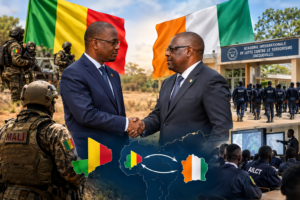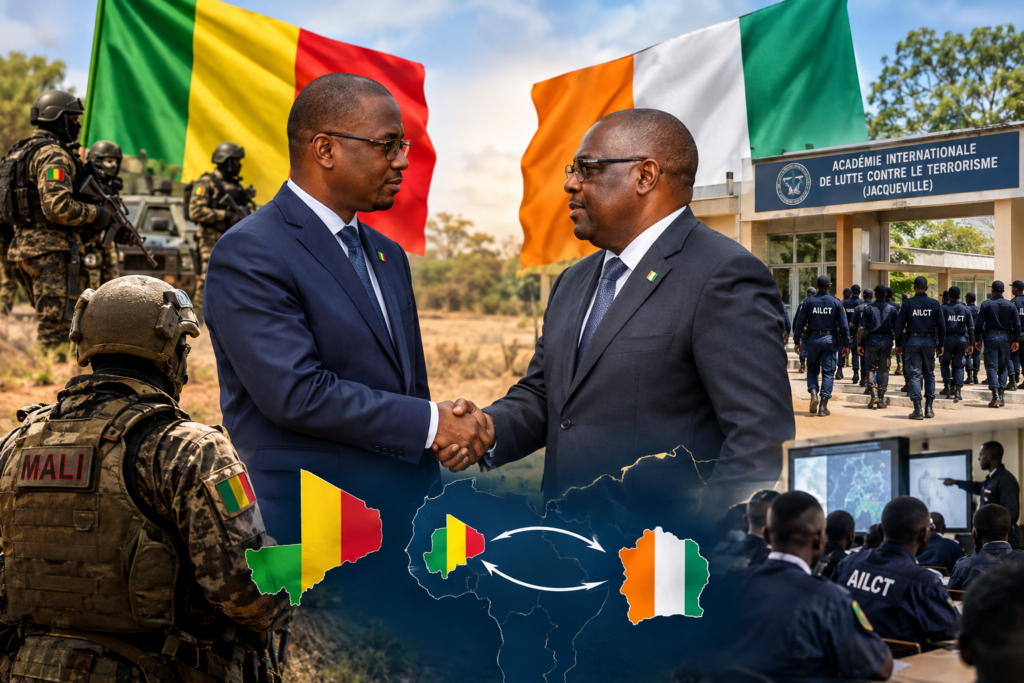
As armed groups escalate attacks across Mali’s northern and central regions, the government is intensifying efforts to strengthen its counterterrorism strategy. A high-level meeting scheduled between intelligence chiefs from Bamako and Abidjan highlights a pivotal question for Malian authorities: could Côte d’Ivoire’s proven model offer a blueprint for more effective security operations in Mali?
The coming meeting in Bamako and what’s at stake for Malian citizens
On October 15, 2026, the Director-General of Côte d’Ivoire’s intelligence agency, Vassiriki Traoré, will visit Bamako at the invitation of his Malian counterpart, Modibo Koné, head of the National State Security Agency (ANSE). While both nations have grappled with regional terrorism, Côte d’Ivoire has recently made significant strides in intelligence sharing, inter-agency coordination, and targeted training of security personnel.
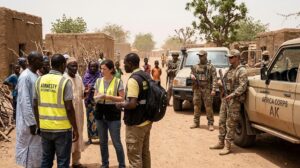
For Malian authorities, the stakes are high. Persistent violence has displaced thousands of civilians and disrupted local economies, particularly in border areas. A more robust counterterrorism approach could mean better protection for communities, reduced disruption to agriculture and trade, and a stronger climate for investment and recovery.
What Mali could gain from Côte d’Ivoire’s security playbook
Côte d’Ivoire established the International Counter-Terrorism Academy (AILCT) in Jacqueville in 2021 to standardize training for security forces, improve intelligence gathering, and enhance operational readiness. The academy serves as both a training hub and a regional cooperation platform, offering courses that cover strategic, operational, and tactical levels.
Mali could benefit from:
Specialized training programs tailored for counterterrorism units
Improved real-time intelligence sharing and analysis protocols
Enhanced inter-service coordination between military, police, and judicial bodies
Public protection strategies designed to reduce civilian casualties during attacks
The academy also fosters peer-to-peer exchanges among regional officials—a model that could help Mali adapt best practices without compromising its operational sovereignty.
Balancing sovereignty with practical security gains
Mali has long prioritized reclaiming territory and dismantling armed groups, but persistent insecurity shows that military action alone is insufficient. Effective counterterrorism demands more than firepower it requires foresight, intelligence, and collaboration.
Côte d’Ivoire’s experience offers a path forward, but success depends on Mali’s ability to integrate these insights into its own systems. That means investing in training, upgrading intelligence infrastructure, and maintaining open channels with neighboring governments. Regional threats do not respect borders; neither should solutions.
The road ahead: from dialogue to measurable action
The Bamako meeting is a step toward deeper security cooperation, but the real test lies in what follows. Will Mali adopt elements of Côte d’Ivoire’s model? Will new joint task forces emerge? Will training centers in Mali begin aligning with the standards set in Jacqueville?
The answers will shape Mali’s ability to protect its people, preserve economic stability, and regain control over regions under threat. For now, the conversation is open—and with lives and livelihoods on the line, so is the urgency to act.
By Rose Njoya — Journalist