The eruption at Goumeri W8 wasn’t just an industrial mishap—it was a turning point. In Niger, this oil crisis has unraveled a web of economic dependencies, environmental risks, and diplomatic strains, leaving citizens, businesses, and the national economy at a crossroads. As black gold spills across the Agadem basin, the ripple effects touch everything from local livelihoods to international trade balances.
What began as a technical failure on September 25 has since ballooned into a test of Niger’s ability to safeguard its resources—and its people.
Industrial emergency, lingering uncertainties
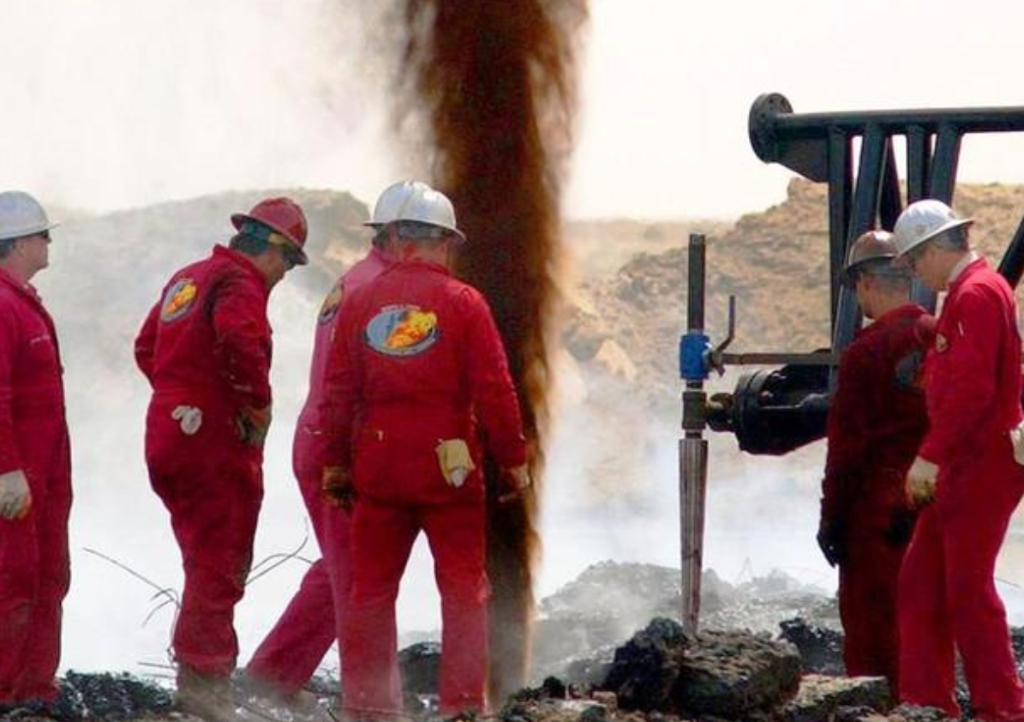
The September 25 blowout at Goumeri W8 sent crude oil and gas surging across the site, damaging the platform and threatening neighboring wells like W3 and W4. By October 12, Niger’s Ministry of Petroleum acknowledged the incident as exceptionally severe, with two workers hospitalized in its immediate aftermath. Containment efforts were underway, but the crisis was far from resolved.
In an industry where precision is non-negotiable, every misstep can escalate a bad situation. Delays, poor risk assessment, or uncoordinated interventions could turn a manageable incident into an enduring disaster. Yet questions persist: who is leading the response? How are decisions being validated? And how are the various teams—Chinese, Algerian, and Nigerian—aligning their efforts?
Reports suggest that as CNPC Niger Petroleum’s teams worked to contain the leak, Nigerien authorities called in Algerian technicians, sparking disagreements over operational control. While the full details remain unverified, the tension underscores a critical issue: in a high-stakes crisis, who holds the reins?
Algeria’s role: between technical aid and diplomatic friction
Niger’s request for Algerian expertise, including representatives from Sonatrach, reflects a strategic move to leverage regional knowledge in a complex technical crisis. Officially, the mission was framed as supplementary support—standard practice in oil industry emergencies. But context matters.
Prior tensions over operational parameters at the SORAZ refinery, where adjustments to hydrocarbon flow raised technical concerns, add layers to the current dispute. While these claims lack independent confirmation, they highlight a pressing need: clear, defined chains of command. On a site operated by CNPC, any intervention by external experts must integrate seamlessly into established safety and operational protocols.
Transparency is not optional. In a situation where rumors spread faster than official statements, clarity is the only way to prevent misinformation from derailing the response.
Environmental risks: beyond the surface containment
The immediate focus may be on securing the well, but the environmental and human costs demand equal attention. Efforts to contain the spill have included constructing sand berms and digues with bulldozers—a temporary fix that does little to address subsurface contamination.
Oil buried under sand is not oil neutralized. Hydrocarbons can linger, seeping into groundwater or releasing toxic vapors. For local communities, the stakes are immediate: is their water safe? Are their grazing lands contaminated? Are exposed workers and residents receiving adequate health monitoring? And who will bear the cost of long-term remediation?
By October 20, officials claimed the spill was contained, with plans underway to drill a relief well (Goumeri W-8R) between October 24 and December 26. Yet this step, while crucial, does not absolve authorities and operators from answering a fundamental question: what is the full extent of the damage, and how will it be undone?
The $400 million fault line
To grasp why Goumeri W8 has become a flashpoint, look beyond the wellhead. China’s role in Niger’s oil sector is mammoth, with investments spanning production, the Zinder refinery, and export pipelines. This partnership has built an integrated oil industry—but also a deep financial and operational interdependence.
In April 2024, Niger secured a $400 million advance from CNPC against future oil revenues, to be repaid over 12 months at a 7% interest rate. This deal provided immediate liquidity but also tied Niger’s financial stability to its ability to meet export targets. With cumulative investments in the sector reported at $8.34 billion by mid-2026—shared between Niger’s state entities, CNPC, and SOPAMIN—the stakes could not be higher.
Every dispute now carries added weight. For Niger, the priority is ensuring oil revenues translate into tangible national benefits. For China, contractual obligations and operational continuity are non-negotiable. Balancing these interests requires more than goodwill—it demands verifiable data, clear agreements, and a shared commitment to stability.
Niamey’s ultimatum: a warning shot with economic echoes
On October 13, 2026, Niger issued a 45-day ultimatum to CNPC, WAPCO, and SORAZ, demanding compliance with contractual obligations. The government cited alleged failures in revenue repatriation, local employment quotas, and other state-mandated commitments. Foreign Minister Bakary Yaou Sangaré highlighted staggering figures: over 3 trillion CFA francs in unrepatriated export earnings since April 2024, and a 17.4 billion CFA franc shortfall for the public treasury.
These claims, if substantiated, could have far-reaching consequences. But their verification hinges on access to contracts, financial records, and corporate responses. The ultimatum signals Niger’s growing assertiveness in enforcing its rights. Yet the unresolved question remains: will the companies meet the demands, or will the stand-off escalate?
For now, Goumeri W8 serves as both a symbol and a stress test. It is a reminder that Niger’s sovereignty over its resources cannot come at the expense of safety or stability.
China’s evolving partnership under scrutiny
The relationship between Niger and China is entering a new phase, where economic cooperation alone cannot smooth over rising tensions. Niger’s push for greater control over oil revenues and stricter adherence to agreements reflects a broader demand for economic sovereignty.
Yet sovereignty is not just about issuing ultimatums. It is about oversight—controlling operations, auditing finances, enforcing contracts, and protecting communities. CNPC remains a linchpin in Niger’s oil sector, and prolonged conflict could jeopardize not only daily operations but also the long-term trust needed to secure investments and expertise.
This does not mean Niger should back down from its demands. Rather, it must pursue them through verifiable processes, transparent negotiations, and strategies that safeguard its long-term interests. The challenge? Extracting greater economic benefits without destabilizing the very infrastructure that generates those benefits.
Algeria’s delicate position in a high-stakes equation
Algeria, too, finds itself in the spotlight. By involving Sonatrach, Niger sought regional expertise to tackle an unprecedented crisis. On the surface, this is a pragmatic move. But in the current climate, every action is viewed through the lens of Niger’s relationship with China.
There is no public evidence that Algeria seeks to displace China in Niger’s oil sector. However, the lack of clarity over roles and responsibilities invites speculation. Who approves operations? Who is accountable for on-site decisions? How are expert recommendations incorporated into the operator’s plan?
Without clear answers, diplomatic narratives risk overshadowing the urgent need for technical solutions. Algeria’s expertise is welcome, but it must complement—not complicate—the existing operational framework led by CNPC, all under Niger’s regulatory oversight.
Beyond rivalries: the imperative of fact-finding
Amid swirling suspicions and unanswered questions, one thing is clear: assumptions and political interpretations cannot replace hard facts. Niger has announced an independent investigation into the Goumeri W8 incident, which must establish the cause of the eruption, evaluate early response decisions, clarify responsibilities, and assess environmental harm.
The findings must be made public. Only then can Niger distinguish between technical challenges, contractual disputes, and genuine safety failures. All parties—CNPC, Sonatrach, and Nigerien authorities—must present their evidence openly. A crisis of this magnitude demands rigorous scrutiny, not a trial by speculation.
Goumeri W8: a litmus test for Niger’s resource sovereignty
At its core, the Goumeri W8 crisis poses a question Niger can no longer avoid: how can it assert control over its natural resources without compromising the safety of its people or the stability of its partnerships? The $400 million advance, the billions invested in oil infrastructure, Niger’s financial demands, and the presence of Algerian experts each tell part of this story. Together, they reveal a partnership where economic, technical, and diplomatic interests are now inextricably linked.
But oil does not wait for diplomatic resolutions. Until the well is secured and contaminated land is restored, the risks persist. For Niger’s authorities, the dual priority is clear: demand accountability from partners while ensuring the industrial crisis does not leave a legacy of environmental and human harm.
For China and Algeria, the task is to prove that their collaboration with Niger can operate transparently, with respect for each party’s role and a focus on tangible results. At Goumeri W8, the real question is not which partner will emerge stronger from this standoff. It is whether Niger can turn its oil wealth into a engine of development—or whether it will become another source of division.