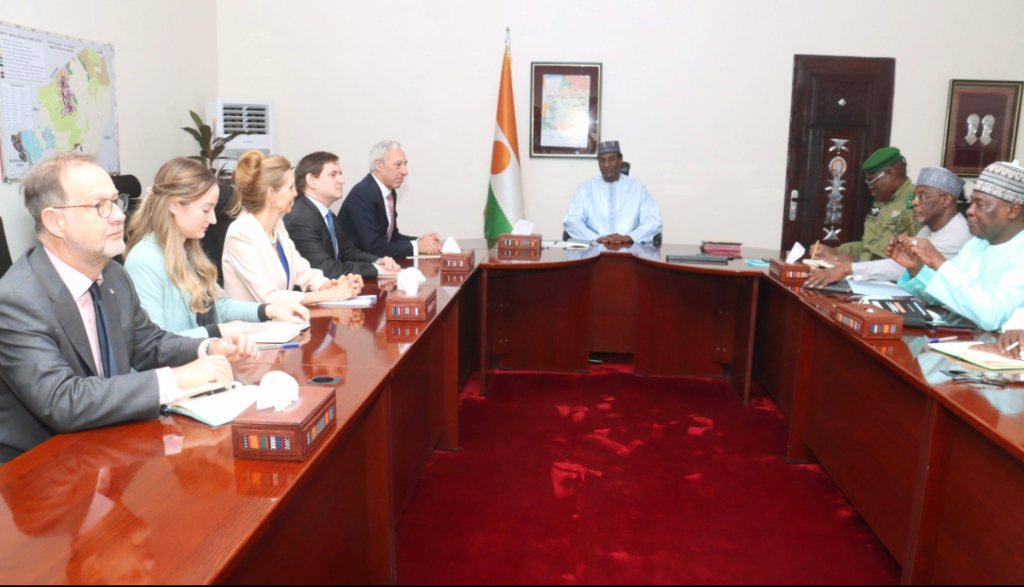
The diplomatic accreditation of Niger’s Adamou Moumouni to the European Union’s top institutions has sparked questions about whether Niamey is softening its stance toward Brussels—or merely maintaining a fragile dialogue amid deep divisions. His presentation of credentials to António Costa and Ursula von der Leyen on 22 October signals a formal commitment to engagement, yet the underlying disputes over governance, humanitarian aid, and the fate of former president Mohamed Bazoum remain unresolved.
Since the July 2023 coup that ousted Bazoum, Niger’s relationship with the EU has been marked by repeated clashes. Yet, despite the strain, diplomatic channels endure. What does this persistence mean for the people of Niger, local businesses, and the broader economy?
Diplomatic ties strained but not severed
The military takeover in Niger reshaped its partnerships with Western allies, with Brussels at the forefront of the tension. Disagreements have centered on political governance, the direction of humanitarian support, and the treatment of Bazoum, whose continued detention has drawn sharp criticism from European institutions.
Moumouni’s accreditation formalizes Niger’s representation in Brussels, ensuring its voice is heard even as political frictions persist. But does this institutional continuity pave the way for deeper reconciliation, or is it merely a stopgap to keep lines of communication open?
The humanitarian aid dispute and its economic ripple effects
A November 2024 row over €1.3 million in EU flood relief exposed deeper fissures. Niger’s transitional government argued the aid—earmarked for NGOs like the International Committee of the Red Cross—had been allocated without adequate consultation. Authorities insisted they had the capacity to address the crisis independently and demanded the EU halt operations, even summoning the bloc’s ambassador, Salvador Pinto da França, for clarification.
Niger’s stance reflected a broader demand for sovereignty over aid distribution, while the EU defended its principles of neutrality and independence in humanitarian action. The impasse led to mutual recalls of ambassadors, disrupting cooperation and leaving flood victims in limbo. For local businesses dependent on stability, such diplomatic standoffs translate into uncertainty, stalled projects, and economic strain.
Bazoum’s detention: a flashpoint with economic consequences
In March 2026, the European Parliament’s resolution demanding Bazoum’s unconditional release underscored the EU’s concerns over Niger’s democratic backsliding. The vote—524 in favor, 29 abstentions—highlighted the growing divide between Niamey’s assertion of national sovereignty and Brussels’ insistence on democratic norms.
Beyond the political symbolism, the dispute has tangible impacts. Prolonged sanctions or reduced cooperation could deter foreign investment, complicating Niger’s economic recovery. Local enterprises, particularly those tied to international trade or aid-dependent sectors, face heightened risks as diplomatic tensions linger.
Navigating diplomacy amid regional instability
Niger’s decision to maintain a diplomatic presence in Brussels, despite the friction, reflects pragmatic realities. The Sahel’s security and economic challenges demand international engagement, even when political alignment is lacking. For the EU, dialogue with Niamey remains critical to addressing regional instability and humanitarian crises.
Yet, true progress requires more than ceremonial gestures. Meaningful coordination on aid, a resumption of high-level discussions, or compromises on contentious issues like Bazoum’s status could signal a shift. Until then, the accreditation of Moumouni serves as a placeholder—a reminder that relations are preserved, but not yet repaired.
What’s next for Niger-EU relations?
Is Niger reversing course after years of tension? The answer remains unclear. The accreditation neither signals surrender nor guarantees reconciliation. It underscores the necessity of dialogue, even as fundamental disagreements endure.
For Niamey, the challenge lies in balancing sovereignty with the need for international partnerships that sustain its economy and stability. For Brussels, the task is to uphold its principles while maintaining avenues for cooperation. The coming months will reveal whether this diplomatic step leads to a thaw—or merely prolongs the status quo.