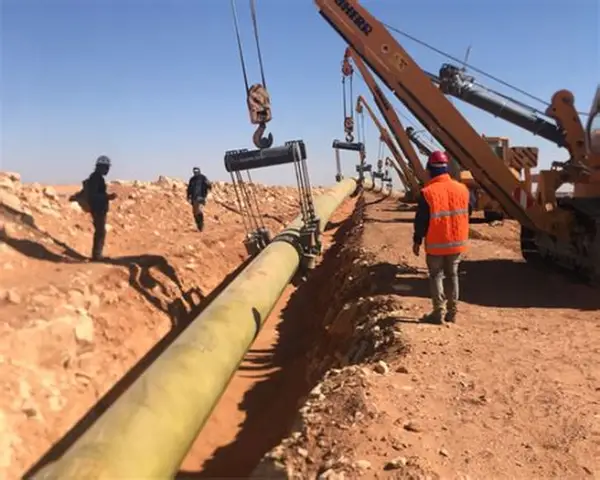
The African energy landscape is on the verge of a historic evolution, with Niger now occupying a central position in this transformation. Following the formal launch on June 4 in collaboration with strategic partners Algérie and Nigeria, the Trans-Saharan Gas Pipeline (TSGP) has moved into a critical implementation phase. This massive infrastructure project, extending over 4,000 kilometers, aims to deliver Nigerian natural gas through the heart of Niger to the European continent.
For the authorities in Niamey, this initiative represents far more than a technical achievement; it is a manifestation of national economic sovereignty and an elevation of the country’s geopolitical standing on the global stage.
The Nigerien corridor: A bridge for African energy
The TSGP route is designed to link the extensive gas fields of the Niger Delta to the established Algerian pipeline networks, specifically Medgaz and Transmed, which are directly connected to the European market. At the center of this complex logistical equation lies Niger, serving as the essential transit link.
Key project specifications:
- Total length: Exceeding 4,000 km, with a substantial segment crossing Niger from south to north.
- Annual capacity: Approximately 30 billion cubic meters of natural gas intended for export.
- Estimated investment: Upwards of $13 billion.
By providing a secure and optimized transit corridor, Niger is establishing itself as an indispensable facilitator of the Abuja-Alger axis. Rather than being a passive observer, the nation intends to leverage its unique geographical position to stimulate its domestic economy.
Significant local benefits and development prospects
Beyond the macroeconomic advantages and transit royalties that will bolster the national treasury, the TSGP serves as an unprecedented catalyst for Niger’s industrial development. Preliminary agreements include specific clauses for local gas supply.
Electrification and energy access: A portion of the transported gas will be reserved to fuel local thermal power plants, a vital step toward eliminating the country’s energy deficit.
Job creation and technical training: The construction phase and the subsequent operation of compression stations on Nigerien soil are expected to generate thousands of direct and indirect jobs. This will encourage the growth of local expertise in gas engineering.
A strategic response to European requirements
The timing of this project is highly significant. The European Union is currently engaged in an aggressive strategy to diversify its energy sources and reduce its long-term dependence on Russian gas, viewing the TSGP as a premier alternative.
As Niger becomes a guarantor of this energy flow toward Europe, its diplomatic influence with Western partners is set to increase. The country is demonstrating its capacity to participate in large-scale, complex multinational industrial partnerships.
Navigating challenges: Security and capital
While there is significant optimism in Niamey, Alger, and Abuja, the project faces notable hurdles. The primary challenge involves securing a 4,000 km route that passes through Sahelian regions currently facing chronic security issues. The three partner nations must coordinate their defense forces with unprecedented precision to protect the infrastructure.
Furthermore, finalizing the financial structure and attracting international investment will require political stability and a transparent regulatory environment. The Nigerien government is currently working to send these positive signals to global markets.
The commencement on June 4 signaled the dawn of a new era. By positioning itself as the vital link between Nigeria’s gas wealth and Algérie’s distribution infrastructure, Niger is no longer merely reacting to regional geopolitics; it is actively defining them. The success of the TSGP could permanently establish Niger as a major energy hub connecting sub-Saharan Africa to the European continent.