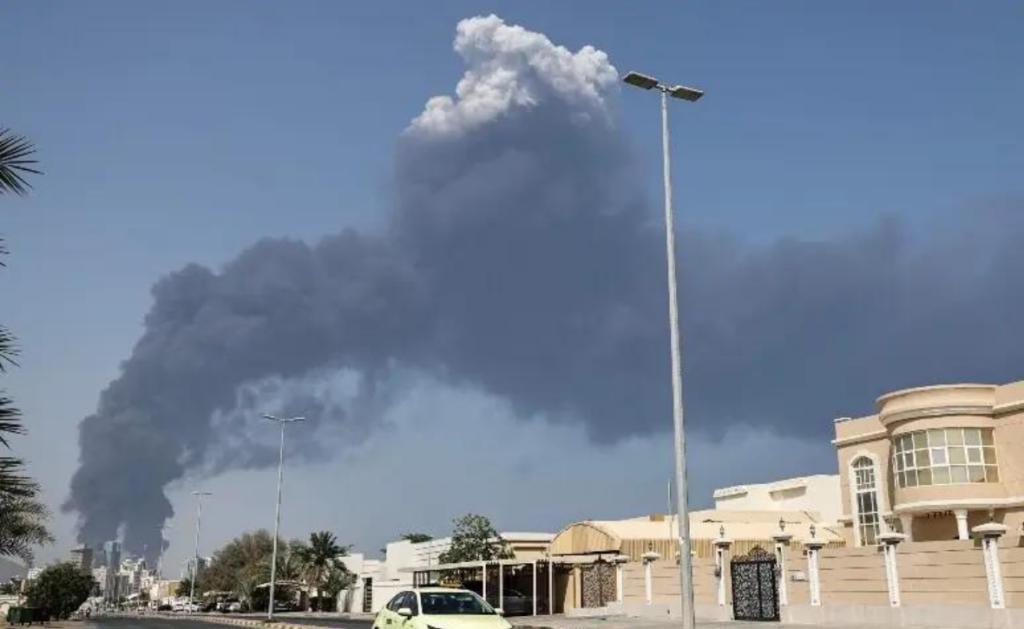
The latest military confrontation between Iran and the United States is sending shockwaves through the Persian Gulf, with direct strikes on key American installations in Bahrain and Kuwait raising fears of a broader regional conflict. These attacks mark a dangerous escalation, escalating tensions beyond traditional battlegrounds and putting civilian populations and economies in the crosshairs.
Regional security shaken by targeted strikes
The Persian Gulf is bracing for fallout after Iran launched precision strikes on military infrastructure hosting American forces in Bahrain and Kuwait. Authorities in both countries confirmed intercepting hostile drones, though the full extent of damage remains under assessment. These operations signal a geographic expansion of hostilities, transforming local military sites into potential flashpoints for wider conflict.
Bahrain’s critical role in US military operations
Bahrain remains a linchpin in Washington’s Middle East strategy, hosting the US Fifth Fleet—tasked with safeguarding maritime security across the Persian Gulf, Gulf of Oman, and surrounding waters. Recent aerial threats intercepted near the kingdom underscore the growing risk of spillover amid rising regional hostilities.
Reports of attacks targeting the Sheikh Isa Air Base, including military radar systems, have stoked concerns, though no independent verification confirms direct strikes on the Fifth Fleet’s headquarters. Social media claims of a massive assault on the base remain unconfirmed, leaving officials cautious about assessing the impact.
Kuwait’s strategic vulnerability in the crossfire
The Ali Al Salem Air Base in Kuwait, a cornerstone of US military logistics in the region, has also come under fire. Kuwaiti defense systems intercepted incoming drones, highlighting the increasing strain on Gulf states’ security infrastructure.
Kuwait’s geographic position and military cooperation with Washington make it a sensitive player in the Iran-US standoff. The challenge now is balancing strategic alliances with the US while avoiding entanglement in a direct confrontation with Tehran.
From military strikes to economic tremors
The escalation threatens far more than regional stability—it endangers global energy markets by targeting the Strait of Hormuz, a chokepoint for oil and gas shipments. Any prolonged disruption could trigger surging fuel prices, shipping costs, and broader economic instability.
Beyond military installations, commercial shipping and energy infrastructure remain at risk, turning a regional conflict into a potential international crisis. The stakes could not be higher as the world watches to see if these attacks trigger a broader conflagration.
Diplomatic paralysis amid unrelenting hostilities
The latest strikes have further eroded trust between Washington and Tehran, complicating already fragile diplomatic efforts. With each retaliatory action, the window for dialogue narrows, leaving regional mediators like Oman and Qatar struggling to broker de-escalation.
For the US, protecting military personnel and assets in the Gulf is non-negotiable. For Iran, maintaining a credible deterrent against American operations remains a core strategic objective. The outcome of the coming hours will determine whether this crisis spirals into a full-blown regional war or finds a precarious off-ramp.
The Persian Gulf now stands at a precipice: every passing moment brings the region closer to either containment—or catastrophe.





