The high stakes of Burkina Faso’s curriculum overhaul: why a fragmented history fails the nation
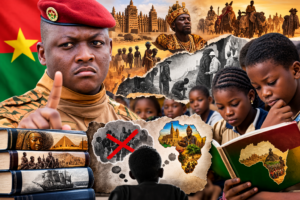
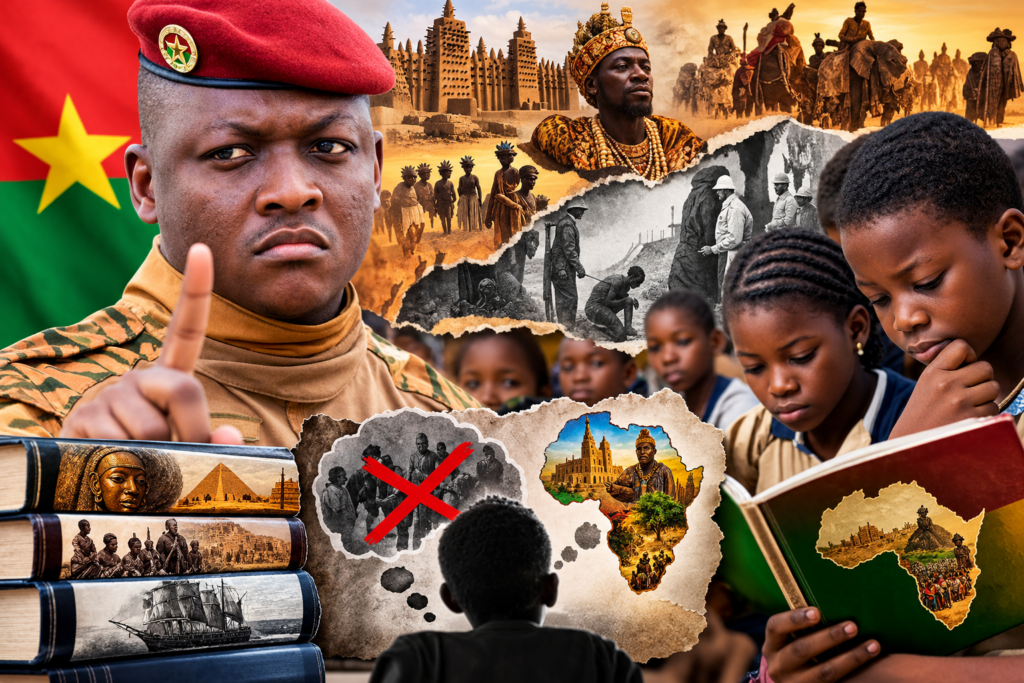
The Government of Burkina Faso has embarked on an ambitious overhaul of its history and geography curricula, aiming to “decolonize” textbooks used in schools across the country. While the initiative seeks to address long-standing omissions in the portrayal of African history, it raises a critical question: can revising educational content truly mend historical injustices if it restricts young minds to a narrow interpretation of the past?
The nation stands at a crossroads. History is not merely a chronicle of colonial suffering or Western conflicts it is a mosaic of civilizations, empires, trade networks, scientific discoveries, and social transformations. Teaching history demands rigor: acknowledging past wounds without reducing an entire people’s identity to those wounds alone. Failing to strike this balance risks leaving students ill-equipped to navigate the complexities of their own heritage and the world around them.
Education as a tool for healing or a source of new divisions?
At its core, the curriculum reform seeks to correct historical distortions by amplifying African narratives. This goal is commendable. Schools should illuminate the continent’s pre-colonial glories, highlight African resistance movements, and restore the legacies of figures long marginalized by mainstream education. Yet, these efforts must not devolve into a counter-narrative where colonialism is the sole defining force of Burkina Faso’s past.
History is not a zero-sum game. A curriculum that frames the nation’s identity in opposition to colonial powers or external influences risks fostering a generation of learners whose understanding of the past is constrained by ideological boundaries. Such an approach may inadvertently replace one form of bias with another, substituting a selective memory for a comprehensive one. The true measure of educational success lies not in promoting a single ideological lens but in fostering critical thinking enabling students to critically assess multiple perspectives.
Beyond ideology: crafting a history that reflects Burkina Faso’s full identity
Consider the lessons from neighboring nations where history curricula have undergone similar transformations. A balanced curriculum does not pit national history against global events; it weaves them together. Teaching students about the Mossi Kingdoms, the trans-Saharan trade networks, or the contributions of figures like Samori Touré should not come at the expense of understanding the broader forces that shaped the modern world from the Renaissance to the Industrial Revolution. Only by situating Burkina Faso’s story within a global context can students grasp the dynamics of power, exchange, and societal evolution that define contemporary Africa.
This does not mean replicating a foreign model. Instead, it requires adhering to a timeless principle: education should illuminate, not indoctrinate. It should explain, not polarize. And most importantly, it should equip students with the intellectual tools to engage with their heritage not trap them within it.
The economic and social consequences of a truncated historical narrative
The stakes extend beyond classrooms. A history curriculum that omits key facets of the past whether the complexities of European societies or the internal dynamics of African civilizations can have real-world repercussions. Young Burkinabè deserve a foundation that prepares them for the challenges of a rapidly changing world. Without a nuanced understanding of history, they may struggle to engage in informed debates on governance, identity, or economic policy. Future leaders, entrepreneurs, and citizens need more than a simplified narrative; they require the ability to analyze, contextualize, and learn from the past.
Moreover, a fragmented historical education can deepen societal divisions. If the curriculum frames history as a series of grievances rather than a tapestry of shared experiences, it risks entrenching generational resentment. Conversely, a curriculum that presents history as a living, evolving discipline one that acknowledges both triumphs and failures can foster unity and purpose. The goal is not to assign blame but to cultivate a citizenry capable of understanding the roots of contemporary challenges and envisioning solutions.
What future does Burkina Faso want to build? A question of memory and legacy
The curriculum reform is not just about textbooks; it is about the kind of society Burkina Faso aspires to become. Will the next generation inherit a history that is comprehensive and thought-provoking, or one that is ideologically confined and emotionally charged? The answer lies in the choices made today.
Repairing historical injustices does not mean erasing inconvenient truths from the record; it means ensuring that all truths glorious and painful alike are presented with context and depth. Students must learn not only about the injustices their ancestors endured but also about the mechanisms that enabled those injustices, the responsibilities involved, and the lessons they hold for the future. Only then can the past serve as a guide rather than a burden.
The path forward demands courage: the courage to confront uncomfortable truths, the wisdom to avoid simplistic narratives, and the foresight to prepare young minds for an increasingly interconnected world. By embracing a history curriculum that reflects the full spectrum of Burkina Faso’s past, the nation can empower its youth to shape a future where memory is a tool for progress not a source of division.
By Rose Njoya — Journalist