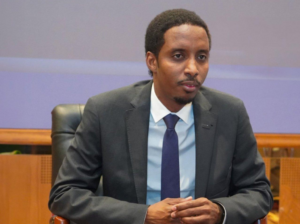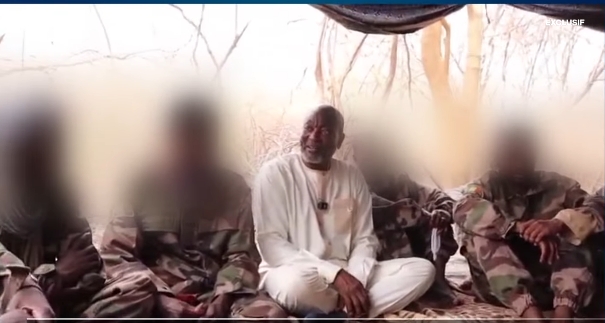
A striking image has sent shockwaves through Mali’s social media landscape, revealing the stark reality of the country’s fractured sovereignty. The photograph captures exiled opposition leader Oumar Mariko alongside 17 recently freed hostages, liberated by the Group for the Support of Islam and Muslims (JNIM), an al-Qaeda-affiliated militant faction operating in the Sahel. While the rescued individuals represent a humanitarian triumph, the circumstances of their release underscore a troubling void in state authority.
the missing hand of the state
The central paradox of this episode lies in the absence of Mali’s official institutions. How did a political figure, openly opposed to Bamako’s transitional authorities, manage to negotiate and secure the release of hostages in regions where the national security apparatus has repeatedly faltered? This private mediation lays bare a critical erosion of sovereignty, where informal actors, rather than government forces, wield influence over security and dialogue in vast swathes of the country.
For analysts and citizens alike, the incident signals a deeper crisis: an administration struggling to assert its control, ceding ground to non-state entities that fill the power vacuum. In this context, the state’s inability to protect its people without external intermediaries raises urgent questions about legitimacy and governance.
terrorist groups weaponize humanitarian gestures
The JNIM’s involvement in the hostage release was far from altruistic. It represented a calculated propaganda move, designed to serve two key objectives. First, the group sought to recast its image as a responsible actor capable of negotiating in good faith—a stark contrast to its violent reputation. Second, by positioning itself as the de facto authority in certain areas, the JNIM undermined local officials, further eroding trust in Bamako’s institutions.
As one observer noted, “Sovereignty is not declared in speeches from Bamako—it is proven by the state’s ability to safeguard its citizens without relying on intermediaries.”
the hidden costs of shadow diplomacy
funding extremism
Behind the scenes of this apparent humanitarian success lies a darker truth: the financial lifeblood of terrorism. While no official ransom payments are acknowledged, covert financial transactions almost certainly occurred to secure the hostages’ freedom. These funds, though unspoken, directly fuel future attacks against Mali’s armed forces and civilians, perpetuating a deadly cycle of violence.
legitimizing insurgents
Negotiating with armed groups implicitly legitimizes their control over territory. For rural communities, this sends a dangerous message: survival may depend on aligning with those who wield power on the ground, rather than the distant and ineffective state. Such concessions embolden insurgents, strengthening their grip on regions where government presence is minimal or absent.
two faces of a divided nation
Mali today is a country of stark contrasts, split between two realities:
- The institutional Mali: In the capital, Bamako, official rhetoric emphasizes military progress and the imminent reconquest of all territories. The government paints a picture of strength and resilience, despite mounting challenges.
- The rural Mali: Beyond the cities, in the countryside, survival often trumps allegiance. Populations in these areas, abandoned by the state, navigate a harsh reality where cooperation with armed groups becomes a necessity for daily existence.
the road to reclaiming state authority
Oumar Mariko’s mediation was not merely a humanitarian footnote—it was a clarion call. By allowing private actors and opposition figures to handle matters as critical as national security, Mali risks deepening its fragmentation. The challenge for Bamako is no longer just military; it is existential. Restoring state authority requires more than firepower—it demands a return to legitimacy, presence, and trust in regions where the sound of gunfire drowns out the voice of government.