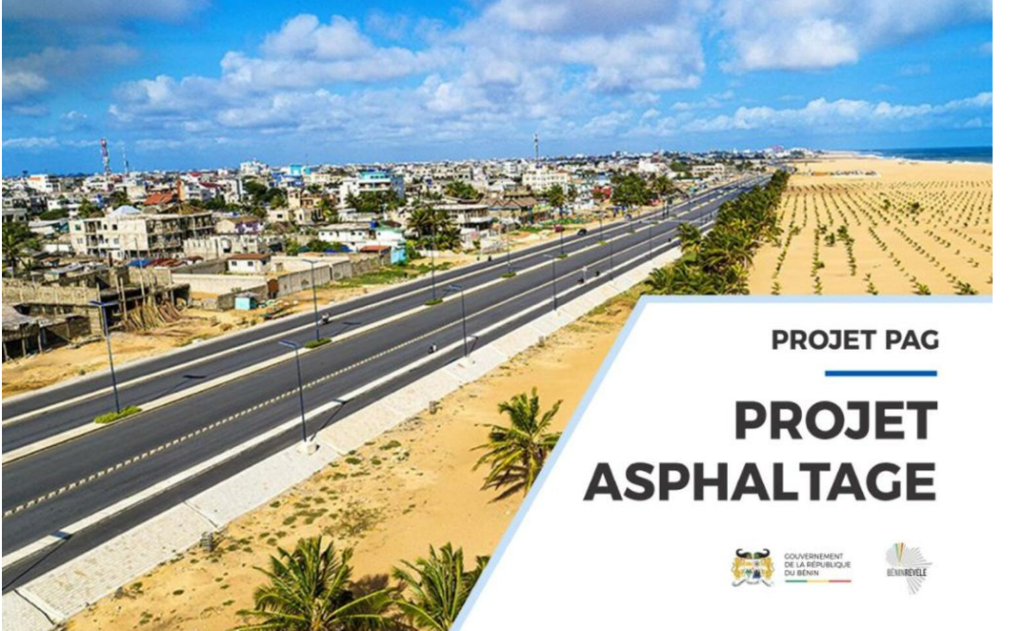
A decade of relentless construction has reshaped the Beninese landscape, leaving an indelible mark on the nation’s infrastructure. Patrice Talon’s presidency will be remembered for one defining legacy: over 2,000 kilometers of asphalt roads, transforming once-dusty paths into modern thoroughfares. From bustling urban centers to remote villages, the transformation is undeniable—a testament to visionary leadership and unwavering dedication to progress.
from craters to corridors: the asphalt transformation
When Patrice Talon assumed office in 2016, Benin’s roads were a patchwork of potholes and delays. The new president recognized a critical truth: mobility is the backbone of economic growth. Without reliable transportation, commerce stagnates, healthcare remains out of reach, and education becomes a daily struggle. His solution? A nationwide road-building crusade that would redefine connectivity.
Today, the results speak volumes. Official records confirm that more than 2,000 kilometers of roads have been paved, with an additional 1,100 kilometers currently under construction. This monumental effort has eliminated dust-choked streets, treacherous potholes, and seasonal flooding that once isolated communities. For families living along these routes, the changes are life-changing—children attend school safely, farmers transport goods efficiently, and traders access markets without delay.
urban renewal through asphalt: the asphaltage initiative
The Asphaltage program stands as the crown jewel of Talon’s infrastructure legacy. This ambitious urban renewal project has breathed new life into Benin’s cities, from the economic hub of Cotonou to the political capital of Porto-Novo, and beyond. Key cities like Parakou, Abomey-Calavi, Djougou, Kandi, and Ouidah have undergone dramatic transformations, shedding their neglected facades for sleek, modern streets.
In Cotonou, the impact is palpable. Gone are the days of hazardous potholes, muddy traps during rains, and suffocating dust storms. What remains is a city reborn—where commuters glide smoothly to work, children play in clean neighborhoods, and emergency services respond with unprecedented speed. The Asphaltage initiative didn’t just improve roads; it restored dignity and pride to entire communities.
bridging borders: benin’s role in regional connectivity
Patrice Talon’s vision extended far beyond national borders. Strategic cross-border projects have cemented Benin’s position as a regional economic gateway. The Cotonou-Niamey highway, a vital artery linking Benin to Niger, has been fully rehabilitated, enabling seamless trade and transportation. Similarly, the Fisheries Road has undergone massive upgrades, including the construction of modern bridges and expanded lanes to ease congestion. Travel times that once stretched for hours now take mere minutes, positioning Benin as an indispensable trade corridor for neighboring nations.
a nation’s pride: the ripple effects of better roads
The true measure of Talon’s road revolution lies not just in statistics, but in the hearts and minds of the people. Beninese citizens no longer view road construction as a distant promise—they now ask, “Which town will be paved next?” This shift in mindset reflects a collective pride in progress. Tourists marvel at the clean, well-maintained streets, while foreign investors flock to Benin, confident in its infrastructure and economic potential. Local economies have flourished, with new markets sprouting alongside freshly laid asphalt, and once-isolated villages now thriving as part of a connected network.
Under Talon’s leadership, asphalt became more than a construction material—it became a symbol. A symbol of progress, resilience, and national pride. An unshakable legacy that transcends borders and generations. For the people of Benin, these roads are more than pathways; they are the foundation of a brighter future.