Court blocks UNIS attempt to halt Sonko’s assembly presidency
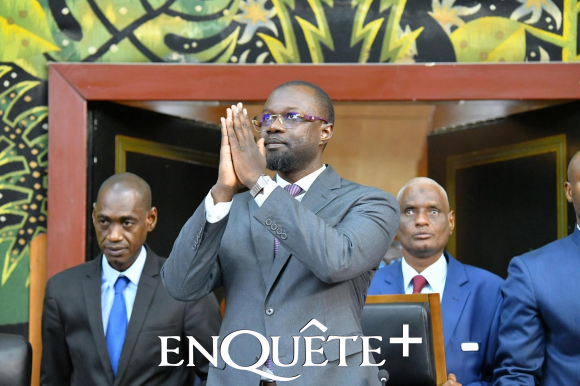
Bamako — The Supreme Court has dismissed a fast-track injunction filed by the National Union for Integrity and Sovereignty (UNIS) aimed at suspending the installation of Ousmane Sonko as President of the National Assembly. The decision follows an initial ruling that declared UNIS’s request inadmissible, prompting the opposition movement to escalate its legal challenge to the full bench of the highest court.
The UNIS statement, issued by its president Amadou Gueye, condemned the 25 June 2026 ruling by the Supreme Court’s judge in chambers, describing it as creating a “negative conflict of jurisdiction” and amounting to “denial of justice”. The organization argued that the order disregards the legal basis of its action and leaves the administrative act issued by the Assembly Bureau beyond judicial oversight.
The dispute began after the Constitutional Council declared itself incompetent on 17 June 2026, stating that the contested act was administrative rather than legislative. UNIS responded by filing both an annulment claim and a request for an injunction to suspend the act temporarily. However, the Supreme Court’s judge rejected the injunction on grounds of separation of powers, refusing to interfere in the Assembly’s internal affairs.
UNIS countered that the judge’s reasoning was legally flawed. The movement asserted that by classifying the Assembly Bureau’s act as an “administrative act of integration”, the Constitutional Council had implicitly recognized the Supreme Court’s jurisdiction over the dispute. According to UNIS, the refusal to hear the injunction leaves no court willing to rule on the matter, effectively creating a legal vacuum.
The organization warned that such an interpretation could lead to a “lawless space” within the Assembly Bureau, enabling unchecked administrative decisions. Despite the setback, UNIS confirmed it would pursue its annulment claim on the merits before the Supreme Court. It has requested that the full bench convene to rule on jurisdiction and resolve what it calls a “threat to legal certainty”. The group called on magistrates to assert their constitutional role in clarifying the balance between the executive, legislative, and judicial branches.