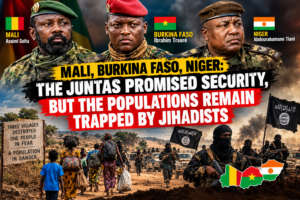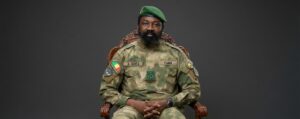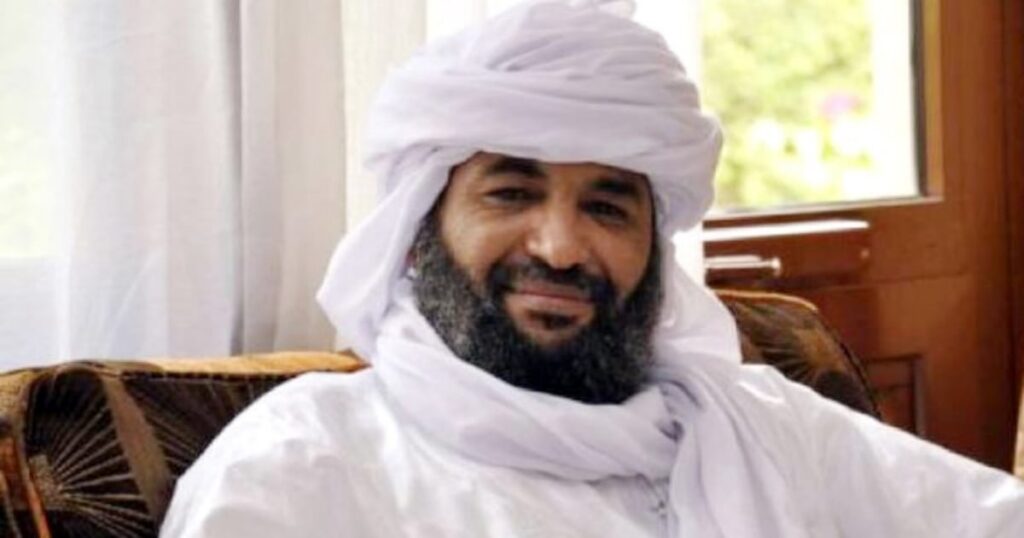
Mali’s transitional authorities have escalated their fight against armed groups by announcing substantial financial rewards for the capture of key jihadist commanders and rebel leaders. Among those now targeted is Iyad Ag Ghaly, a former Tuareg rebel and diplomat who heads the Group for the Support of Islam and Muslims (JNIM), established in 2017.
a wanted man across the Sahel
Iyad Ag Ghaly remains the most hunted figure in the Sahel region, subject to United Nations sanctions and listed as a terrorist by the United States. The International Criminal Court has also issued an arrest warrant against him, charging him with war crimes and crimes against humanity.
His organization, JNIM, operates alongside the National Movement for the Liberation of Azawad (MNLA)—a predominantly Tuareg rebel faction—whose fighters recently joined forces to launch coordinated assaults against government forces in late April. These offensives marked an unprecedented escalation in violence, striking multiple strategic positions across Mali.
high-profile losses and escalating threats
The coordinated attacks resulted in significant casualties, including the death of Mali’s Defense Minister, Colonel Sadio Camara, who was killed in a suicide bombing at the age of 47. Camara, a central figure in the current military leadership in Bamako, had been instrumental in shaping the junta’s security policies.
In response, the Malian government issued a formal statement broadcast on national television, outlining bounties for six individuals believed to be orchestrating the violence. The rewards range from substantial sums for top JNIM commanders to lesser but still significant amounts for other rebel figures.
financial incentives in exchange for intelligence
The Ministry of Security and Civil Protection declared its commitment to combating terrorism and safeguarding national stability through financial incentives. The statement read, «We will reward reliable, actionable information leading to the arrest or elimination of these wanted individuals.»
It emphasized that the targets are accused of masterminding attacks that have endangered civilian lives and property across Mali—a nation grappling with chronic insecurity since 2012.
The surge in violence has been driven by the combined actions of JNIM, the Islamic State in the Greater Sahara, and various armed community-based groups, all exploiting weak governance and porous borders to expand their influence.