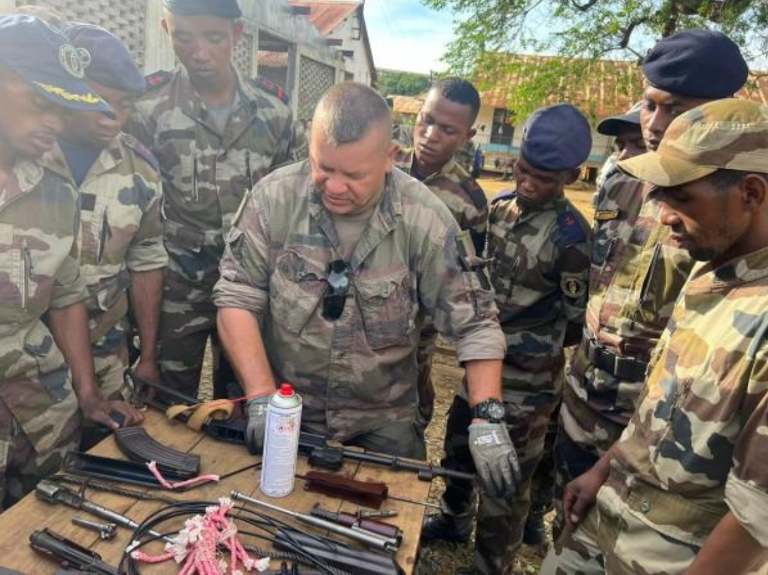
Antananarivo’s growing military cooperation with Moscow has triggered fresh concerns in Washington, as US officials warn that replicating Russia’s Sahel security model in the Indian Ocean could deepen instability across Southern Africa. Analysts warn that the consequences of this strategic pivot extend far beyond defense deals, potentially altering regional power balances and maritime security landscapes.
US cautions Antananarivo against repeating Sahel security pitfalls
The United States has voiced strong reservations over Madagascar’s deepening defense ties with Russia, cautioning that the Kremlin’s approach to security cooperation in the Sahel has failed to deliver lasting stability. During a November 2026 briefing, African Command officials emphasized that the model—characterized by heavy reliance on private military contractors and abrupt shifts away from Western partners—could undermine Madagascar’s long-term security and economic resilience.
Why Russia’s Sahel strategy sparks American alarm
Washington points to recent developments in Mali, Burkina Faso, and Niger as cautionary examples. Despite increased Russian military support—delivered primarily through the Defense Ministry’s Africa Corps—violent extremist groups have intensified attacks, exposing the fragility of Moscow’s security model. Officials argue that this track record raises serious questions about whether similar engagements in Madagascar would yield better outcomes for regional stability.
The US assessment underscores a broader concern: that African nations turning to Russia for security assistance risk trading short-term gains for persistent instability, particularly where governance and counterinsurgency capacity remain weak.
Madagascar’s military partnership with Russia gathers momentum
Since 2025, Madagascar’s defense collaboration with Russia has expanded rapidly under President Colonel Michaël Randrianirina. Moscow has supplied advanced military equipment, including surveillance drones and small arms, while Russian trainers have conducted joint exercises with Malagasy forces. A high-level diplomatic engagement followed in early 2026, when Randrianirina met with Vladimir Putin in Moscow, resulting in multiple agreements on defense, trade, and infrastructure projects.
These developments reflect a broader shift in Madagascan foreign policy—one that prioritizes defense autonomy and non-alignment amid shifting global alliances. Yet, critics argue the move could expose the country to unforeseen risks, including sanctions risks, maritime vulnerability, and strained relations with Western partners.
Mozambique’s conflict and the Indian Ocean security dilemma
Washington’s warnings extend beyond Madagascar to neighboring Mozambique, where Islamist militant groups linked to the Islamic State have escalated attacks in the resource-rich Cabo Delgado region. US officials warn that if Russia’s Sahel model is adopted in Southern Africa, extremist networks could exploit power vacuums and weak governance to expand their influence.
The strategic importance of the Mozambique Channel—one of the world’s busiest shipping lanes—adds urgency to US concerns. Over 20% of global oil shipments and vital trade routes between Asia, Europe, and Africa pass through this corridor, making its security a matter of international interest.
Growing extremist threats in coastal waters
Recent intelligence suggests that Islamist factions are adapting tactics to target maritime infrastructure, including fishing vessels and offshore gas installations. Analysts caution that increased Russian involvement without robust governance reforms could inadvertently fuel these threats, complicating regional counterterrorism efforts.
Can Madagascar balance Moscow and Washington without losing sovereignty?
Despite its objections, the US has stopped short of imposing penalties or coercive measures. Instead, Washington is reportedly focusing on strengthening maritime security cooperation with Antananarivo, offering training, intelligence sharing, and infrastructure support to counter extremist threats.
For Madagascar, the challenge lies in navigating a delicate geopolitical tightrope. The country must weigh the immediate benefits of Russian defense cooperation—such as rapid arms deliveries and training—against the long-term risks of dependency, potential isolation from Western aid, and exposure to global sanctions regimes.
As global powers compete for influence in the Indian Ocean, Madagascar finds itself at a crossroads. Will it deepen ties with Russia to secure military capabilities, or prioritize partnerships with Western allies to preserve access to trade, investment, and development funds? The choices made today could reshape the region’s security architecture for decades to come.
The economic stakes: trade, tourism, and foreign investment
Beyond defense, Madagascar’s pivot toward Russia carries implications for its economy. Tourism, a key sector contributing over 10% of GDP, could face disruptions if Western tourists or investors perceive instability. Similarly, foreign direct investment in mining, agriculture, and infrastructure may become collateral damage in a climate of heightened geopolitical rivalry.
Meanwhile, Russia’s growing presence in ports and logistics hubs—particularly in Toamasina and Nosy Be—raises questions about long-term ownership and control of critical infrastructure. Critics warn that such arrangements could limit Madagascar’s policy autonomy and leave it vulnerable to external pressure.
What’s next for Antananarivo’s foreign policy?
With no immediate sanctions or punitive measures announced, Madagascar retains room to maneuver. However, the US has signaled it will watch closely to ensure any Russian partnerships do not replicate the failures seen in the Sahel. Diplomats suggest that Antananarivo may pursue a “balanced engagement” strategy—leveraging Russian defense support while maintaining channels for Western development aid and trade.
Yet time is of the essence. As extremist groups in Mozambique escalate attacks and global powers intensify their rivalry, Madagascar’s decisions will determine whether its Indian Ocean ambitions lead to stability—or deeper instability.





