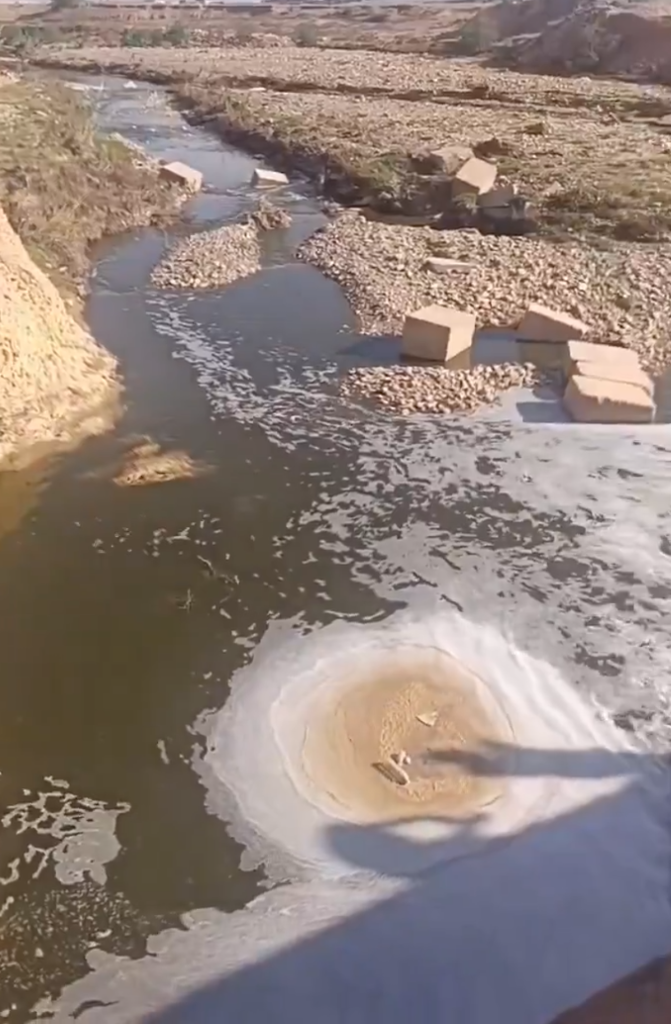
The fragile relationship between Algeria and Morocco has found itself at the center of a new environmental crisis after authorities in Tlemcen reported alarming levels of pollution in the Oued Mouilah river system. What began as a local concern about water quality has escalated into a potential diplomatic standoff, with Algeria pointing to industrial and domestic waste flows originating from across the border.
Environmental disaster threatens regional water security
The Oued Mouilah, which feeds into the critical Hammam Bougara Dam, has shown disturbing levels of contamination. Authorities in Tlemcen have detected elevated concentrations of nitrites, heavy metals, and pharmaceutical residues, alongside elevated microbiological readings. These pollutants pose a direct threat not only to aquatic ecosystems but also to the health of communities relying on water from the dam.
The contamination risks disrupting water treatment processes, increasing purification costs, and exacerbating existing water scarcity challenges in Algeria’s western regions. With climate change tightening water availability and population growth driving higher demand, the stakes could scarcely be higher.
Cross-border pollution claims spark fresh diplomatic tensions
Algerian officials have stated with growing confidence that the pollution originates from industrial and domestic discharges in Morocco, traveling via the Oued Isly before entering Algerian territory through the Oued Mouilah. While the accusation remains unproven without independent scientific verification, it has already fueled diplomatic friction at a time when relations between Algiers and Rabat remain tense.
Analysts warn that without transparent data sharing and joint environmental assessments, the dispute risks shifting from a technical water management issue to a sovereignty and state responsibility debate—especially given the strategic importance of shared water resources in the Maghreb.
What the data shows (and what it doesn’t)
Laboratory results indicate the presence of:
- High nitrite concentrations—linked to agricultural runoff and industrial effluents
- Trace levels of heavy metals including lead and cadmium—common in mining and manufacturing discharges
- Pharmaceutical residues—suggesting untreated domestic wastewater entry
- Elevated fecal coliform counts—indicating sewage contamination
However, current findings do not conclusively establish the exact source of each contaminant. Experts emphasize that without upstream sampling in Morocco, reverse trajectory modeling, and isotopic fingerprinting of pollutants, definitive attribution remains impossible.
Could international law be the next step?
In response to the escalating crisis, regional lawmakers have called for the matter to be referred to international environmental bodies such as the United Nations Environment Programme (UNEP) or the International Court of Justice (ICJ). Algeria has not formally filed a claim but has signaled readiness to invoke the principle of transboundary environmental harm prevention, enshrined in international accords such as the UN Watercourses Convention.
Such a move would compel both nations to engage in joint investigations, risk assessments, and mitigation planning—potentially reshaping bilateral cooperation—or further entrenching existing divisions.
From river to diplomacy: a resource that refuses to respect borders
With both countries grappling with severe water stress, the Oued Mouilah pollution case underscores a harsh reality: water does not recognize political boundaries. As rainfall patterns shift and aquifers shrink, shared rivers like the Mouilah become not only ecological lifelines but also flashpoints for conflict.
To avert a deeper crisis, urgency must be placed on:
- Independent hydrological and toxicological audits covering the entire river basin
- Real-time water quality monitoring stations at bilateral checkpoints
- Establishment of a joint Algerian-Moroccan environmental task force
- Public disclosure of all findings to restore trust among affected communities
The coming weeks will reveal whether this environmental emergency can be resolved through cooperation—or whether it will become another chapter in the already strained Algerian-Moroccan relationship.





