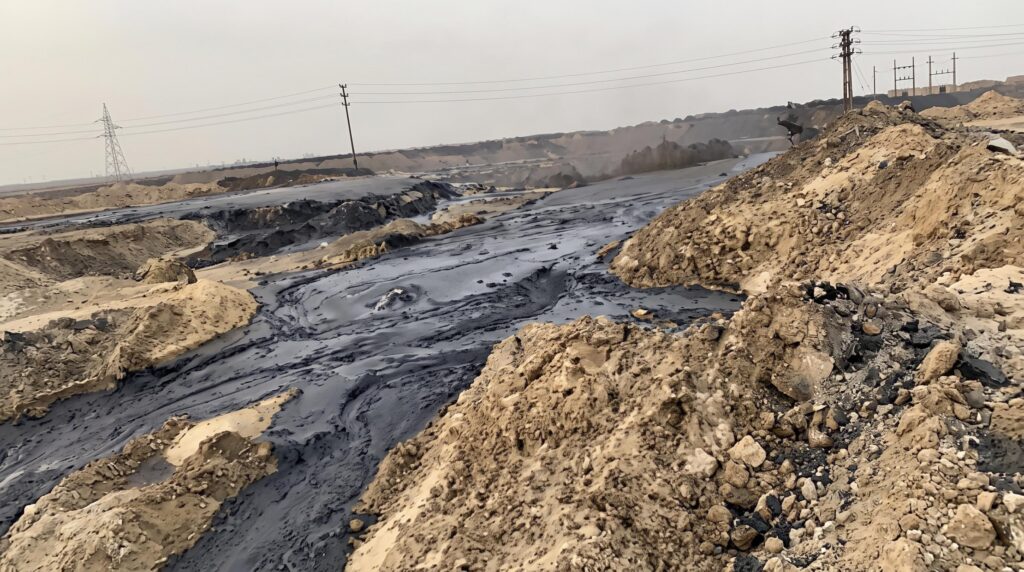
What the Agadem blowout means for Niger’s fragile environment
The uncontrolled eruption at the Goumeri W-8 oil well in the Agadem basin has sent shockwaves through Niger’s environmental and economic landscape. With crude oil and gas spewing uncontrollably, the incident has exposed the severe vulnerabilities of a region already struggling with water scarcity and climate pressures. The immediate concern is the potential contamination of soil and groundwater, which could devastate local ecosystems and the livelihoods of communities that depend on them.
How the spill threatens Niger’s lifelines
The Agadem basin is a critical area for both economic and ecological reasons. Pastoral activities, small-scale agriculture, and fragile ecosystems rely on the region’s limited water resources. A persistent oil leak could poison these vital sources, leading to long-term degradation that would be nearly impossible to reverse. The presence of toxic hydrocarbons in the environment also poses serious health risks to workers and nearby communities, particularly those already exposed to harsh climatic conditions.
Unanswered questions and growing public anxiety
Despite emergency containment efforts, key concerns remain unaddressed. Are water supplies already compromised? Which areas should residents avoid? What safeguards are in place to prevent further contamination? The government’s response so far has been met with skepticism, as officials have yet to provide transparent, verifiable data on the spill’s impact or the reliability of containment measures. Without independent assessments, public trust in official assurances remains fragile.
The China-Niger oil partnership under scrutiny
The Goumeri W-8 disaster has intensified scrutiny of the oil partnership between Niger and China, a collaboration central to Niamey’s economic strategy. The China National Petroleum Corporation (CNPC) operates the Agadem fields, providing the technical expertise and infrastructure needed to extract and transport Niger’s crude. However, the opacity surrounding contract terms, revenue sharing, and environmental obligations has fueled distrust. Financial agreements, such as the $400 million deal signed in 2024, have raised questions about who truly benefits from Niger’s oil wealth.
Is China’s role hindering Niger’s sovereignty?
Niger’s military government has repeatedly emphasized economic sovereignty, yet its dependence on foreign expertise—particularly from China—undercuts this ambition. Tensions have flared in the past, including the expulsion of Chinese officials in 2025 over disputes in the oil sector. The Agadem crisis raises fresh concerns: Could political disagreements distract from critical industrial safety and environmental protection measures? The answer will depend on how both governments respond to the fallout.
Can the Niger junta balance sovereignty and environmental safety?
The military-led government faces a defining test of its commitment to both economic independence and environmental stewardship. If sovereignty means anything, it must translate into enforceable safety standards, transparent contracts, and mechanisms to hold operators accountable. The public deserves clarity on the causes of the blowout, the risks to their health, and the steps being taken to prevent future disasters. Without these guarantees, the promise of oil-driven prosperity risks becoming an environmental and social liability.
What Niger must do to reclaim control
To restore confidence, the government must take decisive action. This includes publishing the findings of the technical investigation into the Goumeri W-8 incident, commissioning independent environmental audits, and establishing a transparent compensation framework for affected communities. Addressing these demands is not just about damage control—it’s about proving that sovereignty extends beyond rhetoric to tangible protection of people and resources.
From promise to peril: Agadem’s cautionary tale
The oil spill at Agadem is more than an industrial accident; it is a turning point for Niger. For a country grappling with poverty, climate change, and political instability, the environmental fallout could exacerbate existing crises. The real challenge for Niamey is not just to resume oil production but to ensure that this vital industry operates within a framework of accountability and sustainability. The alternative—allowing oil to become a curse rather than a blessing—would be a betrayal of the nation’s future.
For the hundreds of thousands of Nigeriens who call the Agadem region home, the question is simple: Will their government prioritize their survival over short-term economic gains?