Will Benin’s urban centers finally deliver on the promise of livability, affordability, and resilience by the end of the decade? As the country advances its sustainable cities agenda, the stakes couldn’t be higher for millions of residents who face daily challenges in housing, mobility, sanitation, and climate resilience.
Why the shift toward sustainable cities matters now
The Fourth International Habitat Forum (FIC 2026), held in Cotonou from October 8–10, 2026, positioned urban transformation as a national priority. At the heart of the discussions was a critical question: how can Benin’s cities evolve from growing urban centers into thriving, inclusive, and environmentally responsible communities? With housing shortages, traffic congestion, waste management crises, and flood risks threatening daily life, the need for action is immediate.
The forum, themed “African Territorial Economies: Accelerating the Transition to Low-Carbon Urbanism,” emphasized that sustainability isn’t just about carbon footprints—it’s about creating tangible improvements in quality of life. Better housing, cleaner neighborhoods, reliable public transport, and resilient infrastructure are not abstract goals—they’re essential to improving how people live, work, and move every day.
Urban planning that brings services closer to people
Quality of life begins with intelligent urban layout. When schools, hospitals, markets, and workplaces are scattered across distant zones, residents face long, expensive commutes. Dispersed urban planning also strains public services and increases pollution. The solution lies in integrated zoning that clusters essential services within walking or short transit distance.
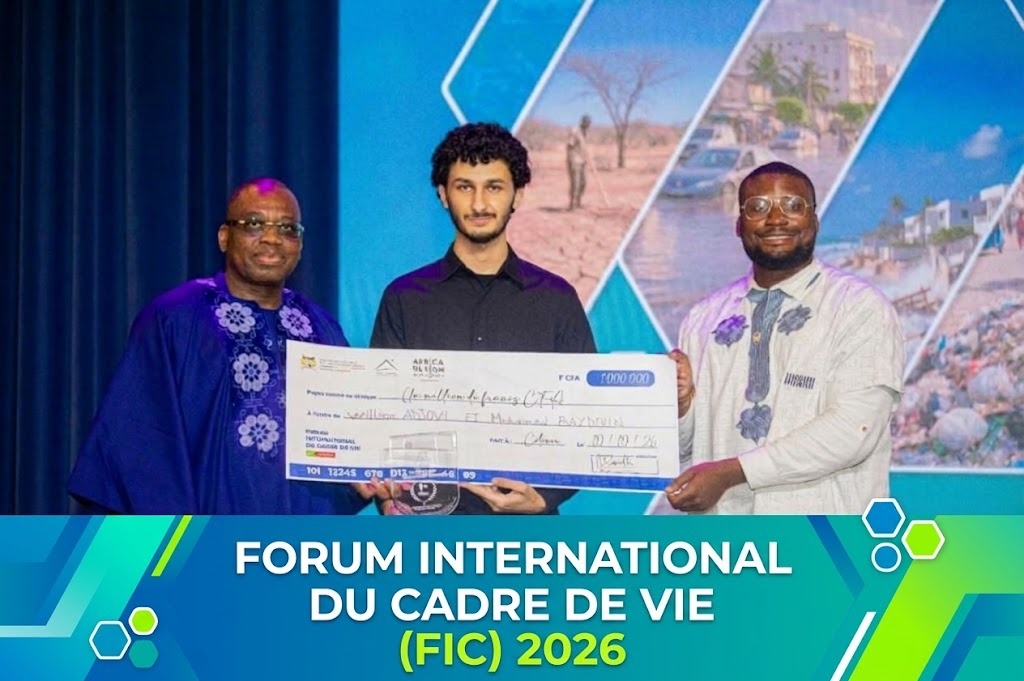
Mobility emerged as a key focus during the FIC 2026 hackathon, where a team led by Willson Edwin Mardochet Adjovi and Mohamed Baydoun presented the “Fifa Bus Stop” project. This initiative highlights youth-led innovation in solving real-world transport challenges. By prioritizing pedestrian pathways, reliable public transit, and accessible bus stops, cities can reduce travel time and costs while improving safety and air quality.
Now, the challenge is scaling such ideas into city-wide policies that respond to user needs, technical constraints, and budget realities.
Building homes that last—and cost less
Housing remains one of the biggest barriers to quality of life. A good home isn’t just a roof—it’s a space resilient to climate extremes, energy-efficient, and affordable over time. In Benin, where imported building materials drive up costs, a shift toward locally sourced, certified materials could revolutionize affordability and support local industries.
Ismaïl Yasso, Director General of Construction and Housing, stressed the need for standardized certification of local materials at forum’s closing. Certification builds trust, ensures durability, and enables families to invest in homes they can count on. Such measures could unlock economic benefits for artisans, builders, and suppliers, while ensuring long-term affordability for homeowners.
But success depends on balancing cost, quality, and accessibility—without sacrificing safety or environmental standards.
Floods, waste, and sanitation: the invisible crises shaping daily life
Poor urban drainage, uncollected waste, and inadequate sanitation don’t just harm the environment—they disrupt lives. Flooded streets block access to work and school. Accumulated garbage attracts disease. Polluted water sources threaten health. In vulnerable neighborhoods, these issues are daily realities.
A holistic urban strategy—one that integrates land use, drainage systems, waste management, and ecosystem protection—is essential. Projects like the one presented by Nelly Mahouna Gbaguidi and Meryl Agnikpe, recognized at the FIC hackathon, offer promising approaches to wastewater treatment and sanitation. Their real-world impact will depend on implementation, maintenance, and public investment.
Only comprehensive planning can turn these environmental fixes into lasting improvements in public health and dignity.
Low-carbon cities as engines of local jobs and green growth
Sustainability isn’t just ecological—it’s economic. Transitioning to low-carbon urban systems can spark new industries: green construction, recycling, sanitation services, and renewable energy. These sectors not only reduce environmental harm but also create skilled jobs and strengthen local economies.
Young innovators, including participants in the FIC hackathon, are already imagining solutions. But turning ideas into infrastructure requires more than creativity. It demands financing, technical support, and clear pathways from prototype to policy.
As Yasso emphasized, well-prepared projects are far more likely to secure funding and see the light of day. The forum’s legacy will be measured not in pledges, but in projects that bring real employment and opportunity to Beninese communities.
From forum to field: turning plans into progress
Before the FIC 2026 closing ceremony, a tree-planting event at the public primary school in Fidjrossè reminded attendees that change begins locally. Small-scale greening and clean-up initiatives help instill environmental stewardship in the next generation. Yet their impact hinges on sustained maintenance and community engagement.
Minister Georges Ale of the Ministry of Habitat and Transport urged participants to convert forum recommendations into concrete actions—with clear responsibilities, timelines, and budgets. Without execution, even the boldest visions remain theoretical.
The true test of Benin’s sustainable cities program will be visible improvements: safer neighborhoods, faster commutes, cleaner water, and resilient homes. These are the metrics that matter to families. If the FIC 2026 momentum translates into tangible change, Benin could set a new standard for urban transformation in West Africa.
At stake is nothing less than the future of daily life. For Benin to succeed, every stakeholder—government, businesses, communities, and innovators—must move from discussion to delivery, ensuring that the dream of sustainable cities becomes a lived reality for all.