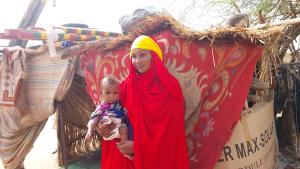
In the bustling nomadic camp of Mandjafa, on the outskirts of N’Djamena, Afia arrived with her four-month-old daughter Fatma to access integrated services tailored for mobile communities. As a mother of five, she relies on these health interventions to safeguard her family’s wellbeing. “Vaccines keep my children healthy,” she says. “At the first sign of illness, I take them straight to the health center.”
Afia is part of Chad’s nomadic population—approximately 3.5% of the nation’s inhabitants—whose livelihoods revolve around seasonal livestock herding. The remoteness of these communities often delays access to essential health services, including vaccination and disease prevention.
One health strategy bridges gaps in Chad’s pastoral care
To address these challenges, Chad’s government has adopted the One Health approach, uniting health, livestock, environmental, and agricultural sectors to deliver integrated care adapted to nomadic lifestyles. On June 9, 2026, this strategy was deployed in Mandjafa, where 134 individuals, including 11 children, received a combined package of human and animal vaccination (96 livestock vaccinated), vitamin A supplementation, deworming, and insecticide-treated mosquito nets.
Dr. Mahamat Béchir, National One Health Coordinator at the Ministry of Public Health and Prevention, explains the rationale behind this shift: “Early studies in the 2000s revealed severe vaccination gaps in nomadic groups. We realized standard outreach wouldn’t suffice—we had to meet them where they live.”
The campaign also leveraged the existing trust between herders and veterinary services. By bundling animal and human health interventions, teams reached more families with fewer trips, maximizing efficiency. Youssouf Idriss, a herder with sheep, cattle, and camels, attests to its impact: “Our animals are our lifeline—they feed us and sustain our families. Their health is non-negotiable.”
Synergy between sectors strengthens pastoral communities
Veterinary officer Raphaël Neni, who has partnered with nomadic groups for five years, notes a marked decline in livestock diseases since vaccination campaigns intensified. “Herders themselves see the difference,” he observes. Beyond livestock benefits, the integrated model also curbs zoonotic disease risks, enhancing community safety.
The One Health platform coordinates national efforts across health, livestock, environment, and agriculture to fortify surveillance and response to health threats. As Dr. Béchir emphasizes, “Health challenges today demand cross-sector collaboration. Zoonoses, climate shifts, and environmental pressures require unified action to protect populations.”
For nearly two decades, the World Health Organization (WHO) has supported Chad’s One Health initiatives, reinforcing the platform, strengthening the International Health Regulations, and building local capacity. Dr. Tamadji Mbaïhol, WHO Chad’s routine immunization lead, highlights the communities’ willingness to engage when services align with their mobility: “Nomadic families readily accept health services—provided they’re delivered where they are. Adaptation is key to participation.”
As teams continue outreach across Chad, Afia prepares to return home with Fatma, having accessed multiple services in a single visit. Her advice to other parents is straightforward: “Don’t wait—take sick children to the health center immediately. Prevention is the best protection.”
The One Health approach in Mandjafa exemplifies how integrated, mobility-sensitive interventions can transform access to care for Chad’s nomadic families—safeguarding both human and animal health at the heart of their survival.