Ouagadougou’s strategic pivot toward Moscow: a calculated move or a new dependency?
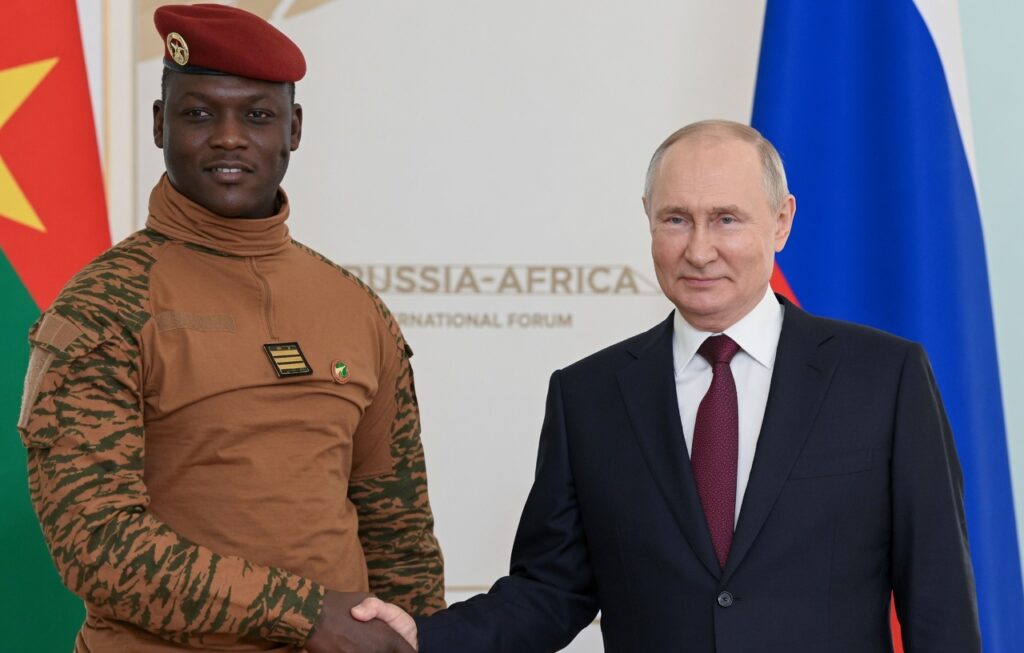
Since deepening ties with Russia, Burkina Faso’s leadership has framed Moscow as a vital ally, emphasizing a partnership built on mutual respect, non-interference, and a so-called «win-win» dynamic. Official statements highlight this collaboration as a path to restored sovereignty and enhanced security. Yet, beneath the rhetoric lies a more complex reality, one that raises critical questions about the true costs and benefits of this alliance.
The illusion of regained sovereignty
Ouagadougou has justified its shift away from Western partners by framing it as a reclaiming of diplomatic independence. The argument suggests that replacing dependence on one bloc with another could restore autonomy. However, true sovereignty extends beyond mere alliance swapping; it demands the ability to navigate partnerships without becoming beholden to a single actor, particularly in critical sectors such as security and natural resources. A nation’s strength lies in its capacity to diversify alliances while safeguarding its decision-making freedom.
Security cooperation: promises unmet by reality
The military cooperation between Burkina Faso and Russia has intensified, yet the country continues to grapple with relentless violence. Deadly attacks, mass displacements, and the persistent threat of armed groups persist across several regions. While Moscow’s support may bolster local forces, the tangible impact on the ground remains limited. The security crisis shows no signs of abating, casting doubt on whether this partnership alone has shifted the balance in favor of stability.
Economic ties: potential versus concrete gains
Projections of future investments and economic opportunities abound, yet the tangible benefits for Burkina Faso’s economy remain elusive. Economic indicators remain strained as local businesses struggle with insecurity, disrupted supply chains, and reduced activity. Promises of cooperation must be measured not by official declarations but by tangible outcomes that improve livelihoods. Without these, the partnership risks remaining a symbolic gesture rather than a transformative force.
Resource exchanges: trading gold for food security
The suggestion that Burkina Faso might leverage its gold reserves to secure Russian wheat imports has sparked debate. While gold is the country’s primary wealth driver, relying on foreign grain in exchange for this resource raises concerns. Does this strategy reflect an inability to feed its population independently, or is it a pragmatic solution amid persistent challenges? True sovereignty encompasses food security, the transformation of local resources into sustainable development, and tangible improvements in living standards. The current approach, however, appears more indicative of economic dependency than of empowered self-reliance.
Education and human capital: a narrow pathway to progress
The academic cooperation between Burkina Faso and Russia offers select students access to Russian institutions, a move that could enhance national expertise. However, the impact remains confined to a small group, doing little to address systemic challenges in education and youth employment. Structural weaknesses in the educational system and limited job opportunities for graduates persist, underscoring the limitations of this aspect of the partnership.
Moscow’s strategic interests: a partnership without conditions?
Official narratives describe Russia’s involvement as devoid of political strings. Yet, in international relations, no partnership is entirely altruistic. Moscow’s engagement in Burkina Faso aligns with its broader geopolitical ambitions, including expanding influence in Africa, countering Western sanctions, and securing economic footholds. Presenting this relationship as purely selfless overlooks the strategic calculations driving both sides.
The risks of over-reliance on a single partner
A heavy tilt toward Russia could narrow Burkina Faso’s diplomatic options, deter diverse investors, and complicate relations with other international actors. In a multipolar world, genuine diversification means engaging with multiple partners rather than substituting one bloc for another. Over-concentration risks leaving Ouagadougou vulnerable to shifts in Moscow’s priorities or global pressures.
The ultimate test: impact on everyday lives
The true measure of this partnership lies in its effect on Burkina Faso’s citizens. Sovereignty is not a matter of diplomatic symbolism; it is reflected in improved security, accessible public services, economic growth, and opportunities for the youth. On these fronts, the results fall short of expectations. Until concrete, measurable, and sustainable benefits are realized, claims of a fully «win-win» relationship remain premature. The partnership’s value will ultimately be determined not by rhetoric but by tangible progress that addresses the nation’s most pressing challenges.