A ransom payment of nearly $50 million, handed over in late 2025 to secure the release of foreign hostages held by Al-Qaïda-linked militants in Mali, has since become a major financial lifeline for extremist groups across the Sahel. According to a confidential United Nations report reviewed by this publication, the funds were not only used to strengthen local branches but also redirected to the terror network’s central command.
UN report traces the flow of terror money
The 10 August document, compiled by UN sanctions monitors, does not name the hostages or the payer but indicates that the funds originated from the United Arab Emirates. Three regional intelligence sources confirmed that three foreign nationals—an Emirati citizen, a Pakistani and an Iranian—were freed in exchange for the payment. When approached for comment, an Emirati official declined to address the specific case but reiterated that the country remains « committed to combating terrorism and cutting off extremist financing channels. »
Funds fuel attacks and recruitment
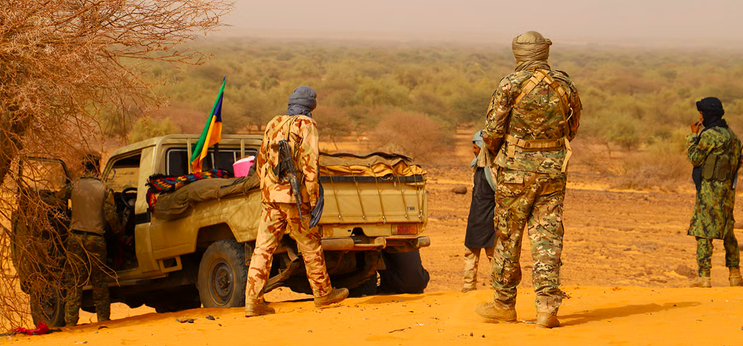
Most of the ransom was distributed among Sahel-based katibas under the umbrella of the Jama’at Nusrat al-Islam wal-Muslimin (JNIM), the Al-Qaïda affiliate active across Mali, Burkina Faso and Niger. The report highlights that « these funds significantly boosted the group’s military operations in Mali, » where JNIM now commands between 7,000 and 8,000 fighters—half of them operating within the country’s borders.
Additional funds were funneled through Al-Qaïda in the Islamic Maghreb (AQIM) to the terror group’s central leadership and its Yemeni branch. Security analysts warn that such large ransom payments are increasingly viewed by JNIM as a reliable revenue stream, undermining state authority and eroding public trust in regional security forces.
Military escalation linked to financial gains
Since early 2026, JNIM has intensified its campaign of violence. In April, militants staged a bold assault on the Malian capital, resulting in the death of the country’s Defence Minister. By June, the group escalated its tactics further, publicly offering multi-million euro bounties for information leading to the capture of the Malian President. Insiders report that typical ransom demands for foreign hostages now range from $4 to $6 million—well below the $50 million payment made in 2025.
The UN report underscores how hostage-taking has evolved from a tactical tool into a central financing mechanism for JNIM, enabling the group to sustain recruitment, acquire weapons and expand territorial control in the Sahel. Security analysts stress that unless the international community addresses the flow of ransom payments, the financial power of Al-Qaïda affiliates will continue to grow, posing an even greater threat to regional stability.