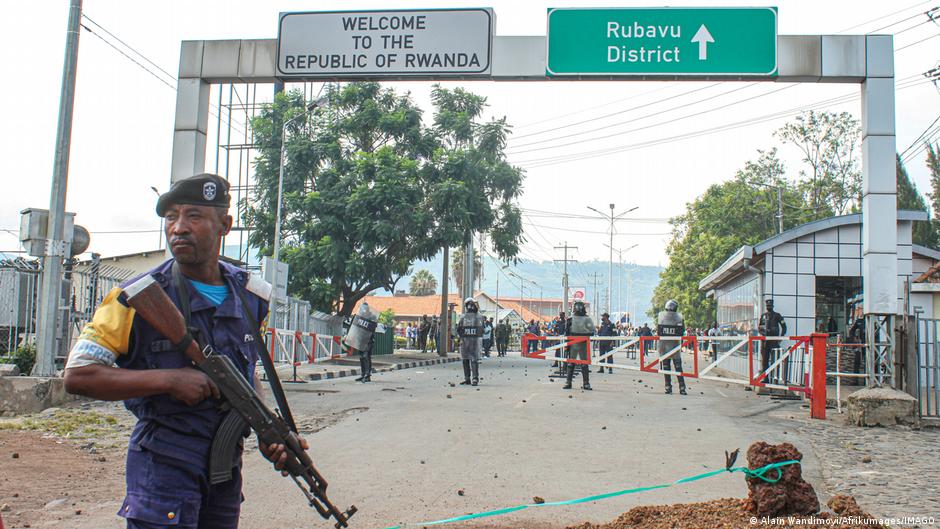
Residents of Goma, a city in the Democratic Republic of Congo (DRC), are feeling the economic pinch after the closure of border crossings to Rwanda. The decision, which has halted the flow of goods and people between Goma and Gisenyi, is leaving small-scale traders struggling to make ends meet.
The impact is particularly acute for local merchants like Jacques Safari, a street vendor who sells eggs. Once able to move freely between the two cities, he now faces plummeting sales. “Our earnings have dropped sharply. Before the border closed, I used to sell five trays of eggs a day. Now, I’m lucky to sell two,” he explains. “Most of my customers were travelers crossing the border. Without them, business has dried up.”
Supply chain disruptions hit traders hard
Gross traders in Goma’s Birere market are also grappling with shortages. Hamuli Kasilembo, a wholesaler, says sourcing goods has become a major challenge. “Before, we could easily cross into Rwanda to restock. Now, it’s nearly impossible,” he notes. “Even finding buyers is tough because money isn’t circulating like it used to.”
Economic ripple effects feared
Economists warn that the border closure will have long-lasting consequences, particularly for those who rely on daily cross-border trade. Alphonse Muanda, an economist, highlights the vulnerability of small traders: “When borders close, it’s the little guys who suffer most. Many depend on these daily exchanges to survive. Others used to buy goods like rice, soap, and household items in bulk from Gisenyi.”
While the Rwandan government cited health concerns—specifically the need to contain Ebola—as the reason for the closure, the economic fallout in Goma is undeniable. Residents now fear worsening poverty as the restrictions drag on, leaving families scrambling to adapt to the new reality.