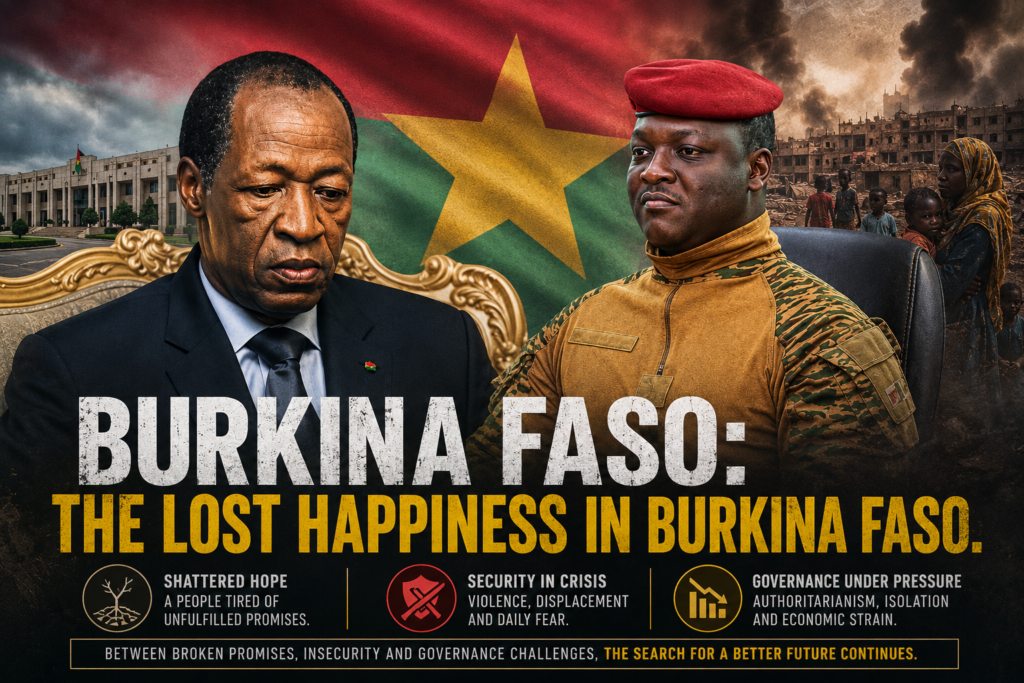
For decades, Burkina Faso stood out in the Sahel as a bastion of relative stability, despite enduring criticism of its political system. During Blaise Compaoré’s 27-year presidency, the country faced accusations of authoritarian governance, restricted democratic freedoms, and suppressed political opposition. Yet, beneath these controversies lay a fundamental truth: under his rule, ordinary Burkinabè could move freely, cultivate their land, and conduct daily life without the shadow of armed violence.
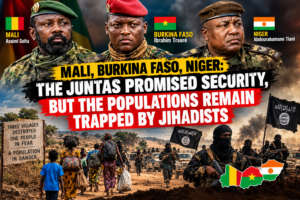
Today, those memories of a more secure past serve as a stark contrast to the current reality. Since Captain Ibrahim Traoré assumed power through a military coup, the nation has been grappling with an escalating security crisis that shows no signs of abating. The new administration pledged decisive action against armed groups, territorial reclamation, and enhanced national sovereignty. However, nearly three years into its mandate, tangible improvements remain elusive for many communities.
From stability to displacement: the human cost of insecurity
Under Traoré’s leadership, official statements frequently highlight military operations and claimed victories against insurgents. Yet, the impact on civilian life tells a different story. In several regions, violent attacks persist, entire villages remain cut off from essential services, and major roads are still deemed unsafe. For families living in these areas, the promise of security feels like a distant dream rather than an achievable reality.
The most glaring indicator of this failure is the growing exodus of Burkinabè from their homes. Thousands are abandoning their villages, farms, and businesses—not by choice, but out of necessity. Many relocate to safer areas within the country, while others flee across borders to neighboring states. This silent wave of displacement speaks volumes about the erosion of public trust in the government’s ability to ensure safety. When citizens prioritize survival over belonging, it reflects a profound institutional breakdown.
This mass migration is not merely a statistic; it is a humanitarian crisis in the making. The loss of productive land, disrupted education for children, and shattered livelihoods carry long-term consequences for Burkina Faso’s social and economic fabric. Yet, these realities are often overshadowed by political narratives that emphasize sovereignty and ideological posturing.
The paradox of sovereignty without security
Traoré’s administration has positioned itself as a champion of national sovereignty, rejecting former alliances and promoting self-reliance. While these themes resonate with segments of the population, they cannot substitute for the primary duty of any government: protecting its people. Sovereignty is not measured in rhetoric alone; it is validated by the state’s capacity to exercise authority and deliver security across its entire territory.
This has led to an unexpected shift in public discourse. Critics who once condemned Compaoré’s authoritarian tendencies now appear hesitant to apply the same scrutiny to Traoré’s governance. The inconsistency fuels perceptions of a double standard—where some leaders are held to higher accountability than others, regardless of the consequences for ordinary citizens.
The true measure of a nation’s success
Burkina Faso’s future cannot be gauged by the popularity of its leader or the boldness of its declarations. It will be determined by tangible outcomes: the reopening of schools in once-inaccessible towns, the resumption of trade along previously dangerous routes, and the return of displaced families to their homes. Until these conditions are met, the debate over Traoré’s leadership will remain unresolved.
The nation’s well-being hinges on a single, non-negotiable priority: the safety of its people. Without it, all other achievements—political, economic, or social—lose their meaning. For the Burkinabè, the choice is clear. They yearn not for slogans, but for stability. Not for isolation, but for the freedom to live, work, and thrive within their own borders.