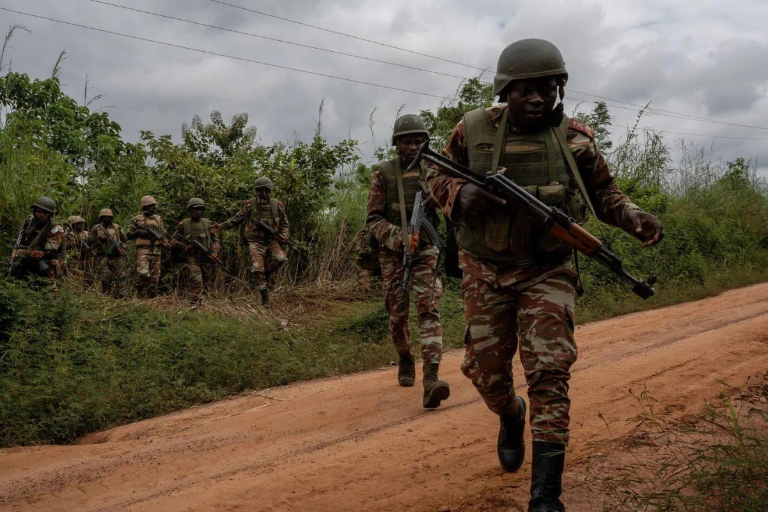
How Benin is turning to Berlin amid rising terror threats in the Gulf of Guinea
The surge in violent extremism along Benin’s northern borders is forcing Cotonou to seek deeper international alliances. Among the growing partnerships reshaping the country’s defense strategy, Germany’s expanding military engagement stands out as a pivotal move with far-reaching implications. While equipment deliveries have dominated recent headlines, the true impact of this cooperation may lie in its long-term institutional and strategic footprint across West Africa.
From military aid to a lasting defense partnership
Germany’s involvement in Benin has evolved beyond one-off equipment transfers. In 2026, Berlin delivered over 550 helmets and 1,266 portable breathing devices to the Beninese armed forces, following an earlier shipment valued at approximately €3 million that included night vision and personal protection gear. But the scope of cooperation has expanded into logistics training and technical support for Benin’s engineering corps, signaling a shift from transactional aid to sustainable capacity building.
At the heart of this transformation is a plan to deploy six to eight German military experts to Benin in late 2027. Unlike traditional troop deployments, this initiative is designed to strengthen advisory roles—enhancing intelligence sharing, operational planning, and logistical preparedness. Anchored in decades of bilateral training—over 350 Beninese soldiers have been trained in Germany since the 1980s—this relationship is evolving into a more structured defense dialogue.
Strategic state-level consultations signal a new phase
Diplomatic signals have intensified. In October 2026, German Ambassador to Benin Stefan Buchwald confirmed plans for high-level joint staff meetings between the two nations, potentially leading to a new bilateral defense agreement. While details remain undisclosed, such talks point to a deeper strategic alignment—one that could redefine regional security dynamics and set a precedent for similar partnerships in the Gulf of Guinea.
Regional instability drives Benin’s defense overhaul
The urgency of this collaboration stems from the escalating threat of armed groups operating near Benin’s northern departments—Atacora and Alibori—bordering Burkina Faso and Niger. Cross-border incursions have exposed vulnerabilities in intelligence, mobility, and counter-terrorism logistics. Germany’s support is now geared toward strengthening Benin’s resilience against these transnational threats, aligning with a broader European push to prevent instability from spilling into coastal West Africa.
Europe’s unified security strategy bolsters Berlin’s role
Germany’s bilateral outreach is part of a wider European strategy. The European Union’s Peace Facility has allocated €35 million to support Beninese armed forces, while the European Security and Defence Initiative in the Gulf of Guinea—partnering with Benin, Togo, Ghana, and Côte d’Ivoire—provides an additional layer of coordinated regional defense. Berlin appears keen to integrate its assistance within these frameworks, enhancing coherence and impact across multiple donor initiatives.
What’s next: turning partnerships into operational power
For Benin, the challenge lies in translating diplomatic momentum into tangible military capabilities. The upcoming bilateral agreement and the deployment of German experts will test Benin’s ability to absorb and implement advanced defense training and technology. For Berlin, the stakes are even higher—securing a durable foothold in a region where geopolitical shifts are reshaping security alliances and power balances. The outcome of this cooperation will not only influence Benin’s future stability but also signal Germany’s evolving role in shaping West Africa’s defense landscape.





