Shenzhen’s high-stakes gathering: what’s at risk for everyday people and businesses
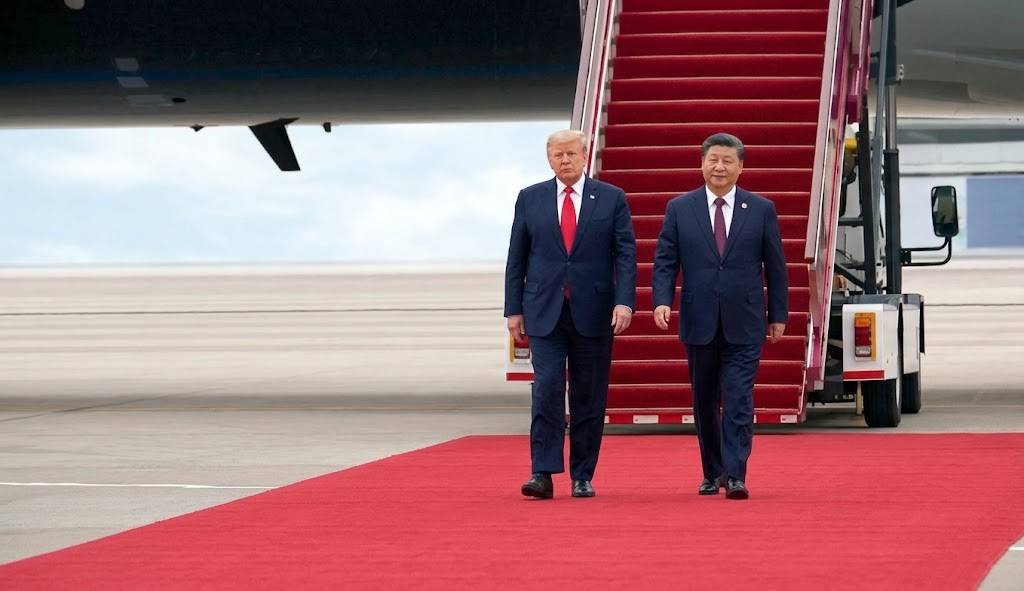
The arrival of Air Force One on Chinese soil wasn’t just a diplomatic formality—it marked the start of a pivotal moment. On November 19, 2026, in Shenzhen, the leaders of the world’s three largest economies and military powers—Donald Trump, Xi Jinping, and Vladimir Putin—convened for a closed-door summit with consequences that could ripple across households, supply chains, and international stability. While the world watches for photo ops and press releases, the real stakes lie in the decisions that affect fuel prices, food security, technology access, and geopolitical stability.
Why this meeting matters more than past summits
Trilateral summits of this scale are rare. Never before have the leaders of the United States, China, and Russia met at such a high level without preconditions. The timing is critical: global inflation is rising, semiconductor shortages are crippling industries, and conflicts in Eastern Europe and the Middle East are threatening energy markets. At Shenzhen, these three leaders aren’t just talking—they’re negotiating over the levers that control the global economy and security architecture.
The nuclear shadow: a threat to peace or a path to disarmament?
No topic carries heavier consequences than nuclear weapons. With the U.S., China, and Russia collectively possessing over 90% of the world’s nuclear arsenal, any agreement—or failure to agree—on arms control would directly affect millions. Families in Europe and Asia are increasingly concerned about the risk of miscalculation or escalation. Meanwhile, businesses in tech, aerospace, and energy sectors are waiting to see whether restrictions on dual-use technologies will be loosened or tightened—decisions that would reshape investment and innovation globally.
Ukraine and Iran: the flashpoints that could derail progress
The war in Ukraine continues to destabilize grain exports, energy flows, and global shipping routes. A summit that fails to de-escalate tensions here could send food prices soaring and prolong the suffering of millions dependent on Ukrainian wheat. Likewise, tensions involving Iran threaten to cut off oil supplies and trigger further price hikes. Any concession or hardline stance from these three leaders could either dampen or ignite regional conflicts with worldwide economic repercussions.
For businesses, this means higher operational costs and volatility in commodity markets. For citizens, it means rising utility bills, tighter budgets, and uncertainty about future conflicts.
Trade, technology, and sanctions: the invisible hand shaping daily life
The summit is as much about what isn’t being said as what is. Behind closed doors, the leaders are likely reviewing trade tariffs on semiconductors, rare earth minerals, and advanced AI chips—all crucial to smartphones, electric vehicles, and military systems. A decision to relax or intensify export controls could either unlock new markets for businesses or trigger a new wave of protectionist policies that raise prices and limit consumer choice.
Take semiconductor chips, for example. Any easing of restrictions by Washington could allow Chinese tech firms to ramp up production, lowering costs for global device makers. Conversely, tighter controls could keep prices high and slow down innovation in AI, cloud computing, and consumer electronics—sectors that drive modern economies.
The silent cost: how geopolitics hits the wallet
- Energy costs: Any escalation in Ukraine or Middle East tensions could spike oil and gas prices, directly increasing heating, transportation, and food prices.
- Supply chain disruptions: Sanctions or export bans on critical materials like titanium, palladium, or rare earth elements would stall manufacturing lines from Detroit to Shanghai.
- Investment freeze: Geopolitical uncertainty drives investors toward safe havens, reducing capital flows to emerging markets and slowing economic growth.
- Job market tensions: Industries reliant on global trade—automotive, electronics, pharmaceuticals—could face layoffs or hiring freezes if trade barriers rise.
A new world order—or just another photo opportunity?
Some analysts compare Shenzhen to Yalta 1945, where post-war spheres of influence were carved out. But the comparison is flawed. Today’s world is more interconnected, with power distributed across dozens of nations and blocs. Any deal struck in Shenzhen won’t be a final solution—it will be the beginning of a new negotiation cycle. The real question isn’t whether these three leaders can rewrite the rules, but whether they can agree on basic principles of cooperation without further marginalizing smaller nations.
Who really loses if the summit fails?
The burden isn’t just on the three leaders. Citizens across Africa, Latin America, and Southeast Asia—countries that rely on stable energy and food imports—are the most vulnerable. When Washington, Beijing, and Moscow clash over tariffs or military posture, it’s the poor who face the highest prices and scarcities. Even in Europe, where sanctions on Russia have already pushed energy bills through the roof, families are bracing for another winter of uncertainty.
The summit may end with a handshake and a joint statement. But the true legacy will be measured in supermarket aisles, factory floors, and gas stations around the world.
What’s next? The road from Shenzhen to global stability
The world is holding its breath. Not for another diplomatic photo, but for signs that these three powers can deliver more than rhetoric. The stakes are clear: global peace, economic stability, and technological progress all depend on whether dialogue in Shenzhen translates into action beyond the negotiating table.
If they succeed, millions could see lower prices, safer communities, and new opportunities. If they fail, the consequences could ripple for decades—affecting the next generation’s access to energy, food, and economic mobility. One thing is certain: the decisions made in Shenzhen won’t stay in Shenzhen.





