Gabon’s economic sovereignty under Oligui Nguema’s leadership
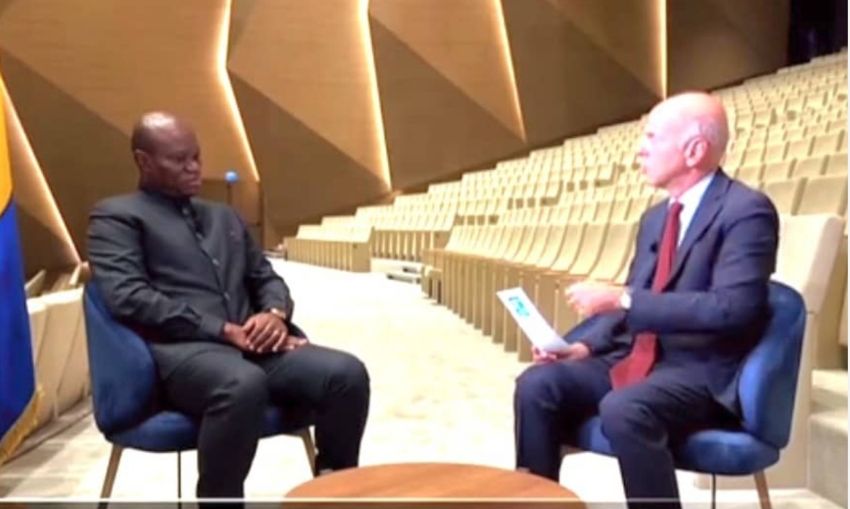
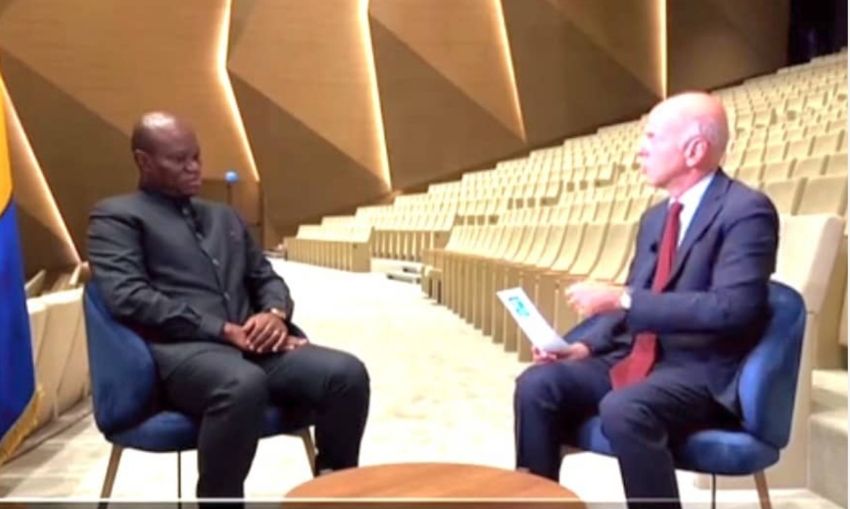
Libreville, June 3, 2026 — In a high-stakes media appearance, Gabon’s President Brice Clotaire Oligui Nguema outlined his administration’s bold vision for economic sovereignty, defended his reform agenda, and reaffirmed the nation’s commitment to democratic renewal during an exclusive interview with an international news outlet.
Three years into his presidency and one year after securing over 94% of the vote in a landmark election, Oligui Nguema used the platform to present Gabon’s strategic roadmap to a global audience. From the Congress Hall of the Cité de la Démocratie in Libreville, the Head of State addressed pressing domestic and international issues with unfiltered candor, emphasizing long-term reform over short-term gains.
Progressive reform: building a future one step at a time
Critics have questioned the pace of development, particularly in access to clean water and reliable electricity. In response, the President acknowledged the challenges but stressed that his seven-year mandate is designed for structural transformation, not quick fixes.
Highlighting investments exceeding 800 billion CFA francs in energy infrastructure, he framed progress as a marathon, not a sprint. His message: national development is a continuous process that demands patience and consistency.
Economic sovereignty as a guiding principle
The most far-reaching declarations centered on economic policy. Oligui Nguema confirmed Gabon’s intent to engage with the International Monetary Fund—but only after a full audit of public finances. This cautious stance reflects a broader strategy: regaining control over the country’s financial commitments before entering new international agreements.
A major policy shift was announced regarding manganese. Starting in 2029, Gabon will ban the export of raw manganese, a critical mineral in which the country holds global prominence. The move is part of a broader push to localize value addition, shifting from raw material exports to processed goods.
This decision sends a clear signal to multinational players like Eramet: processing plants must be operational before the deadline, or the ban on raw exports will take effect. The message is unambiguous—Gabon intends to capture more of the economic value within its borders.
A balanced foreign policy: partnership without subordination
Foreign policy under Oligui Nguema is rooted in balance. He underscored Gabon’s strong ties with France, confirming a planned state visit on July 20 and framing the return of Camp de Gaulle to Gabonese authorities as a cooperative gesture, not a break. This approach contrasts with recent trends in parts of the Sahel and signals a preference for dialogue over confrontation.
When addressing a U.S. proposal to host deported migrants, the President made it clear that Gabon would not accept terms inconsistent with its national interests. While maintaining diplomatic relations with Washington, he firmly rejected the proposal, reinforcing the principle that Gabon’s foreign policy prioritizes sovereignty above all.
Rejecting dynastic rule: a commitment to democratic alternation
In a region where political power often lingers through family succession, Oligui Nguema delivered a historic pledge: no political dynasty will emerge under his leadership. He reaffirmed the seven-year presidential term with a single renewal as an irreversible constitutional principle, positioning himself as a champion of democratic alternation.
The road ahead: from vision to reality
This interview revealed more than policy announcements—it outlined a political doctrine. The pillars are clear: economic sovereignty, local resource transformation, balanced international partnerships, gradual infrastructure reform, and a firm commitment to democratic renewal.
Yet the ultimate test lies in execution. While Oligui Nguema retains strong political capital, public expectations remain high. Gabonese citizens are watching not the promises, but the outcomes. One year into his presidency, the President has staked a claim: Gabon will reclaim control of its economic and political destiny. The nation will now judge whether that vision can endure beyond rhetoric.