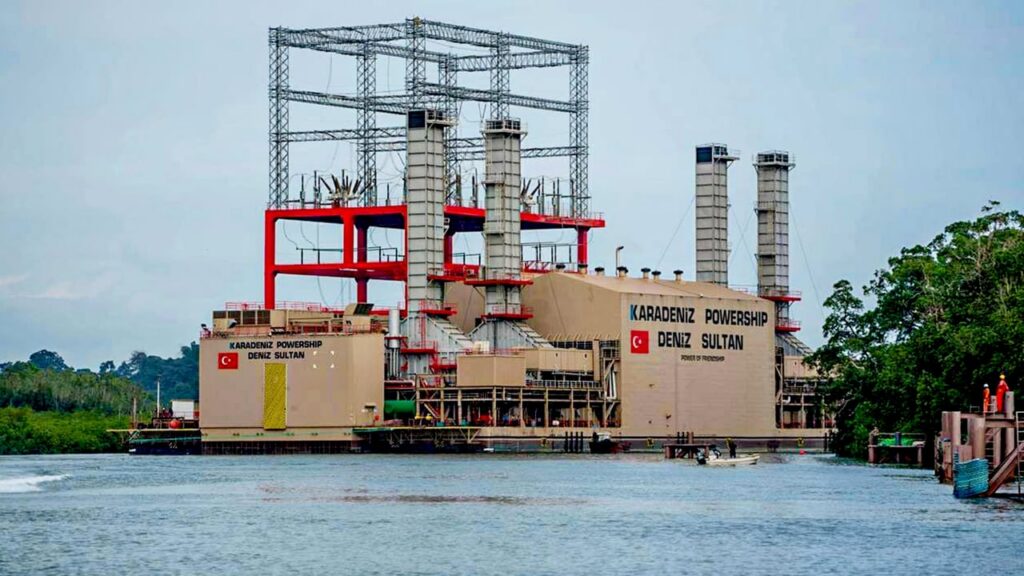

Gabon is taking bold steps to reduce its heavy reliance on Karpowership, the Turkish floating power plant operator, as soaring energy costs pressure the national budget. The move reflects President Brice Clotaire Oligui Nguema‘s commitment to securing long-term energy stability while minimizing foreign dependency.
Karpowership has played a significant role in Gabon’s energy landscape, providing emergency power solutions since 2022. However, rising fuel expenses linked to its operations have reignited debates over the economic sustainability of outsourcing national energy needs.
Energy diversification drives new partnerships
To wean itself off Karpowership, Gabon is accelerating plans to diversify its energy mix. Key initiatives include bolstering the Société d’Énergie et d’Eau du Gabon (SEEG)’s infrastructure and exploring collaborations with international energy firms like EDF. These efforts aim to enhance local production capacity and improve grid resilience.
The government is also prioritizing renewable energy projects, particularly solar and hydroelectric power, to reduce dependence on costly fossil fuel-based imports. Recent bids for renewable energy concessions signal a strategic shift toward sustainable, cost-effective solutions.
Economic implications of energy independence
Analysts highlight that reducing reliance on Karpowership could yield substantial savings for Gabon’s treasury. By investing in domestic energy projects, the country aims to stabilize electricity prices, which have been volatile due to global fuel market fluctuations. This transition aligns with broader economic reforms aimed at fiscal prudence and self-sufficiency.
The push for energy autonomy is not without challenges. Infrastructure upgrades and regulatory hurdles remain obstacles, but the government’s proactive stance suggests a long-term vision for a more resilient energy sector.
Challenges ahead
- Infrastructure gaps: Expanding SEEG’s capacity requires significant investment in transmission and distribution networks.
- Regulatory frameworks: Streamlining permits for renewable energy projects is critical to attracting private sector participation.
- Public-private balance: Balancing state-led initiatives with private investment will be key to avoiding bottlenecks.
As Gabon navigates this transition, the outcome could set a precedent for other African nations grappling with similar energy challenges. The government’s resolve underscores a broader ambition: to transform Gabon into a model of economic resilience and energy sovereignty.