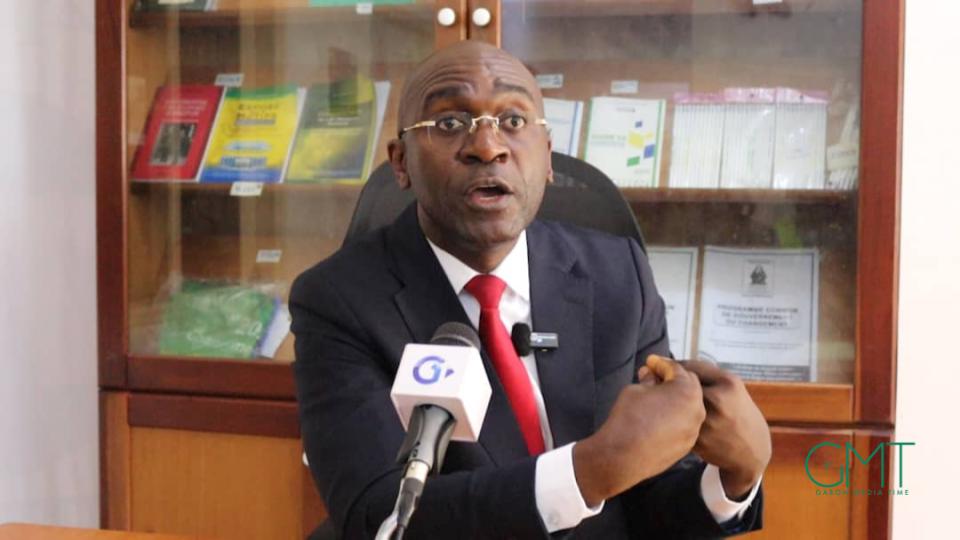
Geoffroy Foumboula Libeka Makosso, a prominent Gabonese civil society leader, has drawn a clear line between free speech and harmful verbal attacks during a press briefing in Libreville. Speaking on the escalating trend of abusive language targeting President Brice Clotaire Oligui Nguema, his wife, and mother, he condemned the recent outbursts while urging authorities to take judicial action rather than issue empty condemnations.
Public debates can be intense without crossing into personal insults. Foumboula argues that criticism of political figures must remain within the bounds of constructive discourse, especially when it involves direct attacks on a head of state and their family. This warning comes amid growing concerns over inflammatory statements attributed to an activist operating under the pseudonym Lanlaire.
Drawing the line between free speech and abuse
For Foumboula, civic engagement must never be reduced to personal insults. Recalling his own advocacy work, he emphasizes that disagreement does not justify defamation or insults. His stance underscores a fundamental principle: while political opposition is legitimate, it must not devolve into gratuitous attacks.
He reiterated that insults, defamation, and public outrage are crimes—not expressions of free speech. The civil society leader urged authorities to enforce the law when these offenses occur, warning that unchecked verbal abuse risks normalizing disrespect toward public institutions.
Questioning the government’s ties to controversial activists
Foumboula’s critique extends beyond the activists themselves. He highlighted what he describes as an unchecked relationship between certain government figures and diaspora activists known for their harsh rhetoric against the administration. These ties, he claims, include invitations to Gabon, media appearances, and alleged presidential delegations seeking to engage with outspoken critics.
One specific allegation involves an activist who reportedly claimed to have received €150,000 (nearly 100 million FCFA) from a presidential delegate to publicly attack the head of state. Foumboula presented this as an unverified claim, emphasizing the need for further scrutiny.
Demanding accountability over impunity
Foumboula called on the presidency and state institutions to end what he calls an unhealthy proximity to activists whose only contributions are insults and defamation. Such tolerance, he argues, risks fostering a climate of impunity where verbal abuse is seen as a tool for visibility—or even access to power.
The civil society leader stressed that failing to prosecute such cases could signal tacit approval, emboldening others to replicate the behavior. Public condemnation alone, he insists, is insufficient unless backed by legal consequences.
Calling for judicial action and digital responsibility
Foumboula urged judicial authorities to pursue legal action against those spreading inflammatory rhetoric. He also appealed to internet users to combat the spread of abusive content by refusing to share or engage with such posts and reporting them through available platforms.
At its core, his message challenges Gabon’s public discourse: free speech remains vital to democracy, but it must never devolve into personal humiliation. For Foumboula, the difference between legitimate criticism and criminal behavior lies in the hands of the courts—not the streets or social media timelines.