Diplomacy
France’s new PM tests diplomatic waters with Qatar and Morocco visits
Sébastien Lecornu embarks on his first overseas tour as Prime Minister, prioritizing strategic partnerships in the Gulf and North Africa. Doha and Rabat take center stage in this high-stakes diplomatic sequence.

Diplomatic signals in a new era
When a Prime Minister steps into office, their first international trips often serve as a compass. They signal priorities, alliances, and the direction of a nation’s foreign policy. Sébastien Lecornu’s maiden voyage abroad follows this unwritten rule.
His itinerary begins in Doha before heading to Rabat — two nations where France holds strategic interests. The timing and destinations are deliberate. The first leg pays respects in Qatar, while the second seeks to deepen ties with Morocco after a pivotal shift in Western Sahara policy. Both stops carry weight beyond mere protocol.
Doha: A gesture with deeper implications
Lecornu’s stop in Doha was brief but symbolically rich. Accompanied by Jean-Yves Le Drian, a seasoned diplomat with deep Gulf experience, the visit underscored continuity in French foreign policy. The occasion? Condolences for the passing of Qatar’s former emir, Sheikh Hamad bin Khalifa Al Thani, who ruled from 1995 to 2013 and abdicated in favor of his son — a rarity in regional leadership transitions.
The French delegation emphasized the emir’s legacy: modernization, active diplomacy, and a long-standing partnership. Behind the scenes, interests run deep. Over 6,000 French expatriates live in Qatar, and economic ties — including defense and aviation contracts — remain robust. In a volatile Gulf region, maintaining open channels with Doha is a priority for Paris. For Qatar, France represents a reliable partner with influence in European capitals.
Rabat: Turning policy into partnership
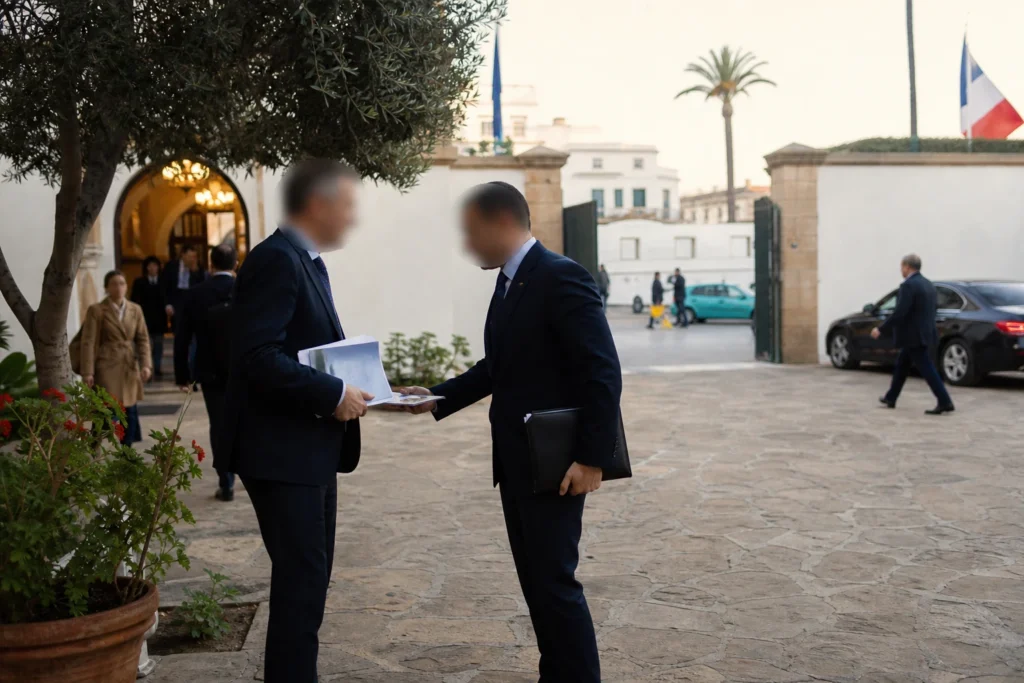
The real momentum lies in Morocco. Lecornu’s visit, the first of its kind since 2019, signals a deliberate push to solidify bilateral relations. A high-level delegation accompanies him, including key ministers like Jean-Noël Barrot and Laurent Nuñez. The presence of such a senior team reflects Paris’s intent: not just dialogue, but action.
The diplomatic thaw began in mid-2024 when President Emmanuel Macron recognized Morocco’s sovereignty over Western Sahara, endorsing Rabat’s autonomy plan. This marked a significant departure from previous stances. In October 2024, Macron’s state visit resulted in a landmark declaration: a “reinforced exceptional partnership.” Over 10 billion euros in investments and agreements were announced, signaling a new chapter in Franco-Moroccan relations.
For Morocco, the gains are clear. Strong European backing, especially from France, bolsters its position on Western Sahara — a cornerstone of its foreign policy. For France, the rewards are twofold: reasserting influence in a key North African market and reclaiming a leadership role it once held.
The shadow of Algeria
Yet, every strategic gain comes with a cost. France’s shift on Western Sahara strained relations with Algeria. In 2024, Algiers recalled its ambassador from Paris in protest, marking a deep diplomatic rupture. Since then, France has walked a tightrope: deepening ties with Rabat while leaving room for engagement with Algiers.
Lecornu’s visit to Morocco sends a clear message: Paris has chosen its path. It reinforces Morocco’s position while signaling to other Maghreb capitals that France is recalibrating its alliances. The immediate beneficiary is Morocco; the evident loser is Algeria, which reads this as an alignment with Rabat.
Criticism also arises from Western Sahara. The Polisario Front and its supporters argue that France’s stance legitimizes an occupation. Paris, however, frames its position as a basis for negotiation, not a final resolution. But the debate underscores the sensitivity of the issue.
What’s next?
The success of this diplomatic gambit hinges on two factors. First, the tangible outcomes from Rabat — economic cooperation, security collaboration, migration policies, and more. Second, the potential visit of Morocco’s King Mohammed VI to France. Such a trip would symbolize a full transition from warming ties to a formalized strategic partnership.
Yet, a lingering question remains: How far can France deepen its relationship with Morocco without permanently alienating Algeria? The stakes are high. Lecornu’s tour does not resolve the tension, but it firmly sets the direction for French diplomacy in the Maghreb.