
The legal framework is unambiguous, yet enforcement remains inconsistent. While the European Parliament has formally endorsed the revised aviation pact with Morocco, the updated agreement explicitly excludes Western Sahara—yet European carriers continue operating flights to the territory without legal grounding.
On July 8, 2026, the European Parliament voted overwhelmingly in favor of concluding the protocol updating the EU-Morocco aviation agreement, following Croatia’s accession to the European Union. The revision passed with 625 votes in favor, 16 against, and 20 abstentions.
The amendment serves solely to align the existing accord with Croatia’s EU membership and introduces no territorial expansions. Its scope remains confined to areas recognized under international law as part of Morocco proper.
Debate surrounding the vote revealed sharp divisions on how the EU should address operational realities. Observers note that many lawmakers supported the protocol precisely because it maintains the status quo—upholding the European Commission’s longstanding position that the agreement does not extend to Western Sahara, in line with EU jurisprudence and repeated Commission statements.
A vocal minority of MEPs contested the measure, arguing that despite the agreement’s limited territorial scope, the Commission has failed to curb unauthorized flights by EU airlines to occupied Western Sahara. These operations, critics contend, violate both international law and EU regulations.
The Court of Justice of the European Union (CJEU) has consistently ruled that EU-Morocco agreements apply only within Morocco’s internationally recognized borders unless explicit consent is provided by the people of Western Sahara. In a landmark 2018 ruling, the CJEU determined that the aviation accord could not be interpreted to cover Western Sahara.
The European Commission has reiterated this interpretation on multiple occasions, formally notifying EU carriers that the EU-Morocco aviation framework does not cover routes linking EU member states to Western Sahara.
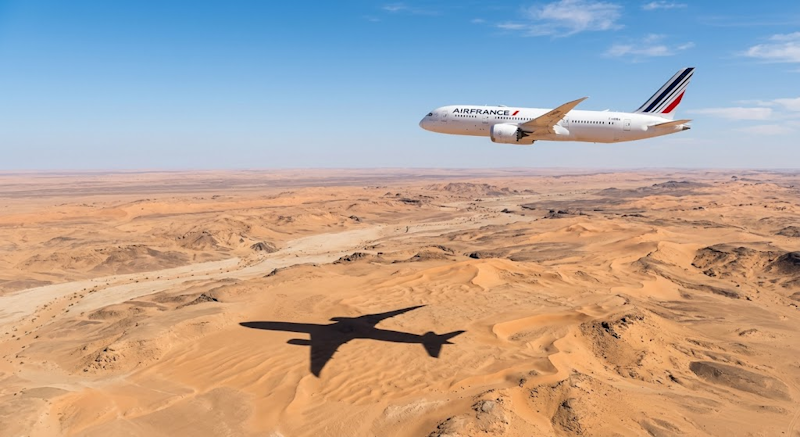
Despite these clear legal directives, several European airlines maintain scheduled services to airports in occupied Western Sahara. Ryanair, for instance, has introduced direct flights from EU hubs to Dakhla, a city in Western Sahara, operating entirely outside the EU-Morocco aviation framework. In addition to Ryanair, Transavia (a KLM-Air France subsidiary), Air Arabia (based in the UAE), and Spain’s Binter Airlines have all flown to Western Sahara in recent years, alongside Morocco’s state-owned carrier, Royal Air Maroc. Attempts to obtain clarification from KLM-Air France and Air Arabia have yielded no response.