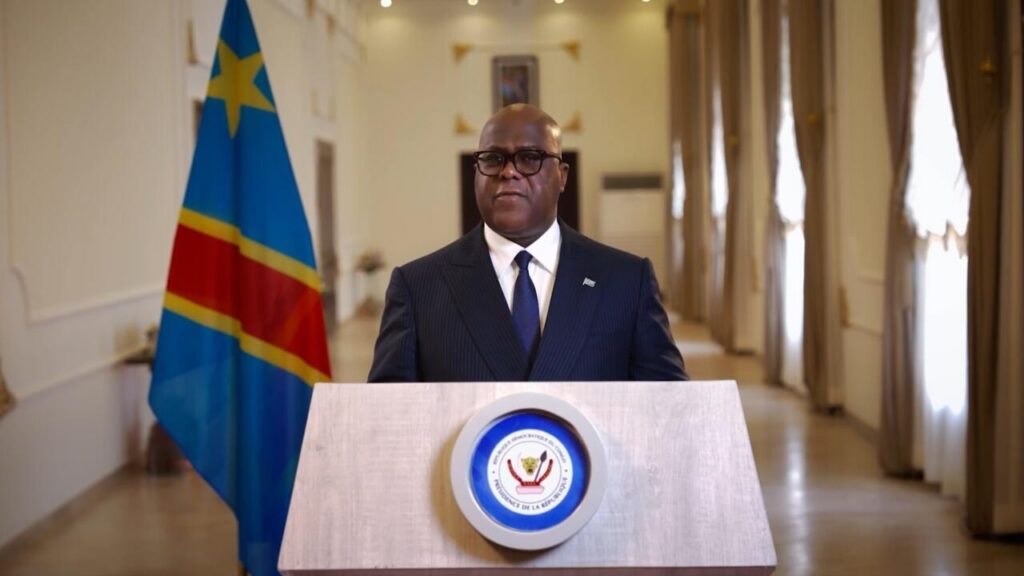
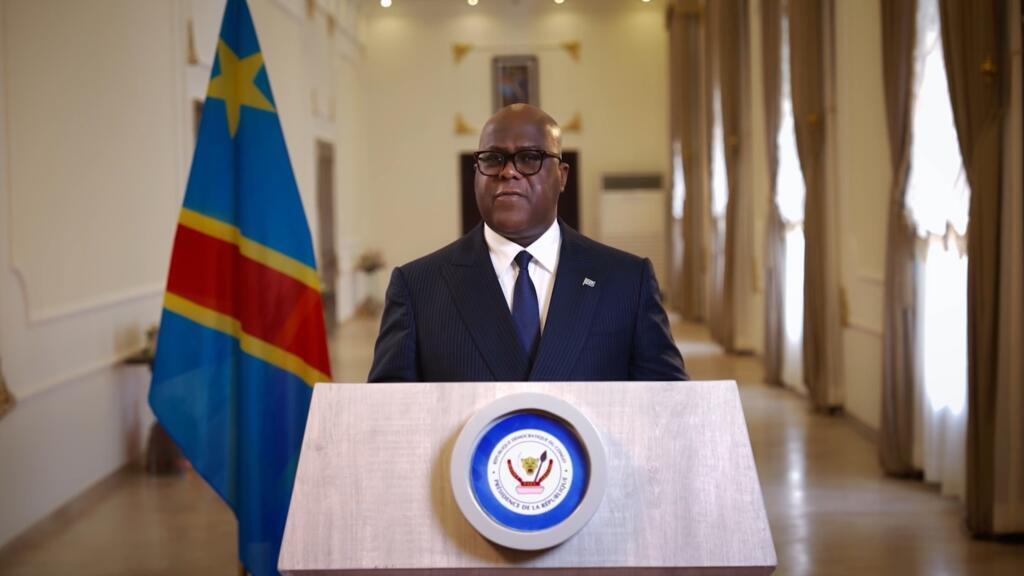
The Democratic Republic of Congo is abuzz with political speculation following a pivotal decision by the Constitutional Court. The court recently affirmed the constitutionality of a law pertaining to the organization of a referendum, a move that has ignited intense debate across the Congolese political landscape.
This ruling, delivered yesterday, has been met with starkly different interpretations. For opposition factions, the referendum law is perceived as a potential gateway to constitutional amendments that could pave the way for President Félix Tshisekedi to extend his tenure in office. Conversely, the presidential camp vehemently rejects this interpretation, asserting that the proposed reforms are solely intended to enhance the operational efficiency of state institutions.
President Tshisekedi, 63, who assumed power in 2019, is nearing the conclusion of his second term at the end of 2028. The existing Congolese Constitution explicitly states that the number and duration of presidential mandates are not subject to revision. However, during a rare press conference in early May, President Tshisekedi declared that while he had not actively sought a third term, he would “accept” one should the “people wish” it.
Opposition mobilizes against constitutional changes
With the Constitutional Court’s validation, a significant hurdle has been cleared. President Félix Tshisekedi now possesses the authority to promulgate the referendum law, which has already received approval from both the National Assembly and the Senate. This development has galvanized the opposition, which views the promulgation of this law as a direct threat to the constitutional order.
Opposition leaders fear that enacting the referendum law could lead to a constitutional revision, effectively resetting President Tshisekedi’s term count and allowing him to seek a third mandate. They consider this eventuality unacceptable and have been actively mobilizing for weeks to thwart any attempts at constitutional amendment. While the Congolese government has not yet provided explicit justifications for the opposition’s distrust, President Tshisekedi’s previous remarks about being open to a third term if supported by the populace have fueled these concerns.
The influential catholic church voices its dissent
Adding significant weight to the opposition’s stance, the highly influential Catholic Church in the DRC has also spoken out against any constitutional modifications. The Conférence Épiscopale du Congo (Cenco), comprising bishops from all provinces, issued an unequivocal statement regarding the president’s proposed constitutional changes. The Congolese prelates firmly declared that they saw “neither the necessity, nor the urgency, nor the opportunity to modify the Constitution.”
This declaration serves as a clear repudiation of any efforts to enable a third term. Cenco’s consistent position on presidential term limits is well-documented. Many recall the widespread protests, largely inspired by religious institutions in 2018, which aimed to dissuade then-President Joseph Kabila from seeking a third term, which would have violated the constitutional limit. Under intense public pressure, coupled with international condemnation and threats of sanctions, Joseph Kabila ultimately relented, albeit with apparent reluctance.
Uncertainty surrounding political dialogue
The constitutional debate is expected to be a central topic in a potential political dialogue, which could materialize in the coming weeks, though its exact parameters remain fluid. Félix Tshisekedi has entrusted various religious confessions with the task of organizing this dialogue. Crucial questions regarding its genuinely inclusive nature, such as whether it will involve all key stakeholders in the Congolese crisis, including former President Kabila, are yet to be resolved.
There is a noticeable divergence in perspectives regarding the dialogue’s agenda. The government’s focus appears to be on fostering national cohesion in response to Rwandan aggression, while the opposition remains steadfast in its resistance to constitutional change. President Tshisekedi has reportedly expressed a willingness to discuss “all questions of national interest,” suggesting that the constitutional debate may not be off-limits. However, observers caution against the pitfalls of such exercises, which incumbent powers sometimes utilize to weaken opposition movements by offering yet another distribution of power.