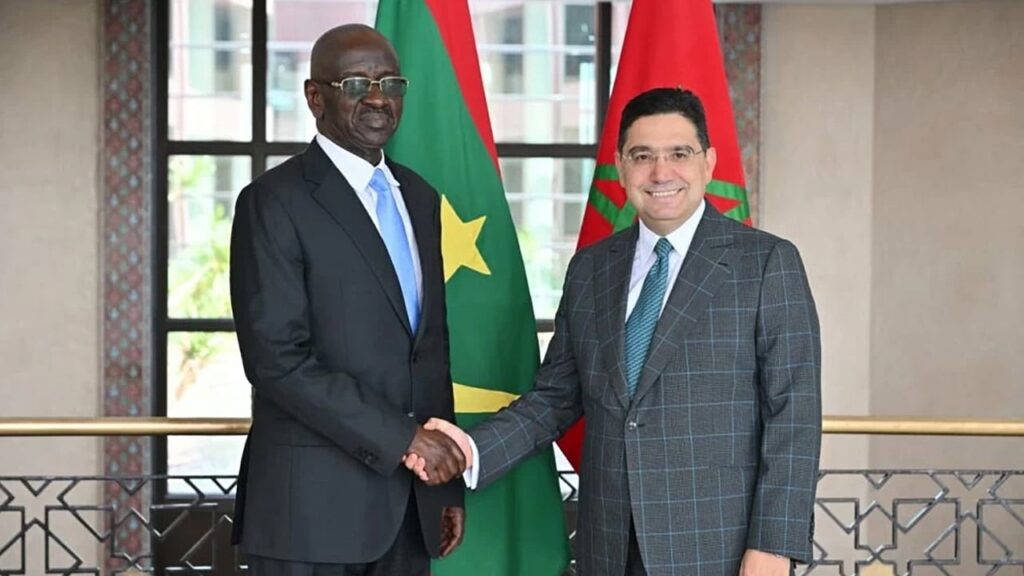

The renewed diplomatic engagement between Morocco and Mauritania over the Western Sahara conflict has taken a new turn during high-level talks in Dakar. The discussions, held behind closed doors, brought together senior officials from both nations to address longstanding territorial disputes that continue to shape regional alliances.
The meeting, held on May 22, 2026, featured a closed-door session between Nasser Bourita, Morocco’s Minister of Foreign Affairs, African Cooperation, and Moroccans Abroad, and Mohamed Salem Ould Merzoug, Mauritania’s Minister of Foreign Affairs, Cooperation, and Mauritanians Abroad. While official statements remained cautious, insiders suggest the talks centered on economic cooperation and security concerns linked to the unresolved status of the Western Sahara.
Mauritania, which shares a border with the disputed territory, has historically maintained a delicate balancing act in its foreign policy. The Dakar talks reflect a growing recognition among regional players that stability in the Sahel hinges on resolving long-standing territorial disputes. Observers note that both nations are recalibrating their positions amid shifting geopolitical dynamics in Africa.
Key takeaways from the diplomatic encounter
- Economic cooperation emerged as a central theme, with both nations exploring avenues to strengthen trade and infrastructure ties.
- Security collaboration was also discussed, particularly in light of rising instability in the Sahel region.
- While no formal agreements were announced, the meeting signaled a willingness to engage in constructive dialogue.
Regional implications of the talks
The Western Sahara conflict has long been a flashpoint in Northwest Africa, with Morocco advocating for autonomy under its sovereignty and the Polisario Front pushing for independence. Mauritania, which has maintained a policy of non-interference, now appears to be reassessing its stance as regional blocs like the African Union and ECOWAS intensify their involvement.
The Dakar discussions underscore the shifting sands of diplomacy in the Sahel, where traditional alliances are being tested by new economic and security challenges. As both nations navigate this evolving landscape, the outcome of these talks could have far-reaching consequences for regional stability.