Triple parliamentary rejection casts a shadow over Senegal’s economic future
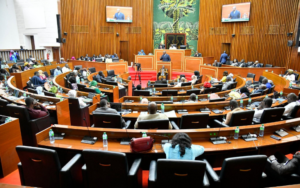
In an unprecedented blow to Senegal’s executive branch, the National Assembly on 3 November 2026 definitively rejected the 2026 Supplementary Finance Bill, completing a sequence of three consecutive defeats. The decision freezes critical budget adjustments proposed by Finance Minister Cheikh Diba and lays bare a widening rift between the presidency of Bassirou Diomaye Faye and the parliamentary majority that once supported it. For citizens, communities and businesses across the country, the stalemate is already generating tangible consequences—delayed projects, suspended funding and rising uncertainty.
From policy clash to institutional rupture: the anatomy of a deadlock
The repeated vetoes are not technical setbacks; they signal a profound political fracture that has spilled from corridors of power into public view. At the heart of the impasse stands the uneasy alliance between President Bassirou Diomaye Faye and Prime Minister Ousmane Sonko, whose parliamentary group—Pastef—led the charge to block the bill.
The parliamentary majority framed its stance as a defense of democratic oversight, insisting the text was drafted without consultation or compromise. “We will examine the law without pressure or threats,” declared leading deputies, underscoring their refusal to rubber-stamp a budget they viewed as an executive imposition.
Social programmes slashed, debt opacity criticised
The Finance Commission delivered a damning verdict on the government’s arithmetic. Among the sharpest grievances:
- Cuts to essential services: Proposed reductions of 555 billion FCFA target critical infrastructure—health centres, school buildings, housing programmes and flood-mitigation projects—directly affecting households in peri-urban and rural zones.
- Opaque borrowing and special funds: Deputies demanded full disclosure of loan conditions, audit reports on special accounts and rigorous scrutiny of public debt trajectories.
- Unmet flexibility demands: Despite last-minute concessions from the finance ministry—including revised deficit caps—legislators maintained their veto, arguing the budget failed to address their core concerns over transparency and social investment.
Media wars heighten tensions
The rhetoric across television studios and social feeds has grown increasingly acerbic. Executive officials have warned that blocking the budget “punishes the people,” while parliamentary leaders counter that they are safeguarding constitutional prerogative against unilateral executive action. The collision has turned a normal budget cycle into a sovereignty debate, eroding the trust needed for collective problem-solving.
Legal shortcuts or escalation: what comes next?
The National Assembly’s triple rejection has left the government with restricted options, each carrying serious implications.
Constitutional workarounds: Officials are weighing measures such as provisional twelfths spending or constitutional Article 86 ordinances to implement expenditures in the absence of an approved budget. Such moves could sidestep legislative scrutiny but risk provoking a constitutional crisis.
Legislative retaliation: Parliamentary leaders have not ruled out deploying stronger tools—including a vote of no confidence—if the executive bypasses parliamentary authority. The standoff could thus escalate into a broader institutional confrontation.
Real-world impact: delayed funds, stalled projects, anxious businesses
Even before the final vote, the budget freeze began to bite. The Finance Ministry has cautioned that prolonged paralysis may delay disbursements from international partners, suspend budgetary support to local governments and withhold payments owed to state-linked contractors. Small and medium enterprises awaiting public-sector contracts now face cash-flow uncertainty, while communities count the cost of postponed flood-protection works and crumbling classrooms.
The triple rejection has shifted the national conversation from fiscal arithmetic to the sustainability of democratic governance itself. Whether resolved through negotiation or confrontation, the outcome will shape not only Senegal’s budget for 2026 but the very balance of power between its institutions—and the daily lives of its citizens.