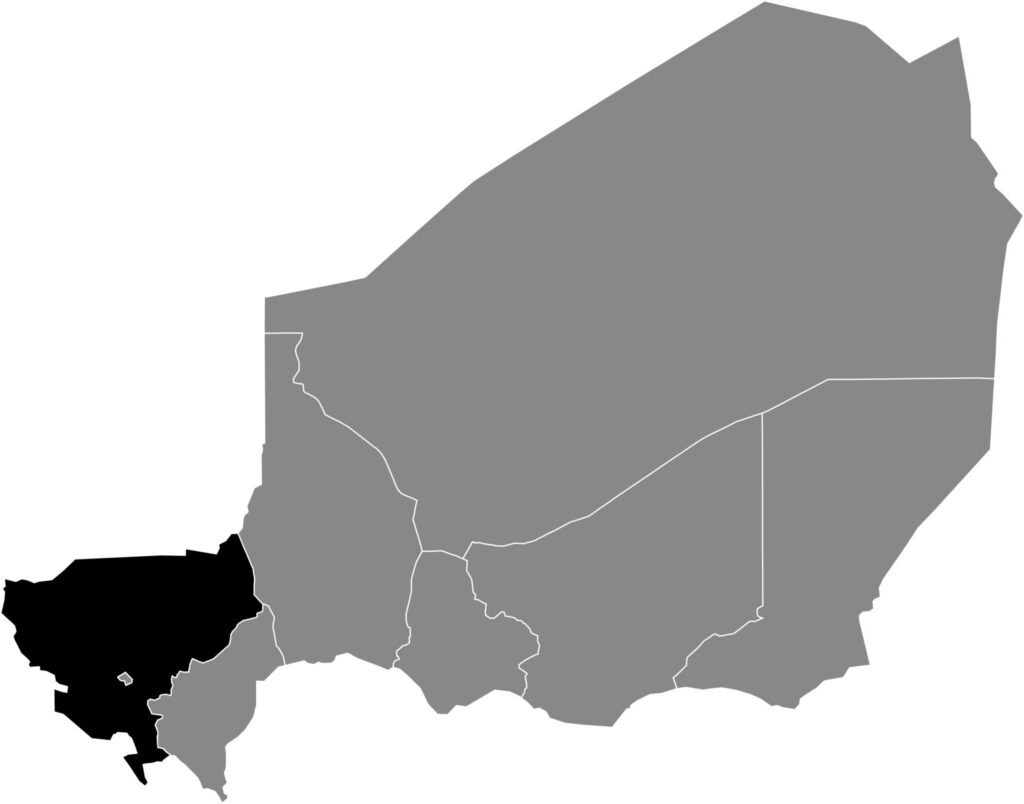
Black highlighted location map of the Nigerien Tillabéri region inside gray map of the Republic of Niger
A peaceful gathering meant to honor the dead turned into a scene of horror in the village of Chinagodrar, located in northern Tillabéri. On July 24, two military drone strikes tore through a funeral ceremony, killing at least seven people and injuring many more. Locals recount how the attack shattered a moment of solidarity, leaving families devastated and the community in shock.
a region under siege by persistent violence
The Tillabéri region has long been a flashpoint in Niger’s fight against insurgency. Bordering Mali and Burkina Faso, this area is part of the volatile “three borders” zone, where clashes between security forces and armed groups escalate with alarming frequency. To counter the threat, Nigerian authorities have increasingly relied on drone operations, using surveillance and combat aircraft to target suspected militants.
However, the use of such technology in areas densely populated by civilians raises serious concerns. Funerals, markets, and gatherings often draw large crowds, making it difficult to distinguish between hostile targets and innocent bystanders. Incomplete or unverified intelligence can lead to tragic mistakes, as this incident demonstrates.
two strikes deepen the tragedy
Witnesses describe a horrific sequence of events. The first explosion hit the funeral crowd, sending people into a panic as they scrambled to help the wounded. Moments later, a second strike landed, compounding the devastation. Survivors speak of a nightmarish scene—families fleeing in terror, injured victims scattered across the ground, and homes caught in the crossfire. The isolation of the area delayed emergency response efforts, leaving the community to grapple with the aftermath alone.
a mounting death toll and shattered lives
The attack claimed at least seven lives, though locals fear the toll may rise as critically injured victims struggle for survival. Among the dead were individuals who had simply come to pay their respects, their presence at the funeral turning into a death sentence. The emotional toll is just as severe, with families left in mourning and a community traumatized by the sudden violence.
In a region already haunted by the specter of jihadist attacks, this tragedy underscores the dread of being caught between warring factions. Civilians, long caught in the crossfire, now face an additional fear: the possibility that military operations meant to protect them could instead claim their lives.
questions over drone strike protocols
The incident has reignited debates about the rules governing drone operations in counterinsurgency efforts. International humanitarian law demands strict adherence to principles like distinction and proportionality—meaning forces must always differentiate between combatants and civilians and minimize harm to the latter. Yet in regions like Tillabéri, where civilian presence is constant, the margin for error remains dangerously thin.
Human rights advocates emphasize that aerial strikes in populated areas require flawless intelligence to avoid civilian casualties. The lack of clarity surrounding this attack—including the target’s identity and the justification for the strikes—has only deepened the community’s unease.
authorities remain silent as families demand answers
To date, Nigerian officials have not issued a detailed account of the operation or confirmed the circumstances leading to the strikes. The absence of official communication has left residents with more questions than answers, fueling speculation and distrust. Many are demanding transparency: Who was the intended target? How did the military validate the strike? And what measures will be taken if civilians were harmed?
eroding trust in a fragile security landscape
Beyond the immediate loss of life, this tragedy threatens to undermine the fragile trust between local populations and security forces. In areas plagued by chronic insecurity, cooperation with authorities is vital for gathering intelligence and combating armed groups. Yet incidents like this one risk driving a wedge between communities and the very forces meant to protect them.
Every civilian death in a military operation chips away at that trust, complicating future efforts and reinforcing the sense of abandonment felt by rural populations already battered by years of conflict.