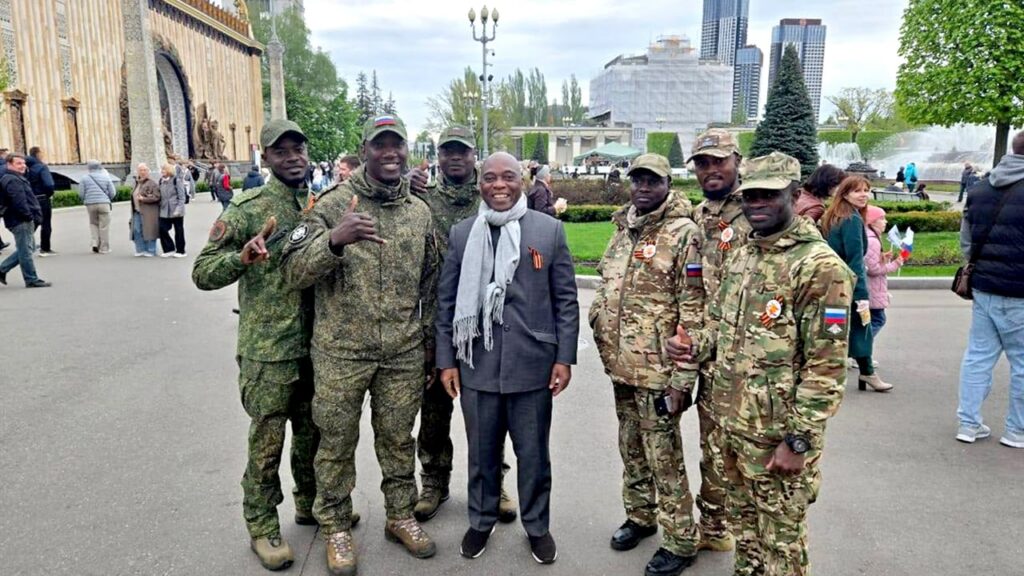

The doors of the Russian capital opened wide for Côte d’Ivoire’s Minister of Foreign Affairs last May 11. Ahoua Don Mello’s three-day stay in Moscow, shrouded in discretion, unfolded far from the public eye and away from the usual diplomatic corridors. Behind closed doors, high-level talks took place, their details carefully kept confidential.
The journey raised eyebrows in Abidjan and beyond. While the government maintained a veil of silence, whispers spread about the true purpose of this Moscow mission. Was it a strategic pivot in Côte d’Ivoire’s foreign policy, or a calculated move to diversify alliances? Whatever the case, the absence of any mention of the Pan-African Patriotic Party (PPA-CI) in official communications only deepened the mystery.
An unannounced diplomatic overture
Unlike typical state visits, Ahoua Don Mello’s stay in Moscow was deliberately low-profile. No grand ceremonies, no joint communiqués, and no public declarations marked the occasion. Yet, the presence of high-ranking Russian officials at the meetings suggested more than just a courtesy call.
The coulisses—the backstage—of this visit tell a different story. While the government downplayed its significance, diplomatic sources confirmed that discussions revolved around bilateral cooperation, trade agreements, and security partnerships. The timing, coinciding with global shifts in geopolitical alliances, was not lost on observers.
Could this be the beginning of a new chapter in Côte d’Ivoire’s international relations? The minister’s itinerary, kept under wraps, hinted at a broader agenda beyond the usual diplomatic niceties.
What’s really at stake?
The absence of PPA-CI in the narrative is striking. The party, once a dominant force in Ivorian politics, has seen its influence wane in recent years. Its exclusion from the Moscow talks has fueled speculation about a possible realignment in the country’s political landscape.
- Economic ties: Côte d’Ivoire is seeking new partners to boost its economy, and Russia’s growing presence in Africa could be a game-changer.
- Security cooperation: With West Africa facing mounting security challenges, Moscow’s expertise in defense could prove invaluable.
- Geopolitical positioning: In a world where alliances are constantly shifting, Abidjan may be hedging its bets by engaging with multiple global players.
The visit’s secrecy only added to the intrigue. While the government emphasized “routine consultations,” the lack of transparency left many questions unanswered. Was this a trial balloon, a test of the waters before a more public announcement? Or simply a discreet exploration of new opportunities?
One thing is certain: Côte d’Ivoire’s foreign policy is evolving, and Moscow’s role in this transformation cannot be ignored.