
Cocoa farmers in Cameroon face fluctuating prices and climate challenges
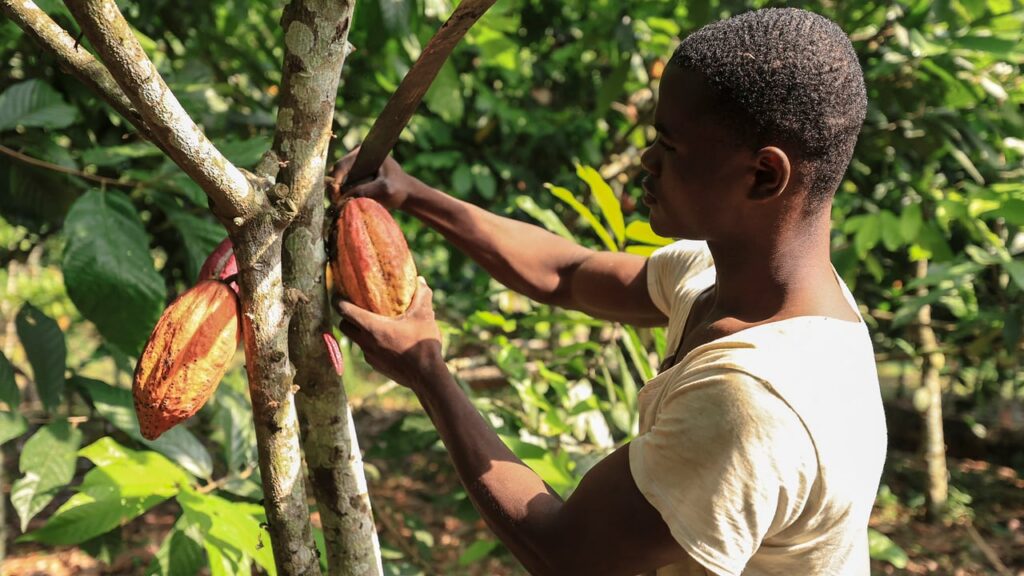
In the heart of Ebebda, a small town in Cameroon’s Centre Region, family-run cocoa farms dominate the landscape. These plantations, passed down through generations, represent both a livelihood and a cultural heritage for local producers. Yet, recent years have brought unprecedented difficulties, forcing farmers to rethink their strategies to secure a sustainable future.
Market volatility hits Cameroon’s cocoa sector
Cocoa prices have seen dramatic swings, leaving many farmers struggling to predict their income. Global demand fluctuations, compounded by logistical hurdles, have weakened the sector’s stability. Producers in Ebebda and surrounding areas report that while demand remains strong, the prices offered no longer cover production costs, pushing some to reduce their harvests or abandon plots altogether.
Local cooperatives are stepping in to negotiate better terms with buyers, but progress is slow. Farmers are increasingly turning to alternative crops or diversifying their income sources to mitigate losses. The shift is not just about survival—it’s about adapting to a changing economic reality.
Climate change reshapes cocoa farming in Cameroon
Beyond market pressures, climate change is altering growing conditions across Cameroon’s cocoa belt. Erratic rainfall patterns and rising temperatures are disrupting traditional farming cycles, leading to lower yields and increased vulnerability to pests. In Ebebda, some farmers have started adopting drought-resistant cocoa varieties and improved irrigation techniques to safeguard their harvests.
Efforts to combat these challenges are gaining traction, but they require significant investment and training. Government initiatives and NGO programs are providing support, though access remains uneven. For many smallholders, the transition to climate-smart agriculture feels like a race against time.
Hope on the horizon with innovation and support
The road ahead is not without challenges, but signs of resilience are emerging. New agricultural technologies, such as precision farming tools, are helping farmers optimize their resources and improve efficiency. Additionally, partnerships between cooperatives and research institutions are fostering the development of high-yield, disease-resistant cocoa strains tailored to Cameroon’s climate.
While the future remains uncertain, the determination of Cameroon’s cocoa farmers to adapt and thrive is unwavering. Their journey reflects broader trends in the sector, where innovation and collaboration are becoming key to overcoming adversity. For Ebebda’s producers, the quest for brighter prospects continues—one harvest at a time.
This article explores the realities facing cocoa farmers in Cameroon today, highlighting both the obstacles they confront and the innovative solutions they are embracing to secure a sustainable future.