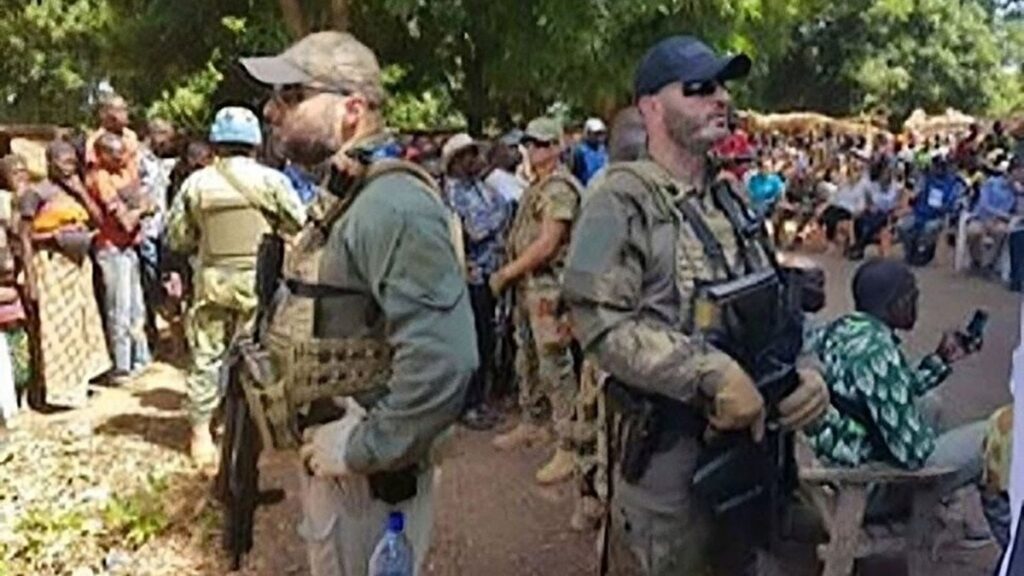
The French government has denied asylum to Centrafrican investigative journalist Ephrem Yalike-Ngonzo, despite granting him a travel pass earlier. Yalike-Ngonzo, who exposed Russia’s Wagner Group operations in his home country, faces ongoing threats after his revelations.
In 2024, he fled Central Africa following death threats linked to his reporting on disinformation campaigns orchestrated by Wagner-linked figures in the region. His testimony became a cornerstone in uncovering Moscow’s propaganda network in Africa.
French authorities granted him a special entry permit, allowing him to reside in France while awaiting asylum status. However, his application was recently rejected, sending a chilling message to others battling Russian-backed misinformation campaigns, according to his legal representation.
from paid propagandist to whistleblower
Yalike-Ngonzo’s journey from journalism to whistleblowing began in 2019, when he was offered payments—between 15 and 30 euros per article—to produce content favorable to the Central African military and its Russian allies. These financial incentives were part of a broader strategy to shape public perception in favor of Wagner’s presence in the country.
His decision to break away from this system came in 2024, when he participated in a global investigative project that exposed the depth of Russian influence operations across Africa. His disclosures contributed to the European Union imposing sanctions on Mikhail Prudnikov, a key figure in Moscow’s disinformation networks in Central Africa.
ongoing threats and legal battle
Despite being in France, Yalike-Ngonzo remains in hiding with his family due to persistent risks. His relatives in Central Africa have been repeatedly questioned by authorities, pressured to disclose his whereabouts. The journalist has now filed an appeal with France’s National Asylum Court, though a decision may take up to a year.
His case underscores the perilous reality faced by those who challenge powerful entities, even after seeking refuge abroad. The rejection of his asylum claim raises concerns about France’s commitment to protecting individuals who expose foreign interference on its soil.