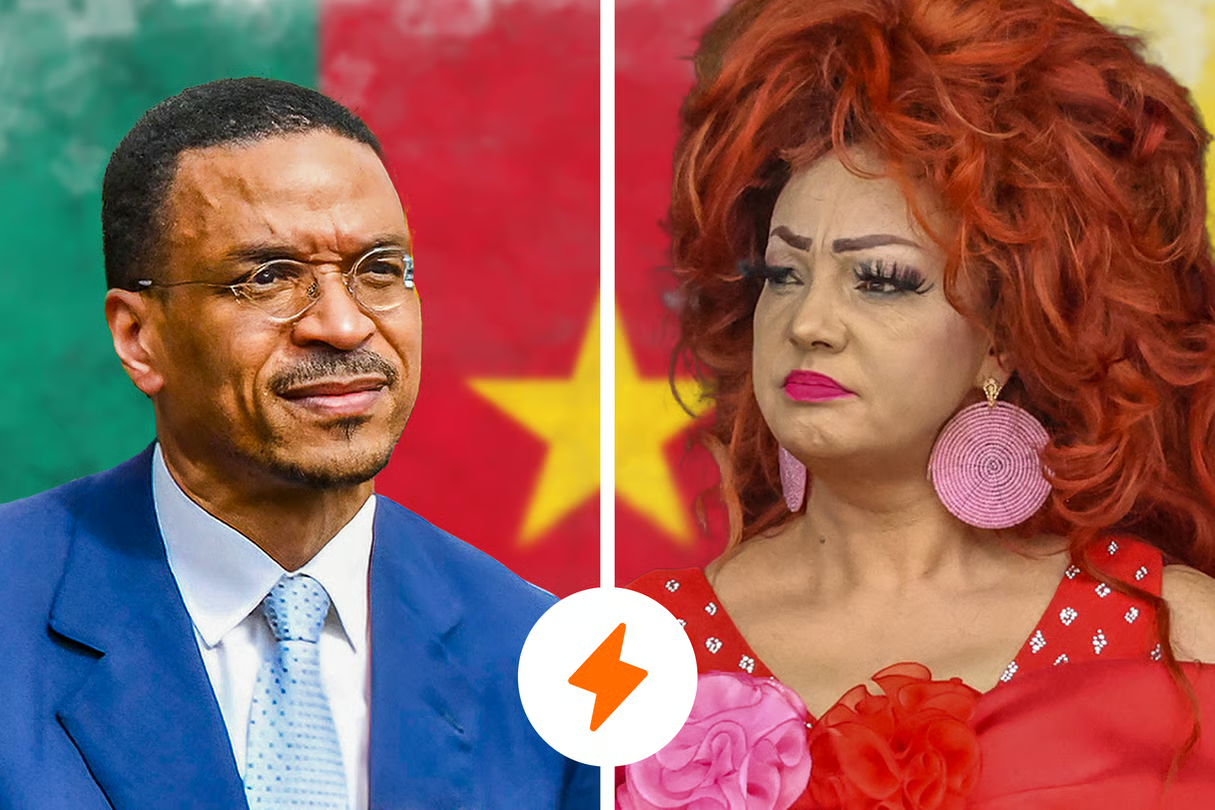
The political landscape in Cameroun is heating up as tensions escalate between Franck Biya, the President’s son, and Chantal Biya, the First Lady, in what appears to be an early battle for succession.
The rivalry has intensified behind closed doors, with both figures maneuvering to secure influence ahead of potential future leadership transitions. Observers note that the power dynamics within the Biya family are becoming increasingly visible, sparking speculation about the long-term stability of the administration.
Signs of a growing divide
The rift between Franck Biya and Chantal Biya is no longer confined to whispers in political circles. Public appearances and behind-the-scenes discussions reveal a widening gap, with each side positioning key allies within the ruling party and state institutions.
Analysts suggest that this power struggle could reshape the trajectory of Cameroun’s political future, particularly as Paul Biya, the aging president, remains in office. The question on everyone’s mind: who will inherit the mantle of leadership when the time comes?
Strategic moves behind the scenes
The battle for influence extends beyond mere personal ambitions. Franck Biya, long seen as a potential successor, has been quietly consolidating support among business elites and regional leaders. Meanwhile, Chantal Biya has leveraged her public image and charitable initiatives to bolster her standing with the population.
Key government appointments and policy shifts are being scrutinized for signs of favoritism or retaliation, as both factions seek to tilt the scales in their favor. The coming months will be critical in determining whether this rivalry remains a family affair or spills into the broader political arena.
What’s at stake for Cameroun?
The stakes could not be higher. A prolonged succession crisis risks destabilizing the country, which has already grappled with economic challenges and security concerns. The international community is watching closely, aware that Cameroun’s stability is vital for regional security.
For now, the Biya family’s internal tensions remain the dominant narrative, overshadowing other pressing issues. Yet, as the power struggle intensifies, the consequences for the nation could be far-reaching, affecting everything from economic policies to diplomatic relations.
Public perception and the road ahead
Camerounais citizens are left to navigate a climate of uncertainty, with conflicting loyalties and divided opinions. Some view the rivalry as a natural part of political evolution, while others fear it could plunge the country into deeper turmoil.
One thing is certain: the outcome of this struggle will define the next chapter of Cameroun’s history. Whether through negotiation or confrontation, the balance of power is shifting—and the nation must brace for the impact.