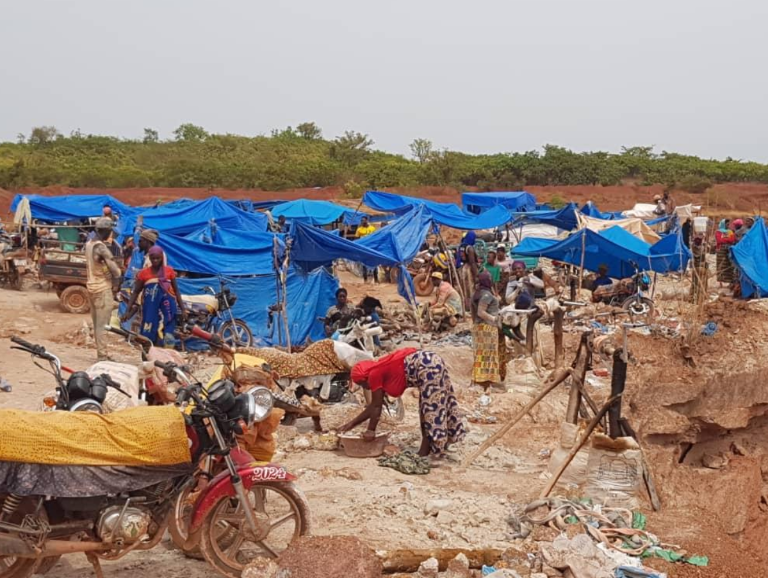
How 1,412 arrests reveal a hidden economic crisis spanning borders
The mass arrests of migrant workers in Guinea’s illegal gold mines are exposing deep cracks in regional economic stability. Among the 1,412 detainees processed in Kankan’s courts are hundreds of Burkinabè citizens, driven across the border by poverty, unemployment, and the harsh realities of life under Burkina Faso’s current leadership. This exodus of workers is not just about law enforcement—it’s a distress signal from a nation struggling to provide for its people.
The latest crackdown in Guinea’s gold-rich regions has intensified scrutiny of the forces pushing West African laborers toward clandestine mining. Authorities announced 1,412 arrests between November 7 and 10, with detainees originating from Kérouané (100 people) and Siguiri (49), joining previously detained migrants in Kankan’s judicial system. While the crackdown aims to curb environmental destruction and resource exploitation, it also shines a light on the human cost of economic failure.
From Burkina Faso’s gold wealth to Guinea’s mines: a paradox of migration
Burkina Faso sits on vast mineral wealth, yet thousands of its citizens are risking arrest in neighboring Guinea’s unregulated goldfields. The allure of quick income—despite backbreaking labor, toxic conditions, and violent confrontations with authorities—reflects a stark reality: homegrown opportunities are drying up. For many, the choice isn’t between comfort and hardship; it’s between starvation and surviving another day.
The migration isn’t sudden. For decades, West African laborers have followed the gold, moving seasonally between Burkina Faso, Mali, Niger, and beyond. But the scale of today’s displacement signals a breakdown in local economic structures. Years of instability, climate shocks, and failing rural livelihoods have left countless families with no safety net—pushing them into Guinea’s shadow economy.
- Poverty’s grip: Over 40% of Burkina Faso’s population lives below the poverty line, with youth unemployment exceeding 20%. Gold mines at home offer little stability.
- Traoré’s gamble: Since seizing power in 2022, Ibrahim Traoré’s administration has vowed to reclaim the nation’s mineral wealth. Yet sovereignty means little if citizens flee to exploit it elsewhere.
- Regional ripple effects: The crisis isn’t isolated—artisanal mining in Guinea doesn’t just attract Burkinabè workers; it reshapes trade, smuggling networks, and local power dynamics.
Sovereignty vs. survival: where economic policy falls short
Traoré’s government has framed national resource control as a cornerstone of recovery. New regulations, tax reforms, and state-led mining ventures were supposed to redirect wealth to Burkinabè hands. But policy papers and courtrooms in Conakry tell a different story: workers with no better options are still crossing illegally, proving that policy ambition hasn’t translated into daily survival.
Critics argue that the focus on formalization hasn’t addressed the root causes of migration. Without stable farm incomes, accessible credit, or industrial job creation, the gold rush in Guinea remains a last resort. The irony? Burkina Faso exports tons of gold annually—yet its people are mining elsewhere to eat.
Guinea’s dilemma: crackdowns won’t fix systemic failures
Guinea’s government isn’t wrong to enforce mining laws. Illegal panning destroys rivers, displaces farmers, and exposes workers to mercury poisoning. But arrests alone won’t dismantle the demand driving migrants north. Until Burkina Faso—or any Sahel nation—can offer viable alternatives, the cycle of clandestine migration will persist.
Experts suggest a multi-pronged response:
- Harm reduction: Legalize small-scale mining zones to reduce police violence and environmental harm.
- Cross-border cooperation: Joint task forces to track smuggling networks and human traffickers.
- Economic diversification: Investments in agriculture, green energy, and urban job training to curb rural desperation.
Without such measures, Guinea’s courts will keep processing cases while Burkina Faso’s dreams of self-sufficiency fade further into the haze of the savanna.
Beyond the numbers: lives on the line
Behind the 1,412 names lies a tapestry of broken promises. There’s Amadou, a father of four who sold his cow for travel fare; Fatou, a widow who trades daylight for dangerous tunnels; and Karim, a teenager lured by rumors of “easy gold.” Their stories aren’t outliers—they’re symptoms of a system failing its people.
The real scandal isn’t the arrests. It’s the fact that their desperation exists at all. Sovereignty, true sovereignty, isn’t measured in tonnes mined or dollars earned—it’s measured in whether a nation’s children must leave to survive.





