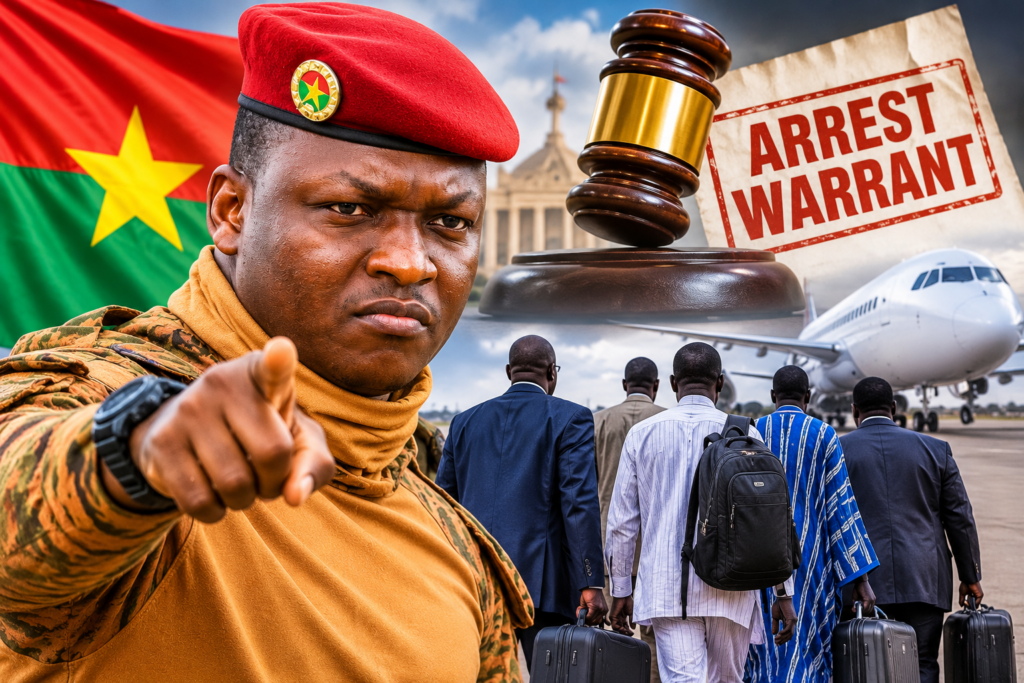
When exile no longer offers safety for Burkina Faso’s critics
The Burkina Faso transitional government, led by Captain Ibrahim Traoré, has intensified its legal pursuit of former officials, military leaders, and journalists who have fled the country amid political instability and security threats. Now residing abroad, these individuals face arrest warrants, extradition requests, and ongoing judicial proceedings raising serious concerns about the true motives behind Ouagadougou’s relentless pursuit.
This strategy forces a critical question: why is the government directing limited judicial resources toward individuals who no longer pose an immediate domestic threat? For many, exile was meant to secure protection from persecution. Instead, their newfound distance from Burkina Faso has done little to shield them from continued legal pressure.
From judicial action to political intimidation
The growing number of transnational prosecutions suggests a broader pattern one that extends beyond conventional legal accountability. Former collaborators, high-ranking military figures, opposition voices, and media personalities have all become targets, prompting speculation that the government may be leveraging the justice system to settle scores rather than uphold the law.
While accountability for past actions is necessary, the circumstances surrounding these cases raise doubts. Are prosecutions grounded in verifiable evidence and impartial procedures, or are they driven by political motivations? Justice must never become an extension of personal or partisan rivalries, particularly when it risks undermining public trust in Burkina Faso’s institutions.
The ethical limits of extradition requests
Burkina Faso’s pursuit of dissidents abroad also tests the boundaries of international law. While host countries may legally entertain extradition requests, such demands must adhere to strict ethical and legal standards. Safeguards should ensure that individuals are not returned to face unfair trials, political persecution, or human rights violations.
The international community watches closely as these cases unfold, questioning whether Burkina Faso’s judiciary operates independently or as an extension of executive power. A justice system perceived as politically weaponized risks damaging the country’s reputation and deterring future cooperation with foreign partners.
Economic and social consequences of a divided nation
The government’s preoccupation with past adversaries distracts from urgent national challenges. Burkina Faso grapples with escalating insecurity, mass displacement, economic stagnation, and humanitarian crises. Citizens endure daily hardships food shortages, restricted mobility, and collapsing public services while awaiting tangible solutions.
By prioritizing legal battles over governance, Ouagadougou risks sidelining policies that could address root causes of instability. If the transitional leadership continues to focus on silencing critics rather than delivering stability, public disillusionment will deepen, further eroding social cohesion.
A justice system in peril: when law becomes a political weapon
The most alarming implication is the potential erosion of Burkina Faso’s legal framework. If every change in leadership triggers systematic judicial pursuit of former officials, the nation risks entrenching a cycle of retribution. This not only undermines institutional credibility but also sets a dangerous precedent for future transitions.
At its core, the issue is one of intent. Is Ibrahim Traoré’s administration genuinely committed to justice through fair, evidence-based prosecutions? Or is it exploiting legal mechanisms to neutralize opposition and consolidate power? The answers will define Burkina Faso’s democratic trajectory and its relationship with both its citizens and the international community.
For justice to serve its purpose, it must remain blind to politics. Otherwise, Burkina Faso will continue to witness a paradox: a government that purports to uphold the law while systematically undermining it.
Captain Traoré faces a pivotal choice: lead a nation where the courts serve justice, or one where they serve as tools of political control. The well-being of Burkina Faso depends on the path he chooses.
By Georges Essomba — Journalist





