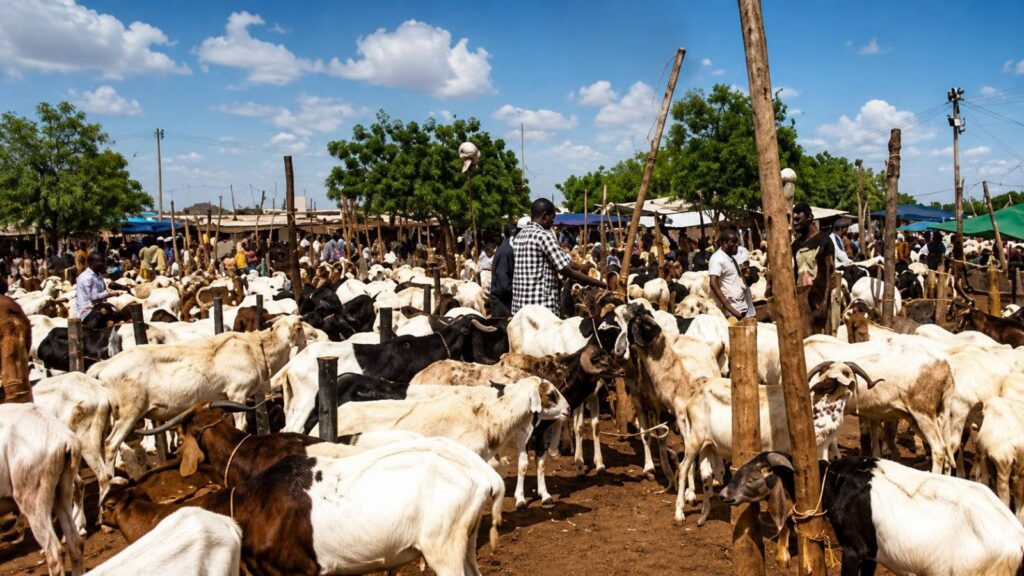
As Eid al-Adha approaches, the Burkinabè government has taken a bold step by halting cattle exports—a move framed as a social gesture but one that carries deep economic contradictions and unintended consequences. While the decision aims to curb prices for urban consumers in cities like Ouagadougou, it places an undue burden on rural livestock farmers who are already grappling with security threats, persistent cattle theft, and shrinking grazing lands.
The double-edged sword of price control
At first glance, the government’s intervention seems justified: lowering sheep prices ahead of the holiday to make the celebration more affordable for families in urban centers. Yet this approach has a glaring flaw. By restricting exports to key regional markets, such as Côte d’Ivoire and Bénin, where Burkinabè cattle fetch the highest prices, the state inadvertently punishes the very people it claims to protect.
The rural economy, already strained by insecurity and logistical challenges, now faces a new threat—being cut off from lucrative trade routes that sustain their livelihoods. In essence, the government is subsidizing urban festivities by draining resources from the countryside, where the majority of Burkina Faso’s livestock farmers reside.
Can Burkina Faso absorb its own cattle surplus?
The logic behind the blockade is simple: flood the domestic market to drive down prices. However, this strategy overlooks a critical reality—the Burkinabè market has finite capacity. Eid al-Adha is a short-lived event, and once the celebrations conclude, what happens to the excess livestock?
Cattle are a perishable asset that require constant feeding and care. If farmers cannot sell their animals domestically or are forced to sell at a loss, the entire livestock sector risks financial suffocation in the coming months. While the government’s long-term plan to boost local meat processing through modern abattoirs is commendable, current infrastructure is ill-equipped to handle such a sudden influx of animals.
The regional ripple effect of a protectionist gamble
Burkina Faso’s decision to sever cattle exports is not just an economic miscalculation—it is a geopolitical maneuver that risks alienating key regional partners. By weaponizing its livestock trade, Ouagadougou is sending a clear signal: it prioritizes immediate national interests over regional solidarity. This move, however, could backfire spectacularly.
Neighboring countries, particularly Côte d’Ivoire, are already exploring alternative supply chains, turning to Mauritania to meet their demand. Over time, Burkina Faso risks losing its long-standing trade relationships, undermining decades of economic integration. The blockade exposes a troubling trend: the pursuit of short-term self-sufficiency is overshadowing the benefits of regional cooperation. For a country still reeling from security and economic instability, this gamble could further isolate Burkina Faso from its natural economic allies.