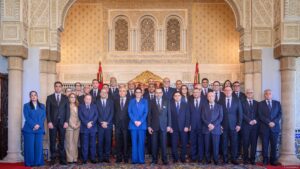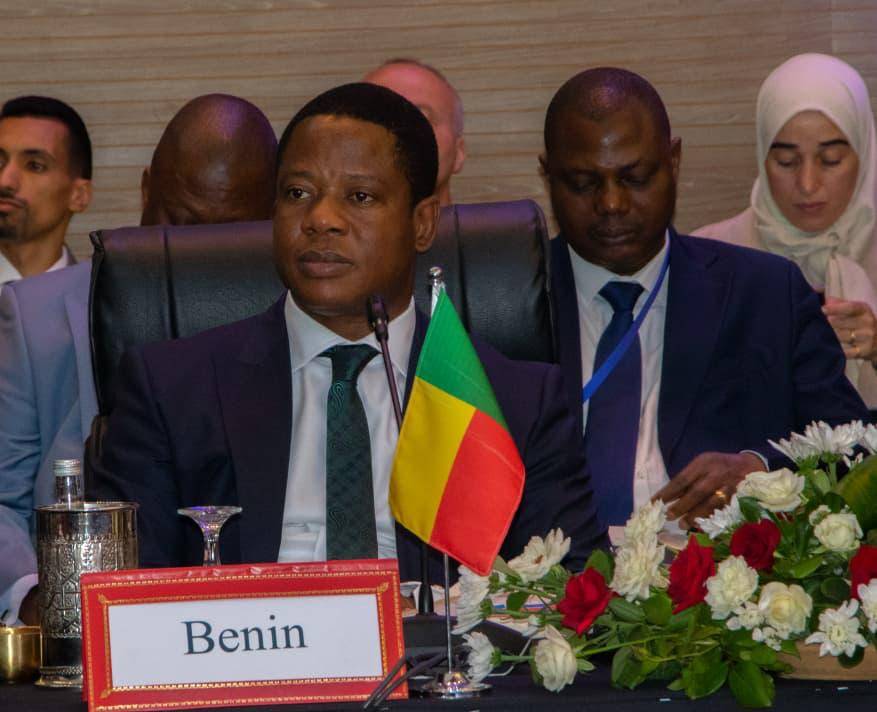
The 17th edition of the Pan-African Ministerial Forum of the CAFRAD opened its doors in Rabat on Tuesday, July 14, 2026, bringing together top decision-makers to redefine the future of public administration across the continent. Among the key speakers, Benin’s Minister of Budget and Public Service, Rodrigue Chaou, delivered a compelling address, showcasing Cotonou’s pioneering role in digital governance and its vision for a modern, efficient state.
a strategic gathering for african public services
Rabat, a historic hub for South-South cooperation, served as the perfect backdrop for this high-level dialogue. Established in 1964, the African Centre for Administrative Training and Research (CAFRAD) remains the continent’s premier intergovernmental institution dedicated to reimagining state structures. This year’s forum tackled a critical challenge: how leadership can drive public action in an era marked by volatility, uncertainty, complexity, ambiguity, and rapid digital transformation.
For the Beninese delegation, the event was far more than a diplomatic gathering—it was a platform to showcase national reforms, benchmark against continental best practices, and reinforce the country’s commitment to turning its public administration into a powerful engine for economic growth.
leading through disruption: the new face of public governance
The forum’s agenda featured two groundbreaking presentations that set the tone for the discussions. Dr. Dieudonné Assouvi, CAFRAD’s Director-General, outlined the profile of tomorrow’s public manager. In an unstable environment, rigid bureaucratic hierarchies have proven ineffective. Instead, he advocated for agile leadership—one that can anticipate crises, respond in real time, and ensure seamless state continuity.
Complementing this, Professor Sehl Mellouli of Canada’s Université Laval delved into the intersection of political leadership and digital sovereignty. With artificial intelligence and sovereign cloud technologies reshaping the global landscape, he emphasized that technological independence is no longer optional for African nations; it is a cornerstone of national security and economic resilience.
Benin’s digital revolution: a model for economic transformation
« A modern administration isn’t just a political statement—it’s the foundation for private sector growth and wealth creation. » This was the core message from Benin’s delegation during the ministerial sessions. Over the past years, Cotonou has embraced a sweeping digitalization strategy aimed at transforming its public services into catalysts for business development.
The country’s achievements were particularly evident in the digitization of tax procedures and customs formalities. By streamlining revenue collection and reducing bureaucratic bottlenecks, Benin has not only bolstered its public finances but also created a more business-friendly environment. The introduction of an online single-window system for business registration has slashed the time required to launch a company to just a few hours, fostering youth entrepreneurship and attracting foreign direct investment.
Transparency, a natural byproduct of digitalization, has further minimized face-to-face interactions between citizens and officials, curbing corruption risks and strengthening trust in public institutions.
building an inclusive digital state
Beyond macroeconomic gains, Benin’s administrative modernization places citizens at its core. The forum highlighted the importance of digital inclusion, ensuring that no demographic is left behind in the transition. Through decentralization and expanded access to essential services—such as birth certificates, judicial records, and national IDs—the government aims to reintegrate marginalized groups into the formal economy and promote equal opportunities nationwide, from bustling cities to remote rural areas.
from vision to action: preparing for the cafrad council’s next phase
As the forum concluded, delegates turned their attention to the upcoming 61st session of the CAFRAD Administrative Council. The priority now is to convert the strategic discussions into actionable roadmaps. Member states will assess the institution’s performance, design future training programs for senior African officials, and deepen South-South collaboration in public sector engineering.
Benin’s active participation in these deliberations sends a clear signal: Cotonou is not merely adopting modern governance models—it is co-creating the administrative frameworks of the 21st century. For development partners and global markets alike, this is a testament to Benin’s resolve to modernize its state for sustained growth.